Many plant lovers are thrilled to have a Monstera in their collection. These lush green plants can bring life and beauty to any space, but sometimes they show signs of distress. When the leaf tips start to turn brown, it can be a worrying sign that something is off with their care.
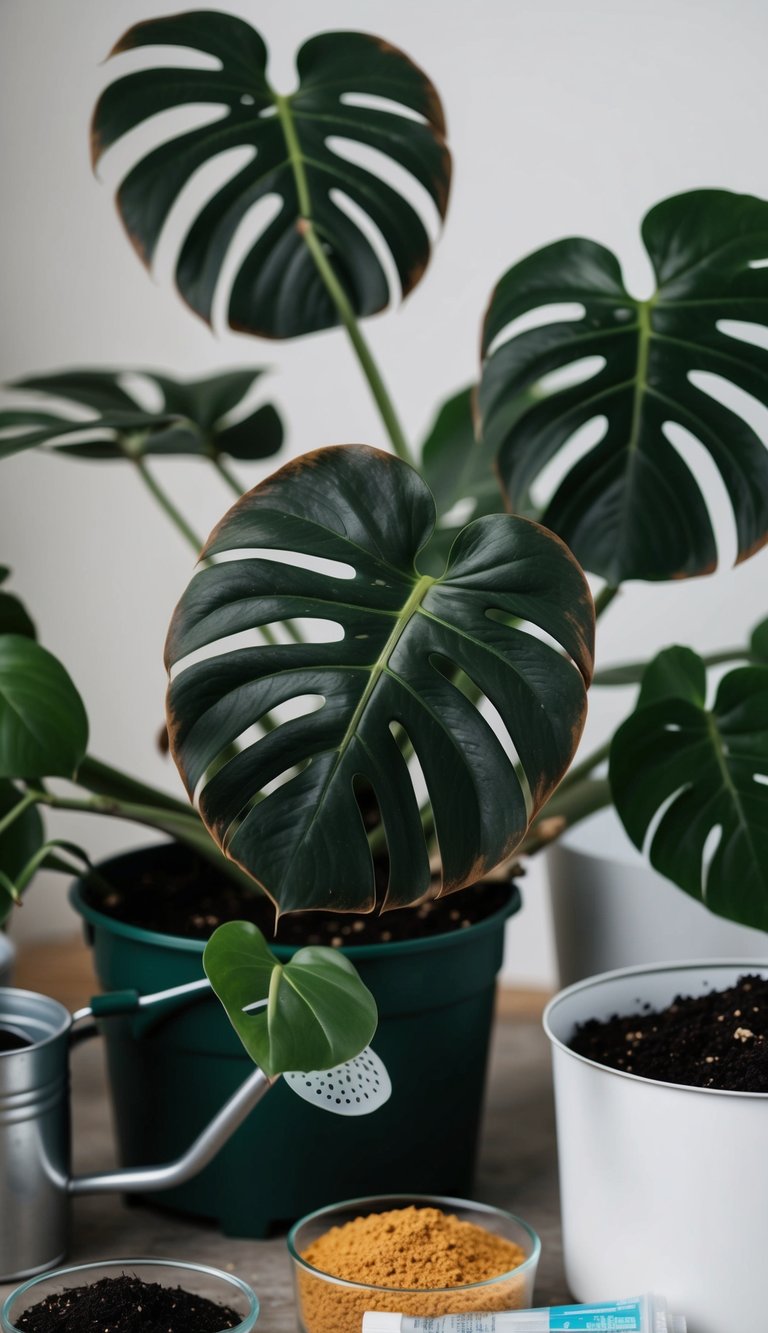
There are several reasons why Monstera leaves might develop brown tips. From watering habits to environmental changes, each factor can affect the plant’s health. Identifying the cause is the first step to helping the plant thrive again.
1) Low Humidity Levels
Low humidity is a common reason for brown tips on Monstera leaves. These plants thrive in humid environments, similar to their native tropical habitats.
When the air is too dry, it affects the plant’s ability to take up water. This can lead to stress and drying out, especially at the leaf tips.
If a Monstera is kept indoors, especially during winter, the air can become quite dry. Heating systems can lower humidity levels significantly.
Using a humidifier can help improve the moisture levels in the air. Placing a tray of water near the plant can also create a more humid spot.
Another option is to mist the leaves regularly. This can provide a quick boost in humidity, helping the plant feel more comfortable.
Grouping plants together can also increase humidity around them. They release moisture, which creates a more humid environment.
Monitoring humidity levels with a hygrometer can help keep track of the conditions. A humidity level of 60% or higher is ideal for a Monstera.
By addressing low humidity, the plant can thrive and grow healthy leaves without brown tips. Happy plants are a joy to care for!
2) Underwatering Your Plant
If a Monstera plant is underwatered, its leaf tips can turn brown. This happens when the plant doesn’t get enough water for its needs. It’s essential to monitor how much water the plant receives.
In dry conditions, the soil can dry out quickly. A Monstera thrives in humidity, and dry soil can stress the plant. When it’s thirsty, the leaves will show signs of distress.
They might curl, droop, or develop brown tips. The plant may also grow slowly and become less vibrant. Checking the soil moisture often can help prevent these issues.
He or she should insert a finger about an inch into the soil. If it feels dry, it’s time to water. A good rule is to keep the top layer of soil slightly moist.
Over time, the owner will learn the right amount of water. Factors like temperature and light affect how quickly soil dries out. Be attentive to these changes, and the plant will thank its caregiver.
Regular watering is key to a happy, healthy Monstera. A consistent schedule will keep the leaves looking great and green. With a bit of care, the brown tips can be a thing of the past!
3) Overfertilization Issues
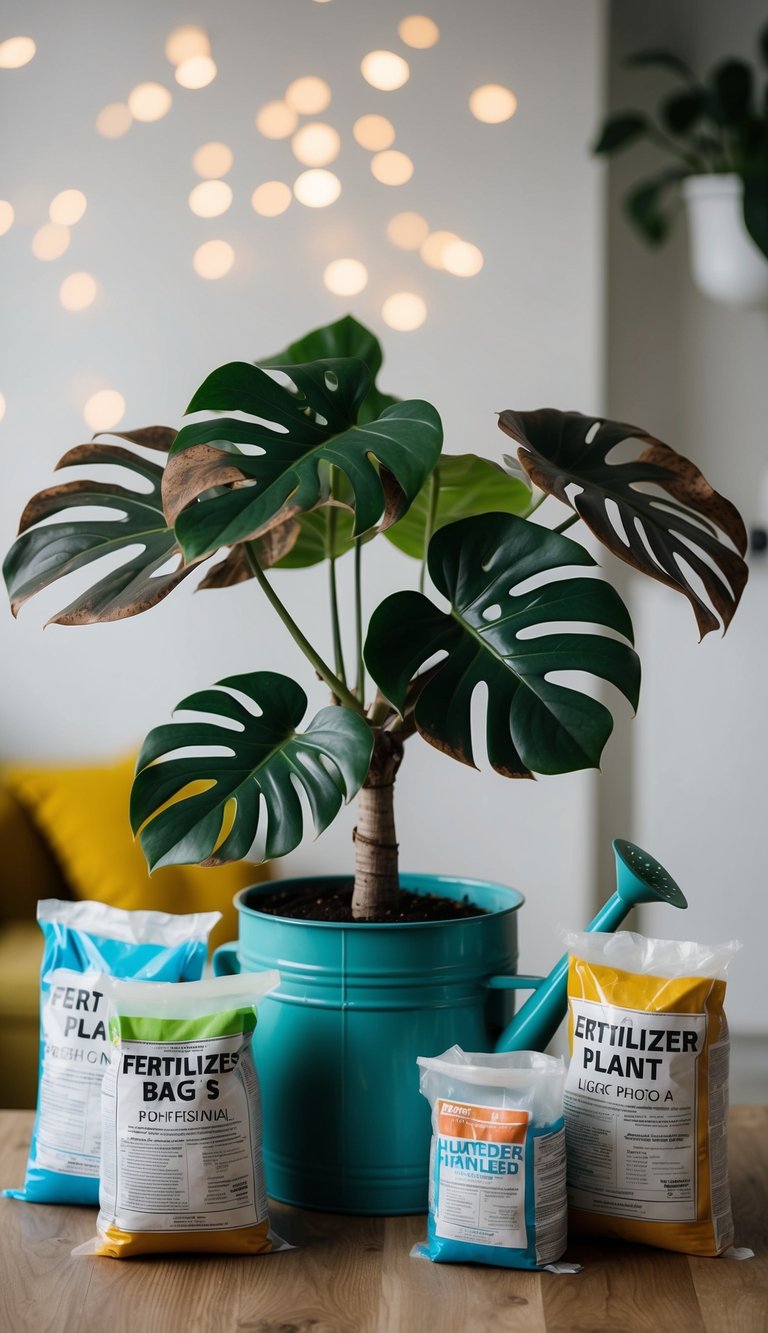
Overfertilization can lead to brown tips on Monstera leaves. When a plant gets too much fertilizer, it can cause a build-up of salts in the soil. This build-up can harm the roots and affect how the plant absorbs water.
Signs of overfertilization often include leaf burn and crispy edges. The leaf tips may turn brown and may feel dry or crunchy. This can be really concerning for plant owners.
To avoid this issue, it’s best to follow the recommended amount of fertilizer. Using a balanced fertilizer every few weeks during the growing season can help. They should also flush the soil with water occasionally to remove excess salts.
If they think their Monstera has too much fertilizer, they can repot it in fresh soil. This helps to reset the conditions and gives the roots a chance to recover. Keeping an eye on the leaves can help catch any problems early.
4) Cold Drafts in Room
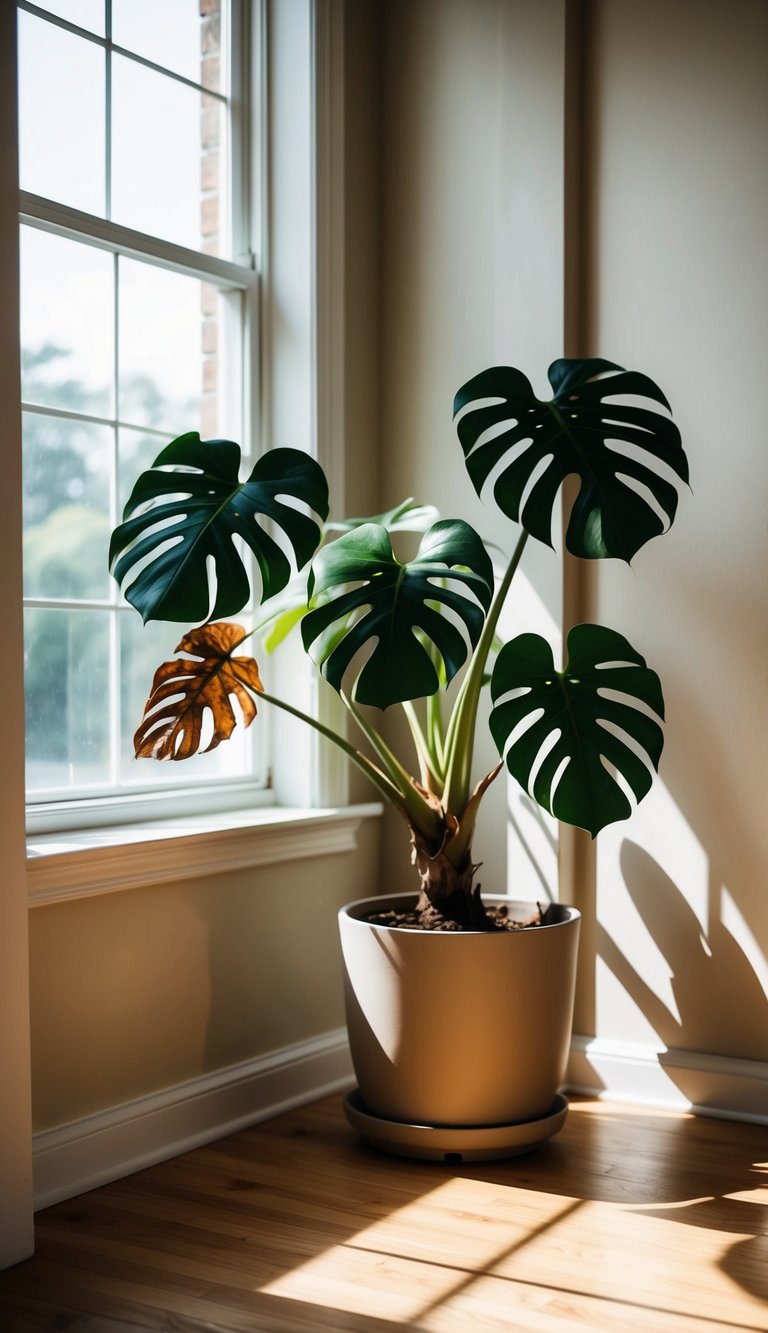
Cold drafts can be a sneaky enemy for Monsteras. When the temperature drops suddenly, it affects the plant’s leaves. Those brown tips could be a sign that it’s feeling too chilly.
Monsteras love warmth. They thrive in environments that stay around 65 to 85 degrees Fahrenheit. Cold air from windows or doors can create a shock. This can cause damage to the leaf tips.
She needs to check where her Monstera is located. If it’s near an air conditioning vent or an open window, it might not be happy. Keeping it away from these spots will help.
It’s best to place the plant in a stable environment. Protecting it from sudden temperature changes is key. This will help keep those leaves lush and vibrant.
Monitoring drafty areas is important too. Simple adjustments, like closing windows during colder months, can make a big difference. This keeps the plant healthy and happy!
Small steps can lead to better plant care. By watching for cold drafts, she can ensure her Monstera stays strong and beautiful.
5) Exposure to Direct Sunlight
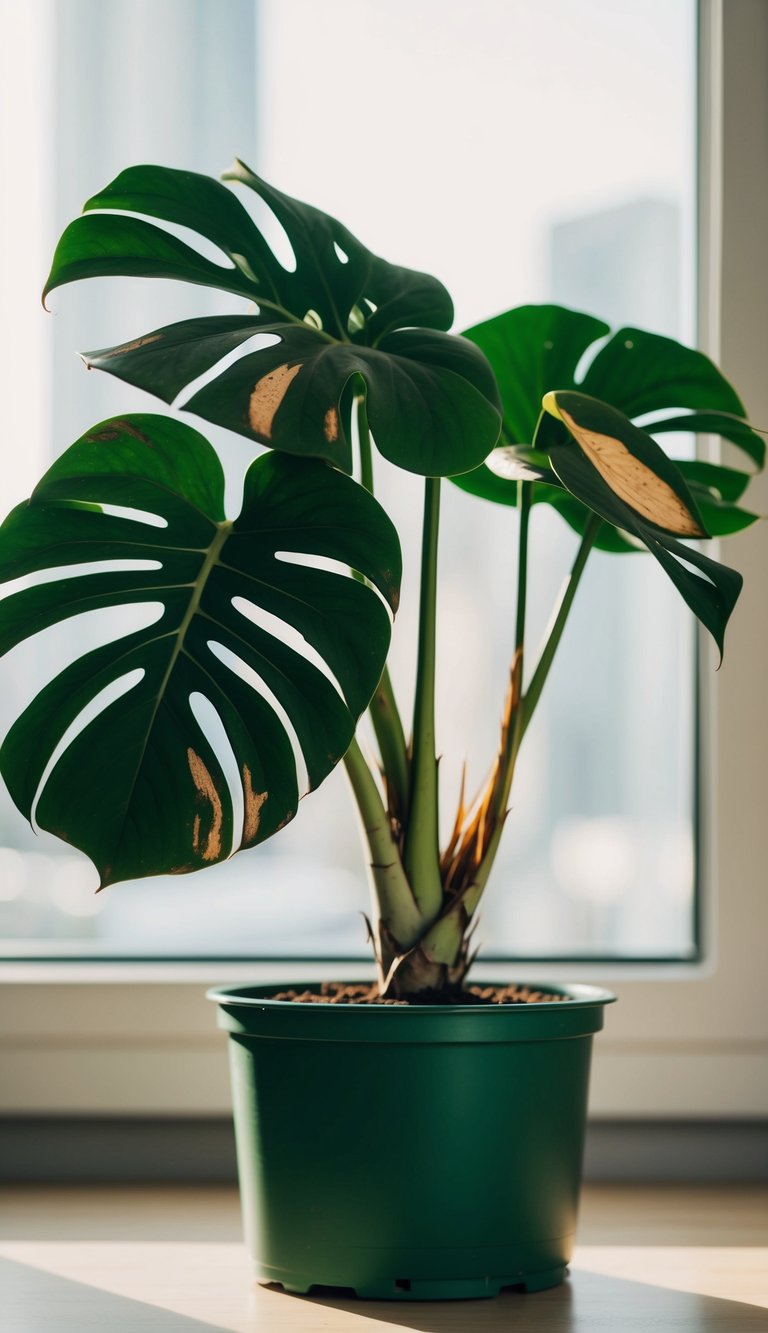
Direct sunlight can harm a Monstera plant. It may seem like a good idea to put it near a bright window, but too much sun can lead to brown leaf tips.
When a Monstera gets too much sunlight, it can dry out the leaves. This makes them crispy and brown. They need bright, indirect light for the best growth.
If the light is too strong, Monsteras can burn. This can show up as brown edges or spots on the leaves. It’s important to find the right balance of light.
To protect the plant, it’s best to move it away from harsh sunlight. Placing it in a spot with filtered light can help keep those leaves healthy and vibrant.
Using sheer curtains can also help. They allow light in while keeping it soft. With the right amount of light, the Monstera can thrive and stay beautiful.
Finding the right light can make a big difference. Happy Monsteras are less likely to have brown tips, and they will grow lush and green.
6) Water Quality Problems
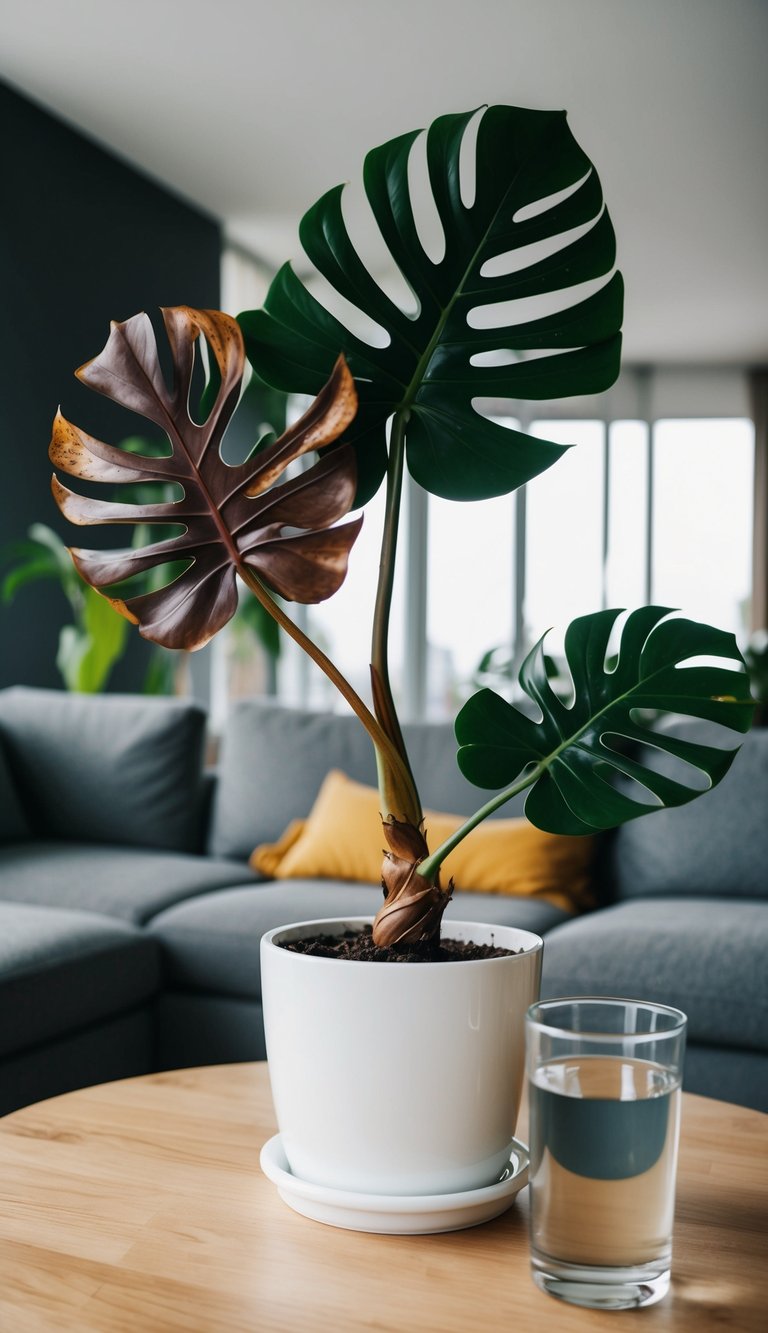
Water quality can have a big impact on a Monstera’s health. Poor water can lead to brown tips on the leaves. It’s important to pay attention to what kind of water is being used.
Chlorinated water is a common issue. Many people use tap water, which often contains chlorine. This chemical can harm the plant and cause stress.
Fluoride is another concern. Some water has high fluoride levels, which can also affect the leaves. Monstera may show signs of distress with brown tips if this is the case.
Using distilled water is a great alternative. It lacks harmful chemicals and keeps the plant happy. Rainwater is also a natural option that many plant lovers enjoy.
Checking the pH of the water is smart. Monstera prefers slightly acidic to neutral water conditions. If the water is too alkaline, it may lead to leaf problems.
Reducing mineral buildup is important too. Using a water filter can help remove some of the harmful substances. Clean water leads to happier plants and healthier leaves.
7) Soil is Too Compacted
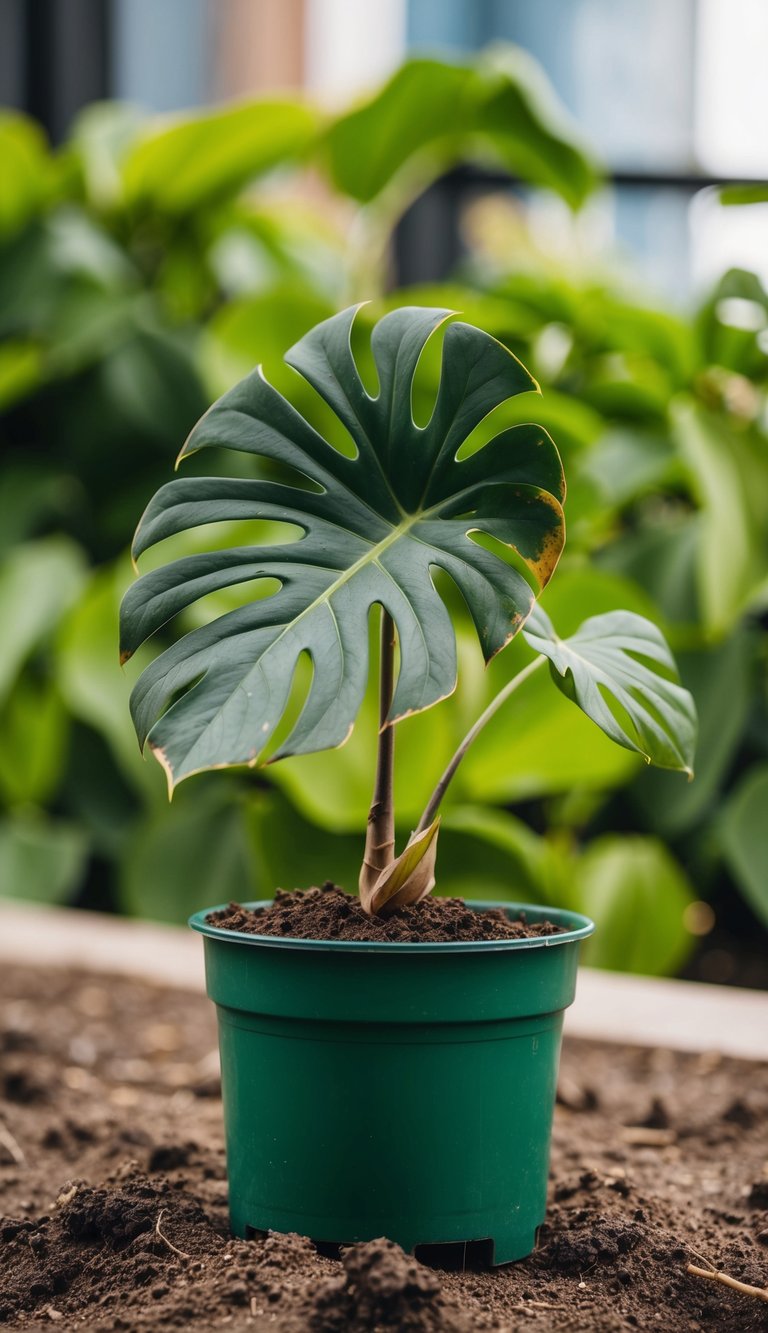
Compacted soil can be a problem for Monsteras. When the soil is too dense, it makes it hard for water and air to reach the roots. This can lead to brown leaf tips!
Roots need space to breathe and grow. If the soil is packed tightly, it can cause stress to the plant. This stress shows up as brown tips on the leaves.
Monsteras thrive in loose, well-draining soil. It allows water to flow easily and keeps the roots healthy. If you notice compacted soil, it’s time to act.
To fix compacted soil, repot the plant in fresh, loose soil. A mix of potting soil and perlite or orchid bark works well. This mix helps keep the soil light and airy.
Checking the soil regularly can help prevent compaction. If the soil feels hard or crusty, it might need some help. Loosening it gently with a stick or your fingers can make a big difference.
Healthy roots mean a happy Monstera!
Improper Drainage in Pot
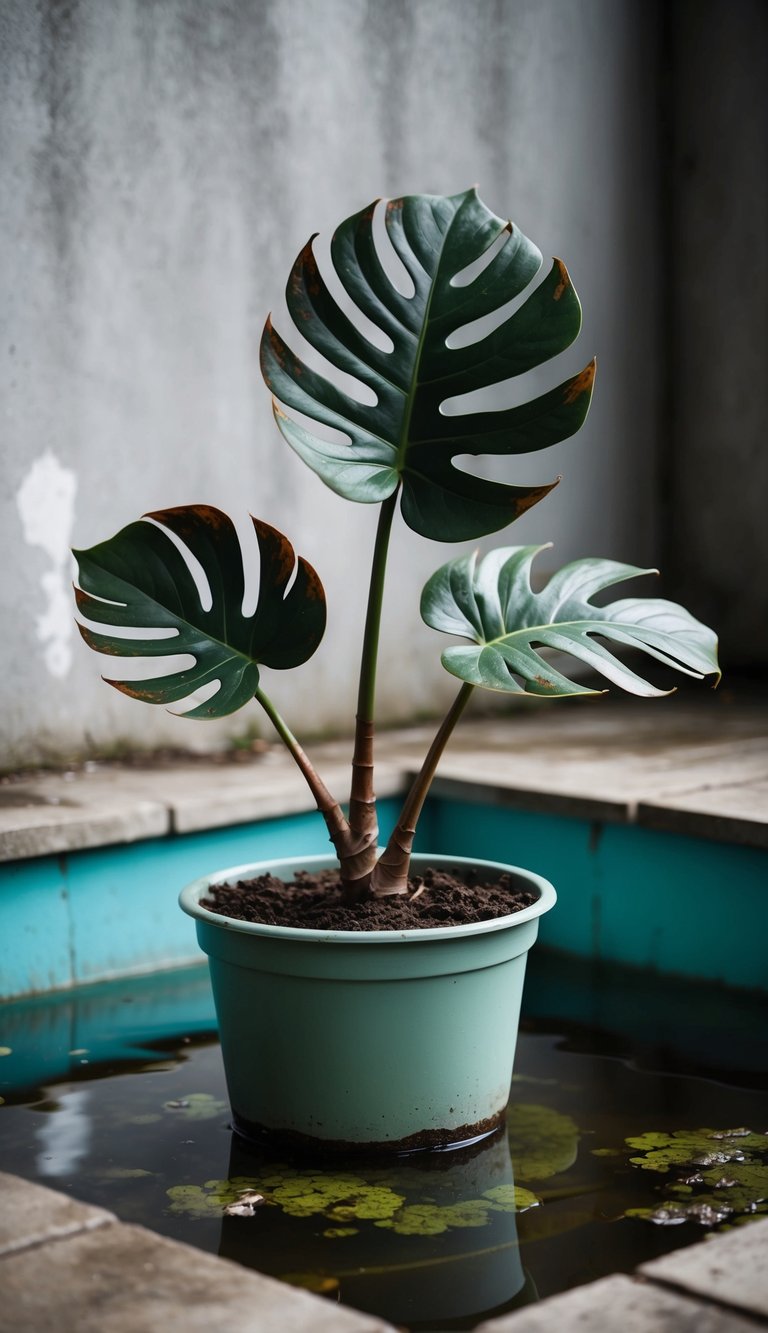
Improper drainage can cause big problems for a Monstera. If water sits at the bottom of the pot, the roots can rot. This leads to brown leaf tips.
Monstera plants prefer well-drained soil. If water can’t escape, it creates a soggy environment. This isn’t good for the leaves or the roots.
It’s important to choose the right pot. Make sure the pot has drainage holes to let excess water out. A pot without holes can trap water and harm the plant.
Using the correct soil mix is also key. A mix that allows air and water to flow helps keep the roots healthy. Soil that’s too dense can lead to water buildup.
If the plant is in a pot with no drainage, it might be time for a change. Transplanting into a pot with good drainage can help save the Monstera. This simple step can lead to healthier leaves and a happier plant.
Monitoring the watering schedule is essential, too. Watering too often can lead to the same problems. Always check if the top inch of soil is dry before watering again.
By ensuring proper drainage, the Monstera can thrive. Healthy leaves will be vibrant and free from brown tips. This small adjustment makes a big difference!
9) Pest Infestation
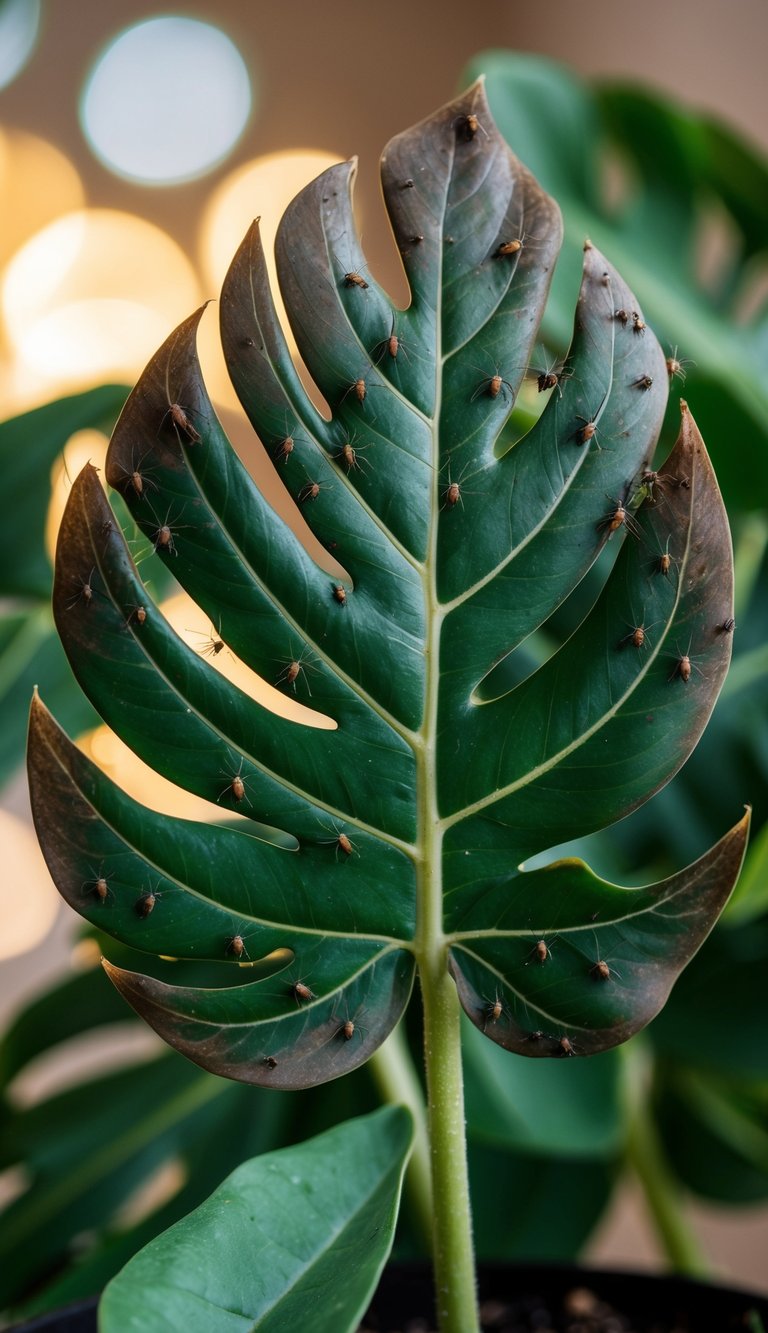
Pests can be sneaky little enemies! When they attack a Monstera, they can cause the leaf tips to turn brown.
Common pests include spider mites, mealybugs, and aphids. These tiny insects suck the sap from the plant, leading to stress and damage.
If she notices tiny webs or little cotton-like spots on her plant, it could mean pests are present. Also, sticky residue on leaves is a telltale sign of aphids or mealybugs.
Regularly checking the undersides of leaves is important. Early detection can save the plant from serious damage.
To treat a pest problem, she can use insecticidal soap or neem oil. These treatments are effective and generally safe for the plant.
Keeping the plant healthy with proper watering and light can also help fight off pests. A stronger plant is less attractive to insects!
She should act quickly if she finds pests. This will help her Monstera stay happy and healthy!
10) Fungal Infection
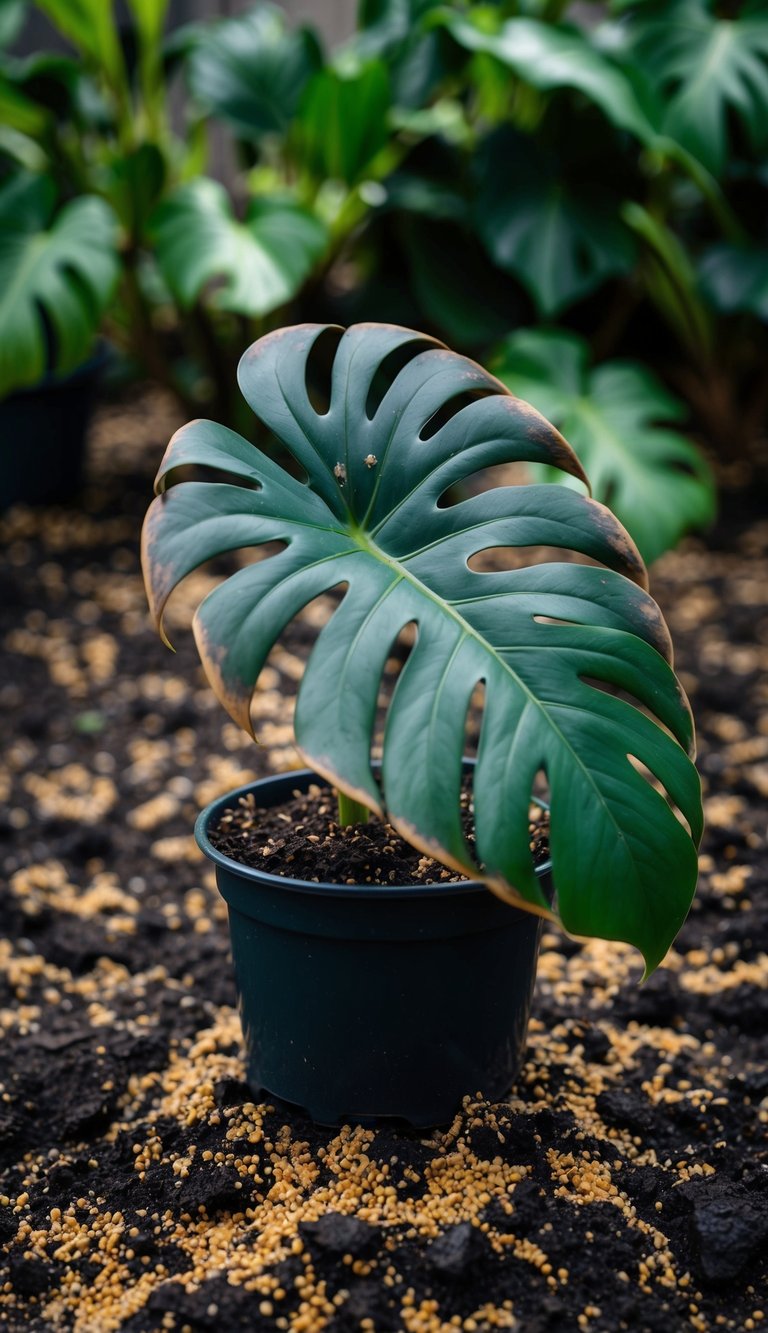
Fungal infections can cause leaf tip browning in Monsteras. These infections thrive in warm, damp environments. If a plant is too wet, it might attract fungi.
Symptoms of a fungal infection include dark spots and a soft texture on the leaves. If the tips turn brown along with these signs, it’s time to act.
To stop an infection, it’s important to improve air circulation around the plant. Keeping the leaves dry can also help prevent issues.
If the infection is severe, a fungicide might be needed. This can control the spread and help the plant heal.
Regularly checking the plant can catch problems early. Using well-draining soil is another great way to keep the roots healthy.
Taking care of the Monstera’s environment is key. With proper treatment, it can bounce back and grow beautifully!
11) Natural Aging of Leaves
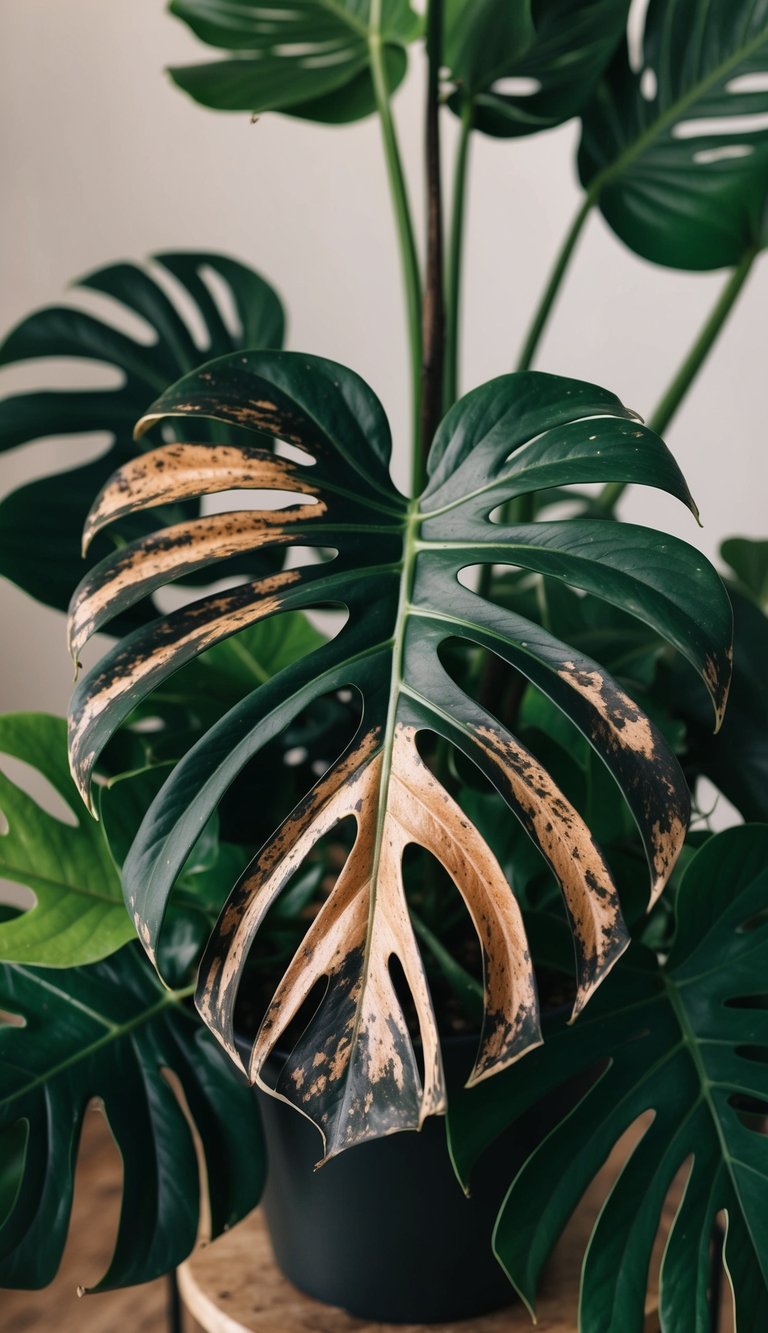
As plants grow, their leaves go through different stages. Older leaves may begin to brown at the tips as part of their natural aging process. This is perfectly normal!
When the leaf is no longer the healthiest part of the plant, it starts to show signs of age. Brown tips can happen because the leaf has taken in as much light and nutrients as it can.
Eventually, the plant knows it’s time to let go of those older leaves. This way, it can focus energy on new growth. It’s like making space for fresh, vibrant leaves to take their place!
Brown tips in older leaves don’t always mean there’s a problem. Instead, it’s just part of the life cycle of the plant. Regular care helps the plant continue to thrive while it sheds its old leaves.
If one or two leaves turn brown, it’s usually nothing to worry about. It’s a sign that the plant is simply moving on to grow more beautiful foliage. So, spotting those brown tips is just nature doing its thing!
Understanding Monstera Leaf Health
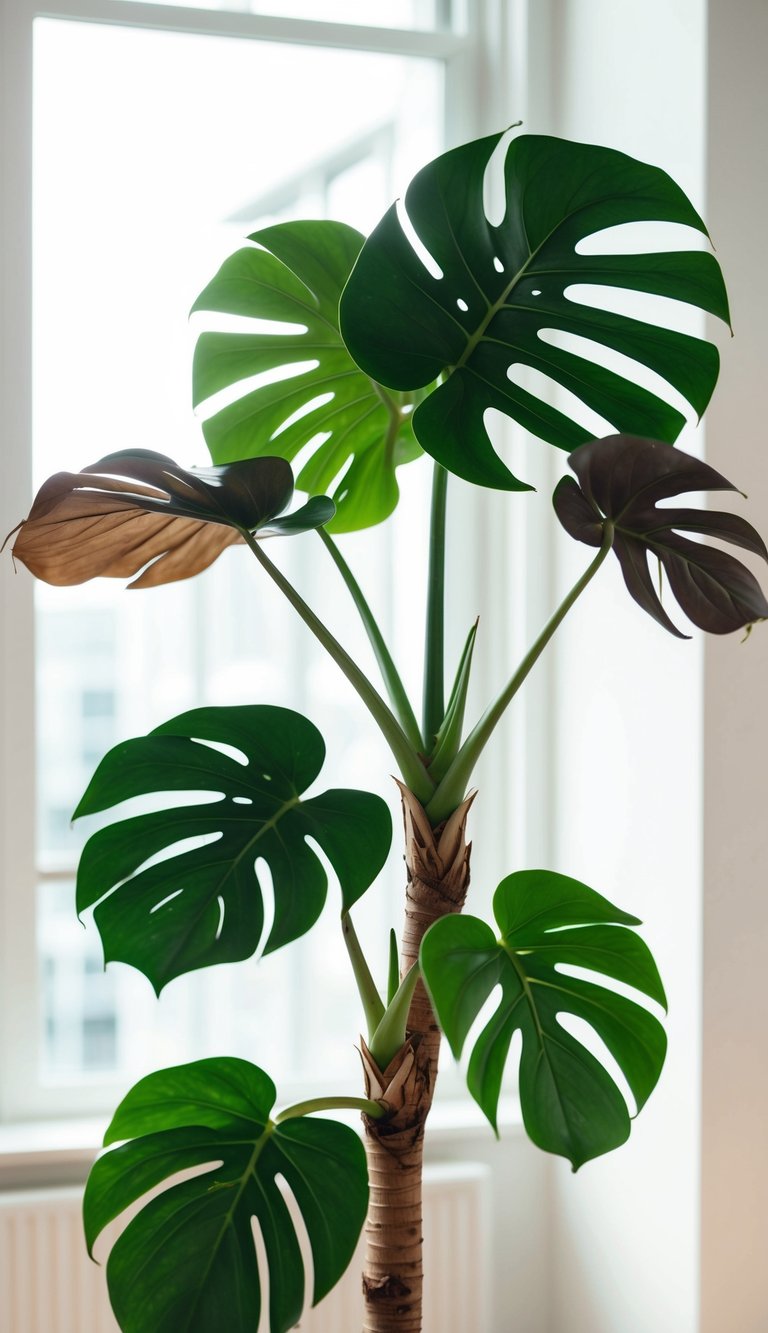
Healthy Monstera leaves are crucial for the plant’s growth. By knowing the structure of these leaves and recognizing common issues, owners can keep their plants thriving and vibrant.
The Anatomy of Monstera Leaves
Monstera leaves are unique and fascinating. They typically have a large, heart-shaped form with deep cuts or holes, known as fenestrations. These cuts help the plant take in light more efficiently.
The surface of the leaf is glossy and can range in color from deep green to light green. Each leaf is supported by a sturdy petiole, which connects to the stem. Healthy leaves also have good moisture levels. If the tips start to brown, the plant may be experiencing stress.
Common Leaf Issues and Their Symptoms
Brown leaf tips on Monstera plants can signal various problems. One common issue is low humidity. Monstera thrives in humid environments, and dry air can cause the leaf tips to turn brown and crispy.
Another issue could be irregular watering. Both overwatering and underwatering can lead to discoloration. Signs of overwatering include yellowing leaves and a mushy stem, while underwatering may show as drooping or wrinkled leaves. Spotting these early can help keep the plant healthy!
Owners should also check for pests, like spider mites or mealybugs, which can cause leaf damage. Regular inspections and proper care can help prevent problems and ensure the Monstera stays lush and green.
Environmental Factors Affecting Monstera Leaves
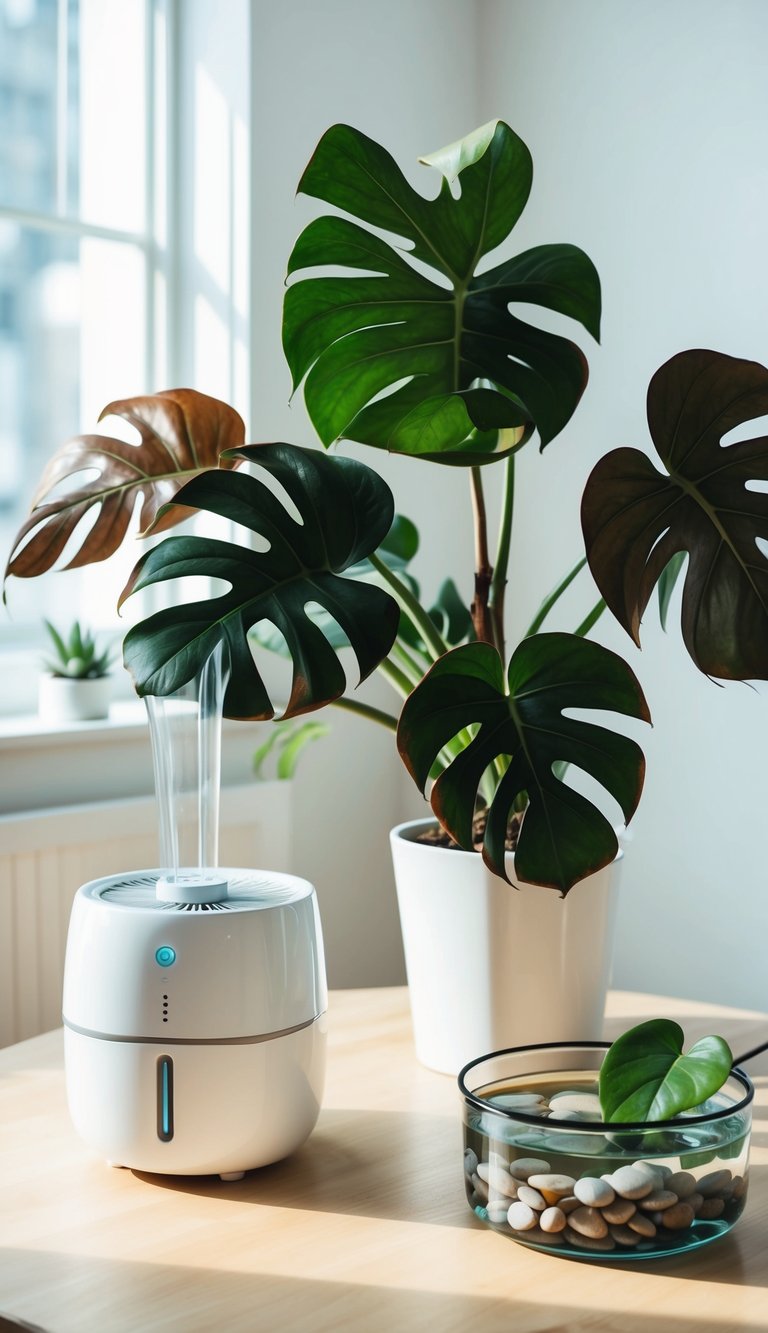
Monstera plants thrive under specific environmental conditions. Lighting and humidity play a huge role in leaf health. When these factors are not optimal, it can lead to issues like brown tips on leaves.
Optimal Lighting Conditions
Light is crucial for a Monstera’s growth. These plants enjoy bright, indirect light. Too much direct sunlight can scorch their leaves, causing brown tips and spots. Conversely, too little light can stunt growth and lead to other problems.
To keep your Monstera happy, aim for the following:
- Bright, Indirect Light: Position it near a window with filtered light.
- Rotate the Plant: This encourages even growth on all sides.
Signs of insufficient light include slow growth and smaller leaves. If the plant is too close to a window, it may display brown edges. Finding the right balance is key for healthy leaves.
Humidity Levels and Their Impact
Monstera plants love humidity. They come from tropical regions where the air is moist. Low humidity can lead to dry tips and edges on leaves.
To maintain the right humidity:
- Use a Humidifier: This can increase moisture in the air.
- Misting: Lightly mist the leaves regularly.
- Pebble Trays: Place trays filled with water and pebbles under the pot.
Signs of low humidity include crisp and brown leaf tips. A happy Monstera should have vibrant, healthy leaves. Keeping humidity levels steady is essential for its well-being.
Watering Practices for a Healthy Monstera
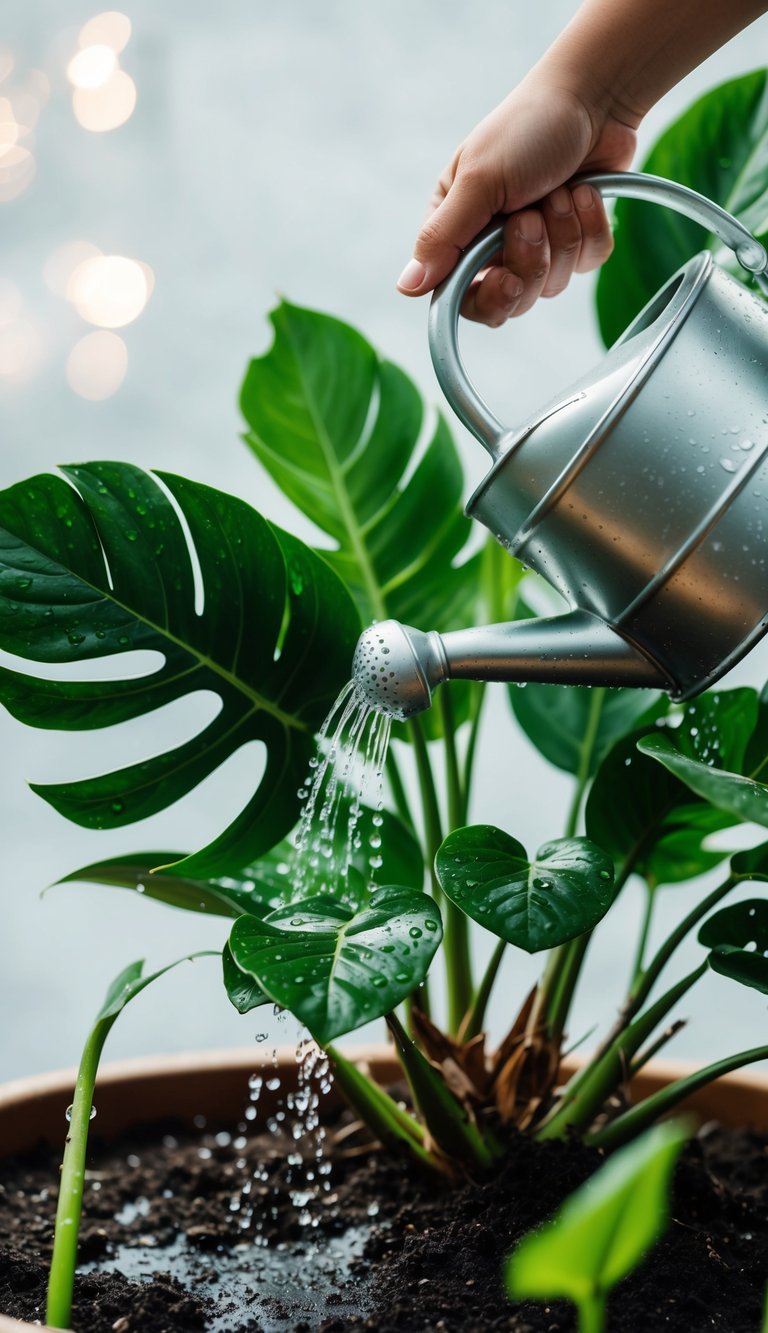
Proper watering is essential for a happy Monstera. Too much or too little water can lead to serious issues, including brown leaf tips. Recognizing the signs of improper watering and applying the best techniques can keep the plant thriving.
Signs of Overwatering and Underwatering
Knowing the signs of watering problems is key. Overwatering can cause yellowing leaves and root rot. The soil may feel soggy, and a musty smell might develop. Underwatering shows up as dry soil and crispy leaf tips. The leaves may curl or droop, signaling the need for water.
Here’s a quick list of signs:
-
Overwatering:
- Yellow leaves
- Moldy or soggy soil
- Root rot
-
Underwatering:
- Dry soil
- Crispy leaf tips
- Curling leaves
Paying attention to these signs can help in adjusting watering practices.
Best Watering Techniques
For the health of a Monstera, water it thoroughly but less frequently. Check the top two inches of the soil. If it feels dry, it’s time to water. Use room-temperature water to avoid shocking the roots.
Aim to water your Monstera every 1-2 weeks. Factors like light and humidity play a role. If the plant is in bright light, it may need more water. In lower light, reduce the frequency.
Consider using pots with drainage holes. Good drainage prevents excess water from staying in the pot. This approach helps maintain a healthy environment for the roots. Always empty any excess water from saucers after watering.