Leggy growth in Monstera plants can be a frustrating issue for many plant lovers. Proper care and attention are key to maintaining a healthy, vibrant plant that thrives in its environment. This article will share 11 tips that can help restore balance and promote better growth for leggy Monsteras.
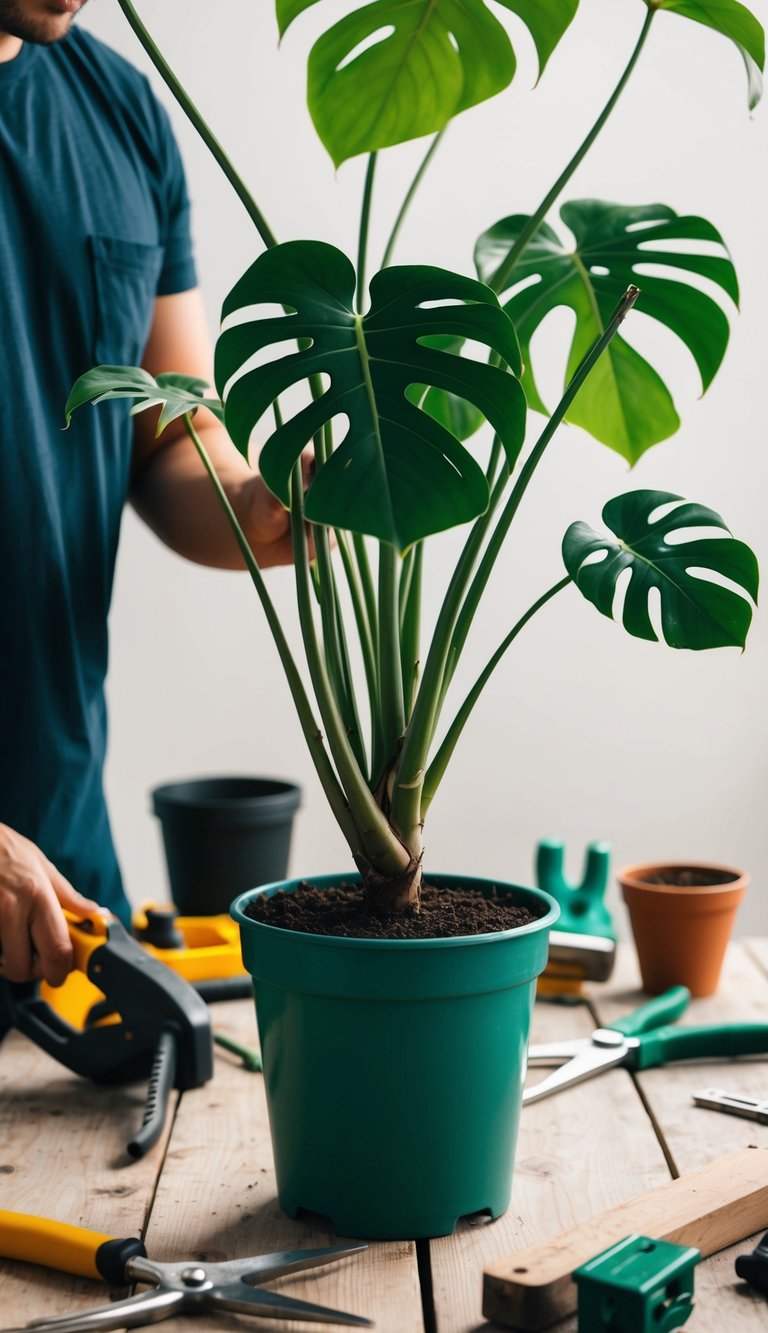
Understanding what causes leggy growth is important for any plant owner. When a Monstera stretches towards light, it may lose its bushy shape. With the right techniques, anyone can encourage a more compact and lush appearance for their beloved plant.
1) Proper Lighting
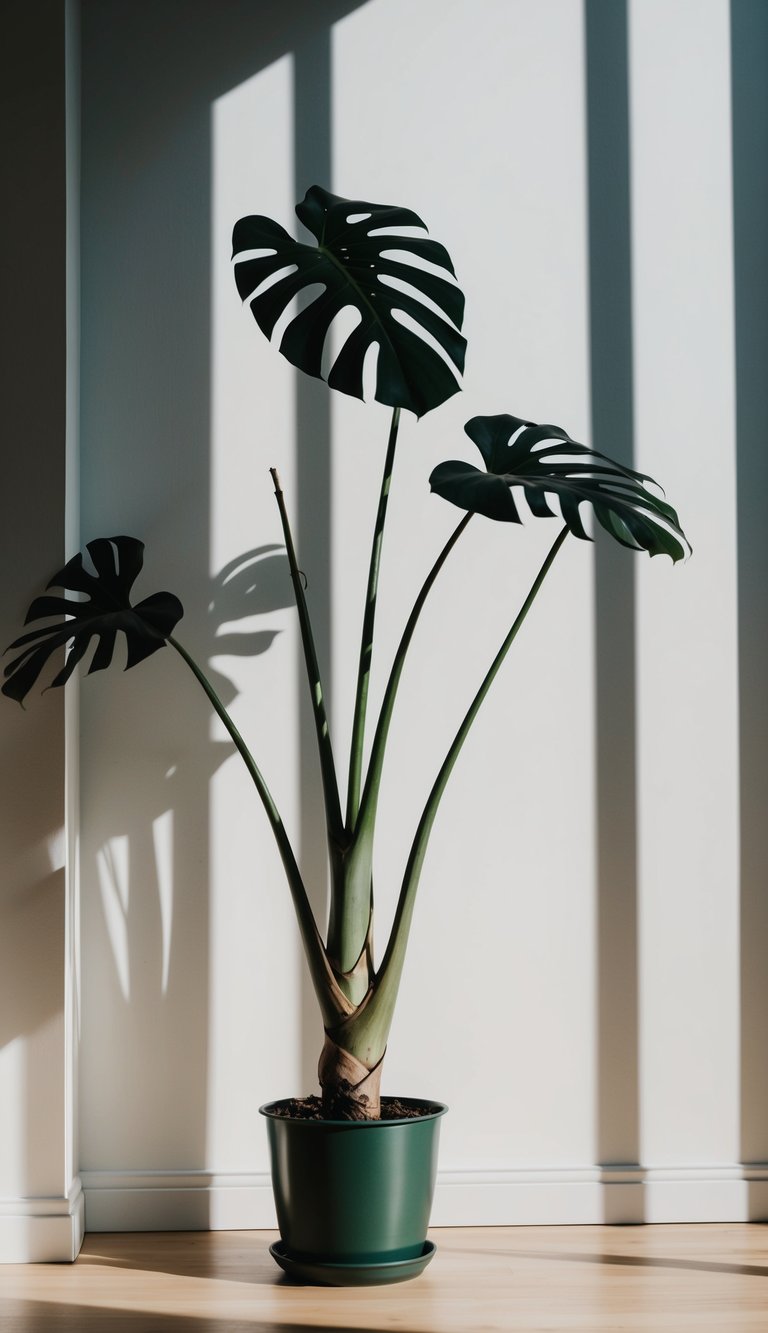
Proper lighting is key to keeping a Monstera healthy. These plants thrive in bright, indirect light. Too little light can lead to leggy growth, making the stems stretch out.
Placing a Monstera near a window can be very beneficial. A spot with filtered sunlight helps the leaves grow fuller and stronger. They can also tolerate some direct sunlight but not too much.
If the light is too dim, the plant may reach for the light. This can cause long, weak stems. They may also produce fewer leaves.
Using a grow light can be a great option. This helps provide the right amount of light, especially in darker rooms. Timers can help ensure the plant receives consistent light each day.
Observing the Monstera can provide helpful hints. If the leaves start to turn yellow or stretch, it may need more light. Adjusting the plant’s location can make a big difference in its growth.
Finding the right balance of light is exciting! With proper lighting, the Monstera can thrive and grow lush, beautiful leaves. It’s a joy to see them flourish in a well-lit spot.
Avoid Overwatering
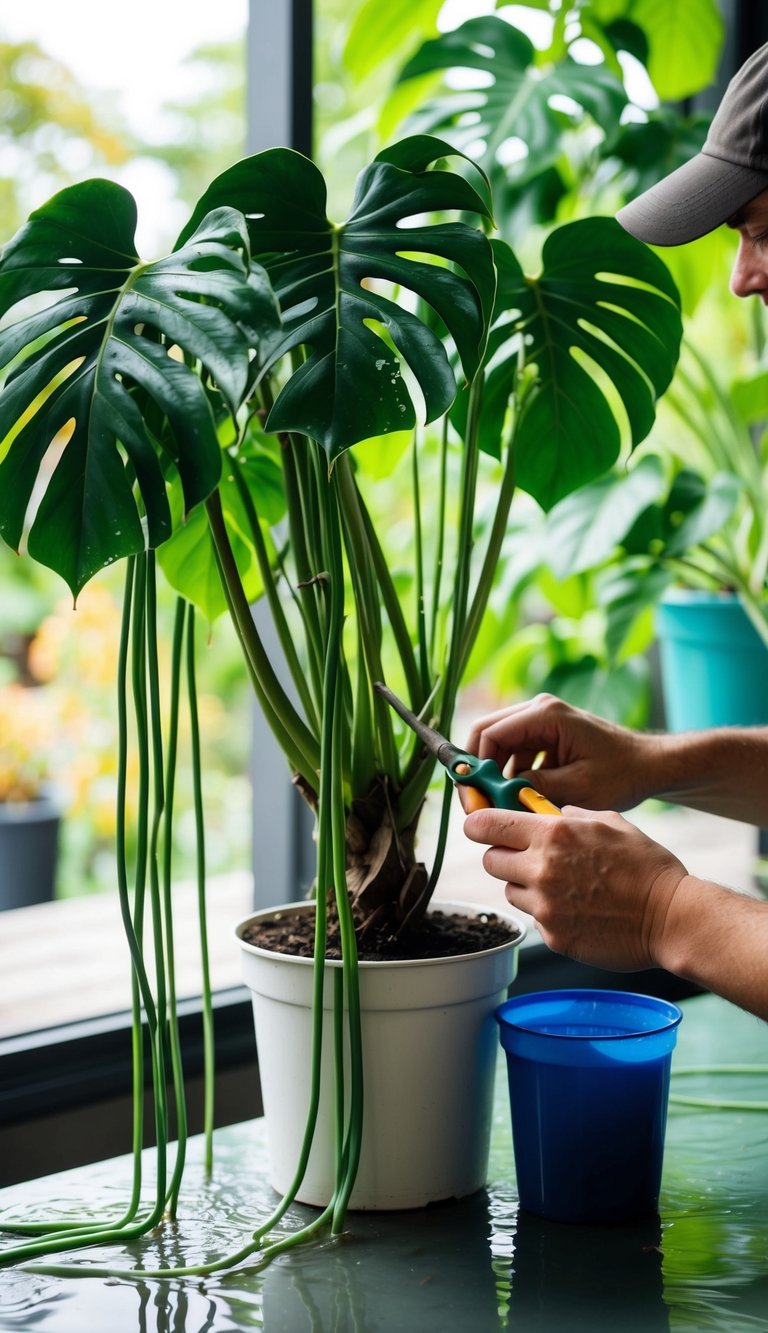
Watering can be tricky for Monstera plants. When they get too much water, their roots can rot. This rot prevents the plant from getting the nutrients it needs.
To avoid overwatering, it’s important to check the soil. It should dry out a bit between waterings. A good rule is to stick a finger about an inch deep into the soil. If it feels dry, it’s time to water!
Using pots with drainage holes is also key. This allows excess water to escape, keeping the roots dry. Without good drainage, water can build up and cause problems.
During winter, Monstera plants need less water. The cooler temperatures slow down growth, so checking the soil often is even more important.
Monitoring humidity is helpful, too. If the air is very humid, the plant may need less water. A simple humidity gauge can help keep track of moisture levels.
Keeping these tips in mind can help prevent leggy growth. A healthy Monstera is a happy Monstera! The right watering habits result in strong, lush leaves.
3) Prune Regularly
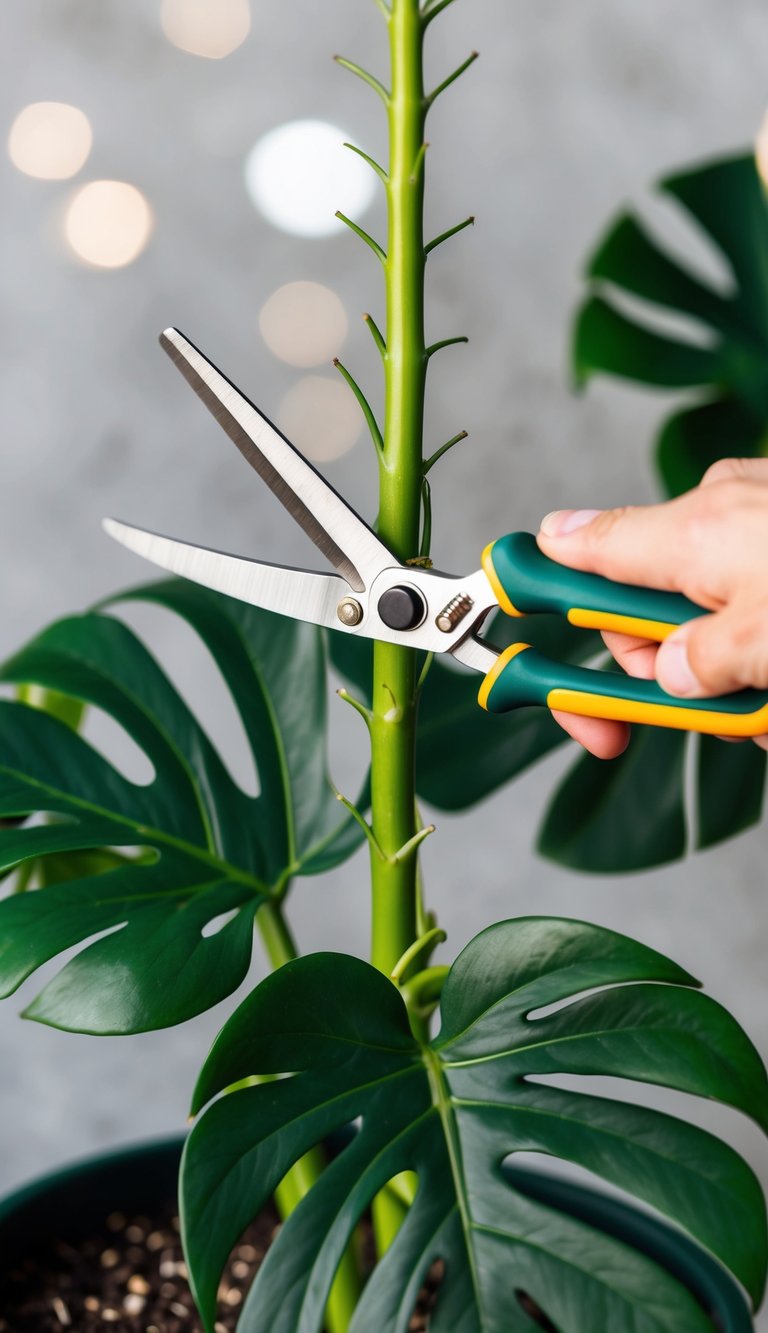
Pruning is a key part of keeping a Monstera looking nice and healthy! It helps the plant grow better and can fix some leggy growth. Regular pruning also encourages new leaves to sprout.
Start by cutting off any long or unhealthy stems. This gives the plant a more balanced look. It can also help the remaining leaves get more sunlight.
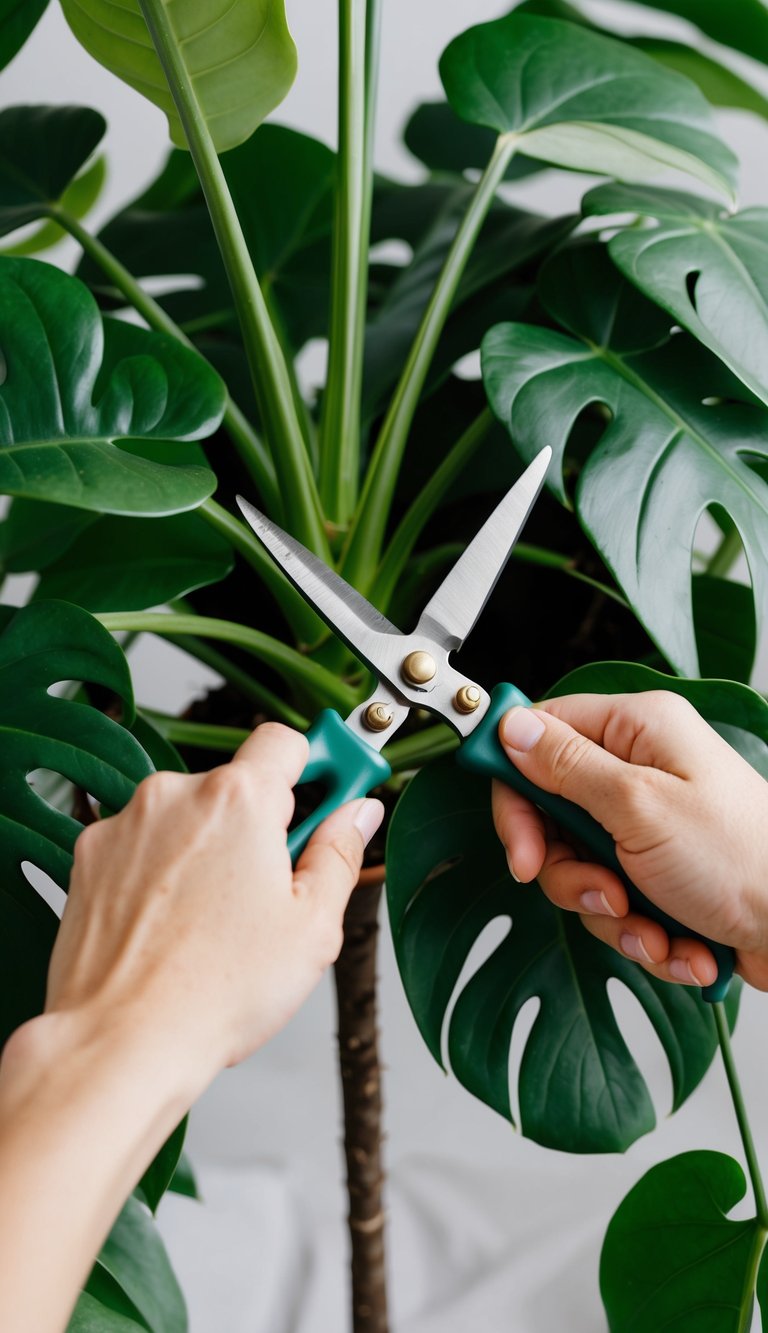
Use clean, sharp scissors or shears to make cuts. This helps prevent any damage or infection. Cut just above a node, which is the small bump on the stem. New growth will sprout from that point.
Pruning can be done any time of the year, but spring is a great time. The plant is waking up from its winter rest and is ready to grow. Regular attention will make a big difference in its appearance.
She can also remove any dead or yellowing leaves. This not only helps the plant look better but also allows it to focus energy on healthy growth. Pruning can be fun and rewarding!
Don’t be afraid to trim back more than you think is needed. A good haircut can lead to a fuller, bushier plant. Happy pruning!
4) Use Well-Draining Soil
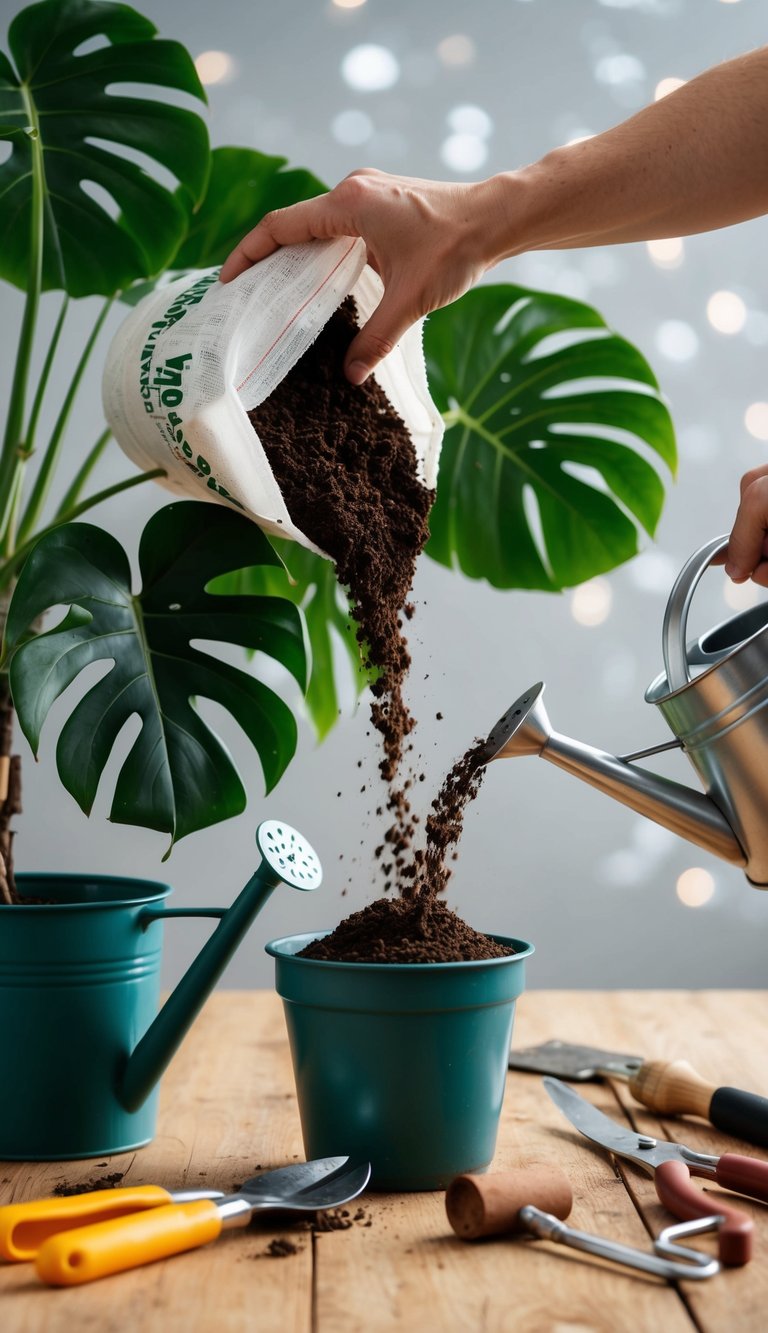
Using well-draining soil is important for a healthy Monstera. This type of soil helps prevent water from pooling around the roots. When roots sit in water, they can rot, leading to leggy growth.
A good mix for Monstera includes potting soil, perlite, and orchid bark. This combination allows for airflow and drainage. It helps the plant stay hydrated without becoming waterlogged.
They should check the soil regularly. If it feels too compact or soggy, it might be time to repot. Fresh soil can make a big difference for leggy plants.
Adding a layer of gravel at the bottom of the pot helps with drainage, too. This provides extra support for healthy root growth. It keeps the roots from sitting in excess moisture.
Using well-draining soil sets the stage for stronger, fuller growth. It encourages the Monstera to grow wide and lush rather than tall and spindly. A little effort in soil choice can lead to a big improvement in appearance.
5) Fertilize Sparingly
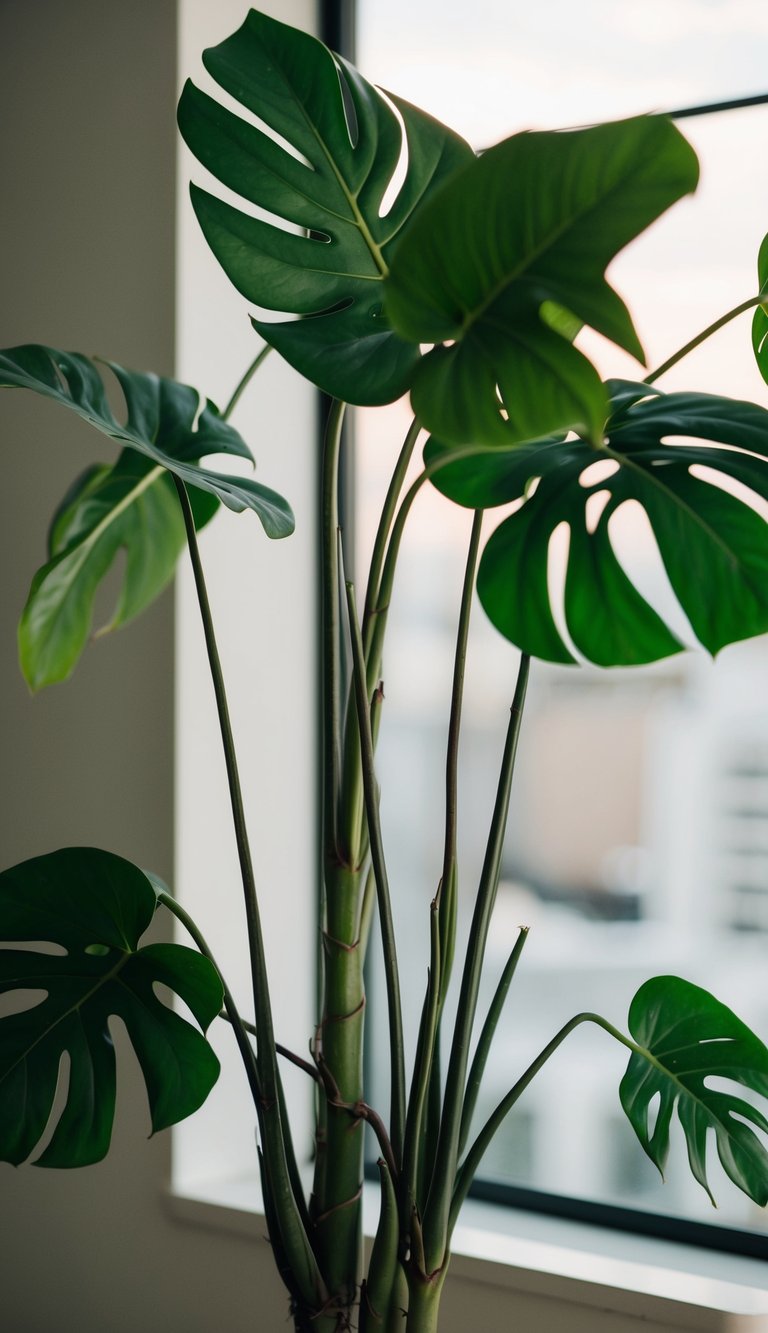
Fertilizing is essential for Monstera plants, but it needs to be done carefully. Too much fertilizer can lead to leggy growth. This happens because the plant focuses on leaf production instead of strong roots and stems.
It is best to use a balanced, water-soluble fertilizer. A diluted solution is a smart choice. She should aim to fertilize once a month during the growing season, which is spring and summer.
In the fall and winter, the plant usually needs less. Stopping fertilizer during these months allows it to rest. This helps the Monstera recharge and prepare for the next growth period.
Observing the plant is key. If the leaves start to look yellow or have brown tips, it might be getting too much fertilizer. Reducing the frequency can help restore balance.
With careful fertilization, the Monstera can thrive. This will encourage strong stems and fuller growth. A healthy Monstera will look vibrant and beautiful. That’s the goal!
6) Provide Adequate Humidity
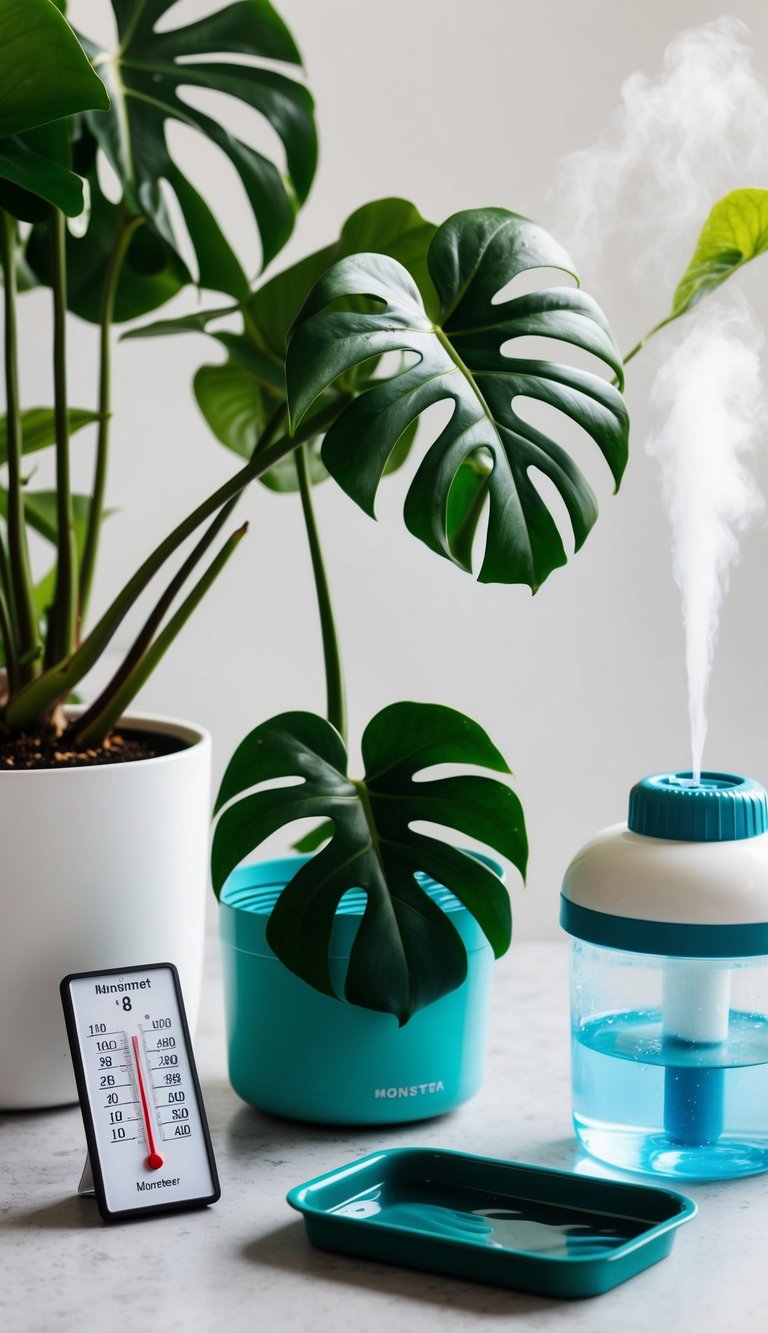
Monstera plants love humidity! They thrive in environments that are moist and humid. Low humidity can lead to leggy growth as the plant stretches for more moisture.
To keep humidity levels high, she can use a humidity tray. This involves placing pebbles in a shallow tray filled with water. When the water evaporates, it adds moisture to the air around the plant.
Misting the leaves with water is another simple trick. Regular misting can boost humidity without much effort. Just be careful not to overdo it. Wet leaves can invite problems like mold.
Using a humidifier can help too! A small humidifier near the Monstera can create a perfect tropical environment. This works especially well during dry winter months.
Grouping plants together can also raise humidity levels. When plants are close, they create a microclimate. This can help keep both plants happy and healthy.
She can also choose to grow her Monstera in a bathroom or kitchen. These areas often have higher humidity from steam and cooking. It’s a great way to keep the plant thriving!
By ensuring her Monstera gets enough humidity, she can enjoy a lush and beautiful plant. It will grow strong, vibrant leaves and minimize that leggy look!
7) Rotate Your Plant
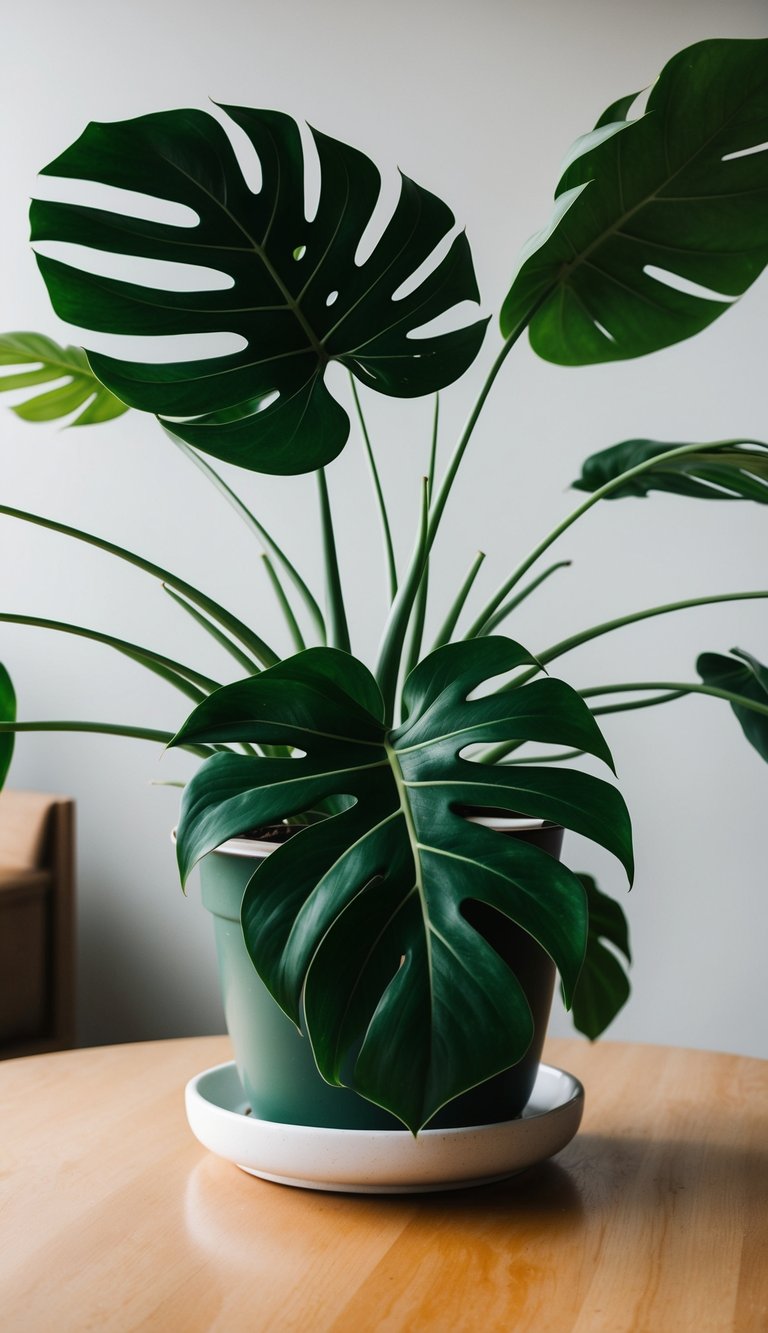
Rotating the Monstera is a simple way to improve its growth. Plants naturally lean toward sunlight. By turning the pot, they can get even light from all sides.
This practice helps the leaves grow evenly. If they only face one direction, they can become leggy. Rotating the plant encourages fuller, bushier growth.
It’s best to rotate the Monstera every week or two. This keeps the growth balanced. A little turn can make a big difference in how the plant looks.
When rotating, do it gently to avoid stressing the roots. Find a spot for the plant that receives bright, indirect light. This will help it thrive even more.
Regular rotation can also prevent pests and disease. A healthy plant is less prone to these issues. With even growth, it can focus energy on producing beautiful leaves.
So, grab that pot and give it a little spin! Your Monstera will thank you with fuller, healthier growth.
8) Use a Moss Pole
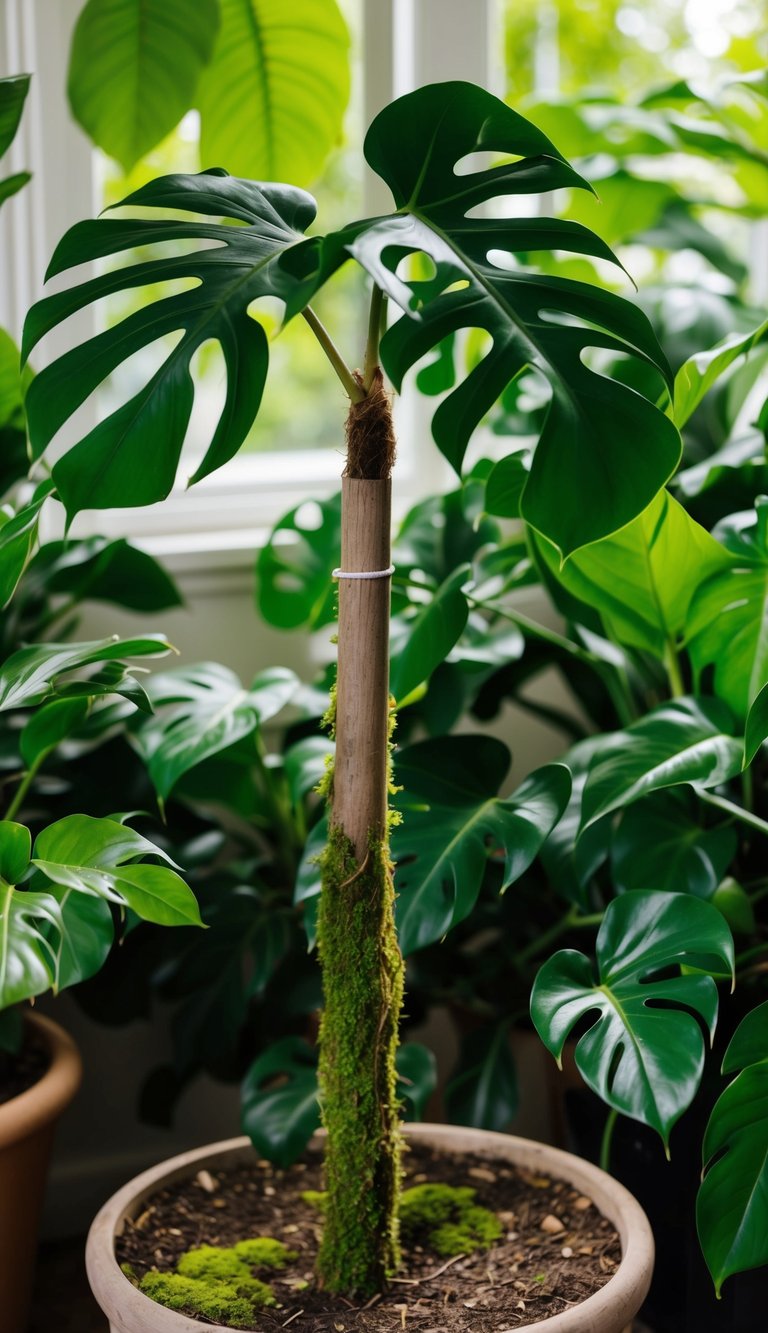
A moss pole is a great tool for helping a Monstera grow straight and strong. This support allows the plant to climb and encourages its natural growth pattern.
Using a moss pole can reduce leggy growth. The Monstera will cling to the pole, and this can help it become bushier.
To set up a moss pole, simply push it into the pot’s soil. Make sure it reaches the base of the plant. For extra support, tie the Monstera stems to the pole with soft plant ties or string.
Moss poles are usually made from coco coir or sphagnum moss. These materials can retain moisture, which helps the roots absorb water as they climb.
Placing the pole near a light source is important. The more light the plant gets, the better it will grow.
Regularly misting the moss pole can also boost humidity. This can create a friendly environment for the Monstera as it grows.
A moss pole not only supports the plant but also makes it look stunning. It adds a natural and tropical vibe to any space.
Try adding a moss pole to your Monstera care routine. It can make a big difference in how your plant grows!
9) Inspect for Pests
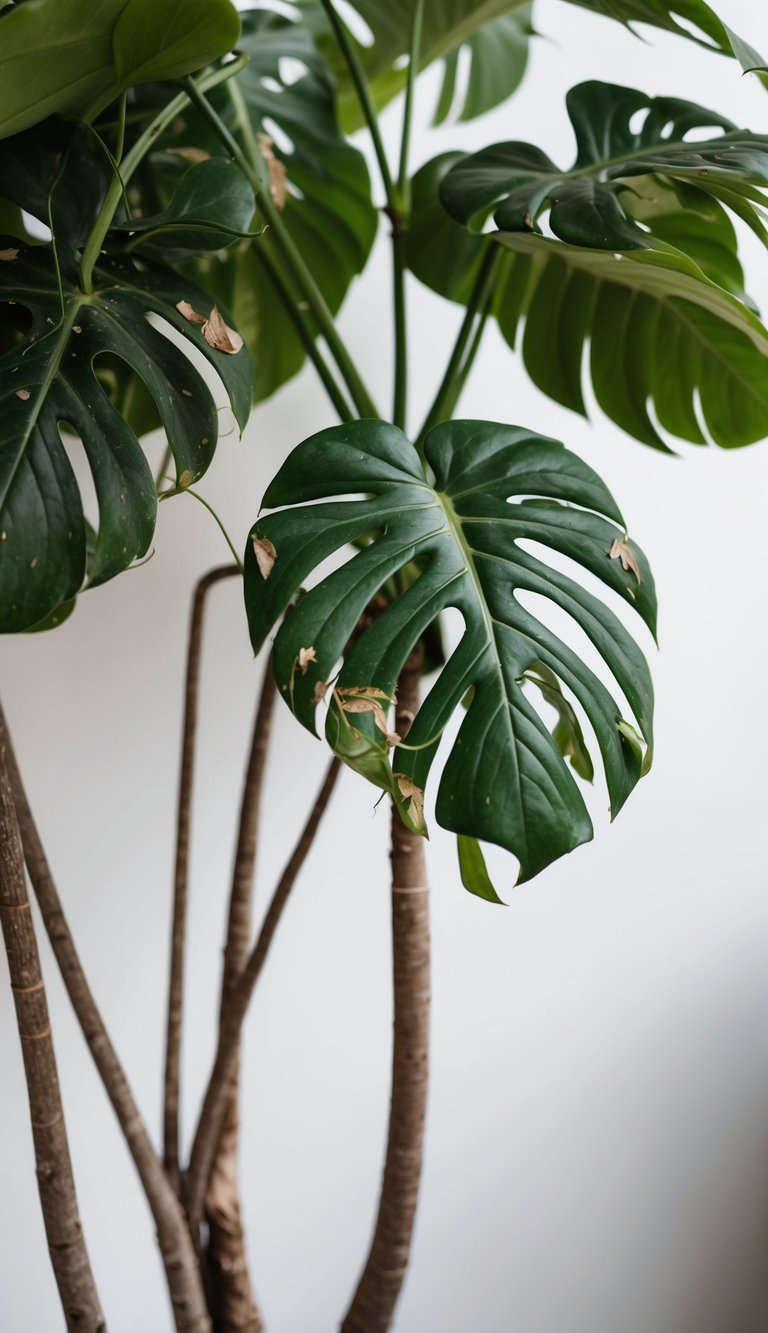
Checking for pests is an important step in keeping a Monstera healthy. Pests can cause leggy growth by sucking nutrients from the plant.
Start by examining the leaves. Look for tiny spots, webbing, or sticky residue. These can be signs of pests like spider mites or aphids.
Next, check the stems and undersides of the leaves. This is where pests often hide. They can be hard to see, so take your time.
If any pests are found, act quickly. A gentle spray of water can sometimes dislodge them. For more serious infestations, using insecticidal soap may be necessary.
Regularly inspecting the plant will help catch any pests early. This keeps the Monstera strong and thriving.
Happy pest-checking! Keeping plants pest-free leads to better growth and healthier leaves.
10) Ensure Pot Size is Correct
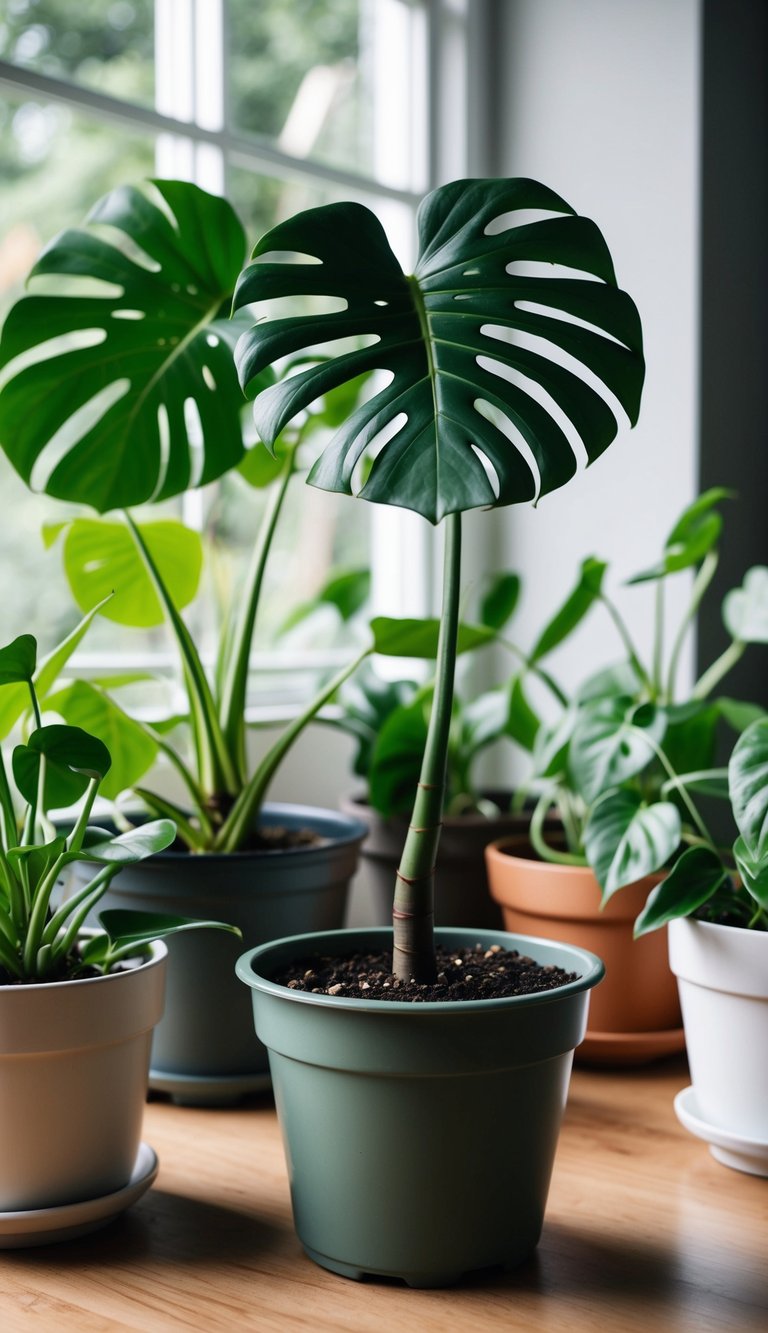
Choosing the right pot size is key for a healthy Monstera. If the pot is too small, the roots can get cramped. This leads to leggy growth as the plant struggles for space.
On the other hand, a pot that is too large can hold too much moisture. This can cause root rot, which is harmful to the plant. Finding the right balance is important.
Most Monsteras thrive in pots that allow a bit of room for growth. A pot that is 1-2 inches larger in diameter than the current root ball is a good rule of thumb. This gives the roots space to spread without overwhelming the plant.
Repotting every couple of years can help too. This refreshes the soil and gives the plant a boost. It’s a chance to check the roots and ensure they are healthy.
Always use good potting soil mixed with drainage materials. This helps the water flow and keeps the roots happy. With the right pot size, Monsteras can grow strong and lush!
11) Clean the Leaves
Keeping the leaves of a Monstera clean is important for healthy growth. Dust and dirt can block sunlight, making it hard for the plant to thrive.
Using a damp cloth, gently wipe the leaves. This helps remove any buildup that can harm the plant. A clean leaf can soak up more light and nutrients.
For larger plants, a soft sponge or a gentle spray can work well. Be careful not to damage the leaves while cleaning.
Cleaning the leaves also helps prevent pests. A clean plant is less likely to attract unwanted bugs. It’s a simple step that can make a big difference.
Make sure to clean the leaves every few weeks. Regular care keeps the plant looking its best. A happy Monstera can grow strong and vibrant.
Understanding Leggy Growth in Monstera
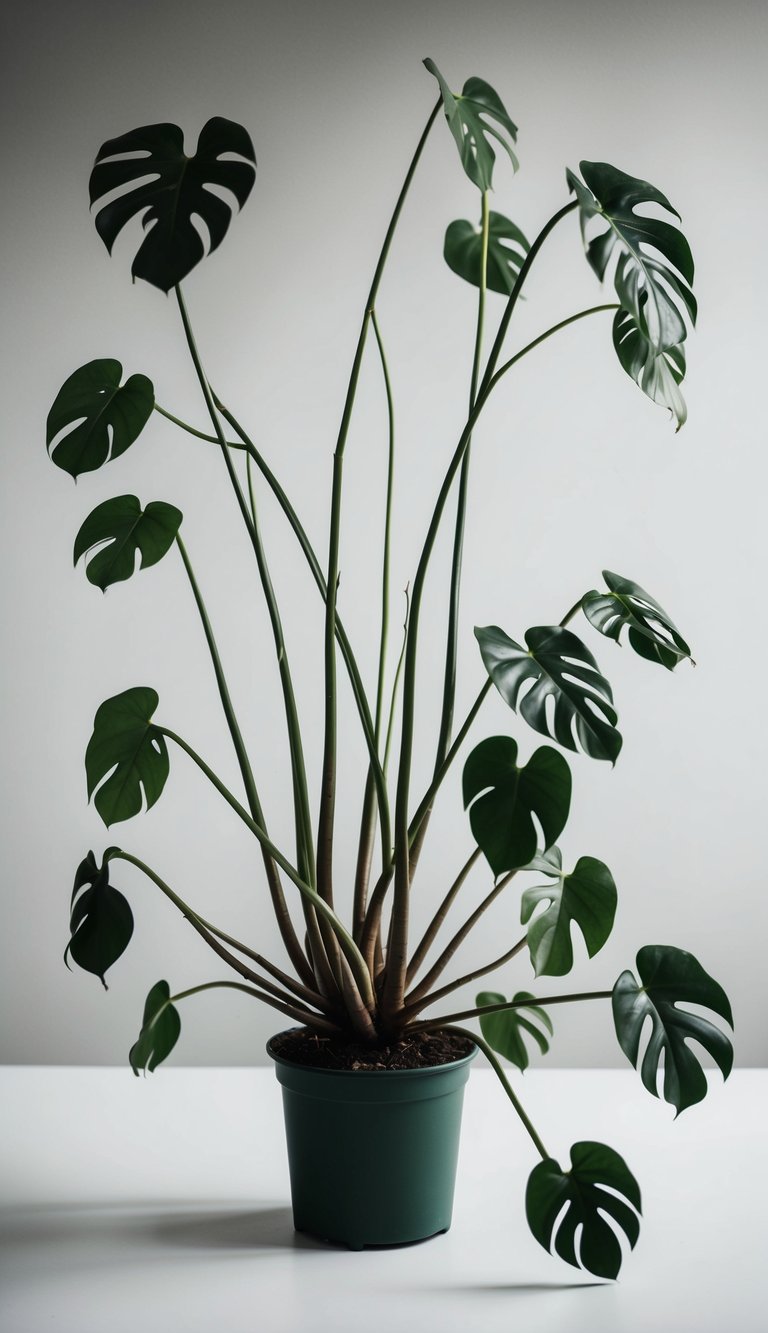
Leggy growth in Monstera is something every plant owner should recognize. It often affects the plant’s overall beauty and health. This section covers what leggy growth means and what causes it, highlighting key factors that can help improve plant care.
What Is Leggy Growth?
Leggy growth is when a plant grows tall and spindly, resulting in long gaps between leaves. For Monstera, this often means that the plant looks unbalanced and less attractive. Instead of a full, bushy appearance, the plant stretches upward.
This can be frustrating for owners who want their Monstera to look lush. When a Monstera has leggy growth, it may indicate a lack of light or inappropriate care steps. Monitoring growth patterns helps in identifying when a plant needs extra attention.
Causes of Leggy Growth
Several factors lead to leggy growth in Monstera. One major cause is inadequate light. If a Monstera does not get enough natural sunlight, it will stretch towards the light source, becoming leggy.
Another cause can be insufficient pruning. Regular pruning encourages fuller growth. Without it, the Monstera may continue to grow tall and thin.
Overwatering is also a concern. When roots sit in water for too long, they become weak, and the plant’s growth suffers. Lastly, nutrient deficiencies can lead to leggy growth. A well-fed Monstera will thrive rather than stretch aimlessly. Proper lighting, watering, and nutrient supply can help restore a healthy, balanced look to your Monstera.
Optimal Lighting for Monstera
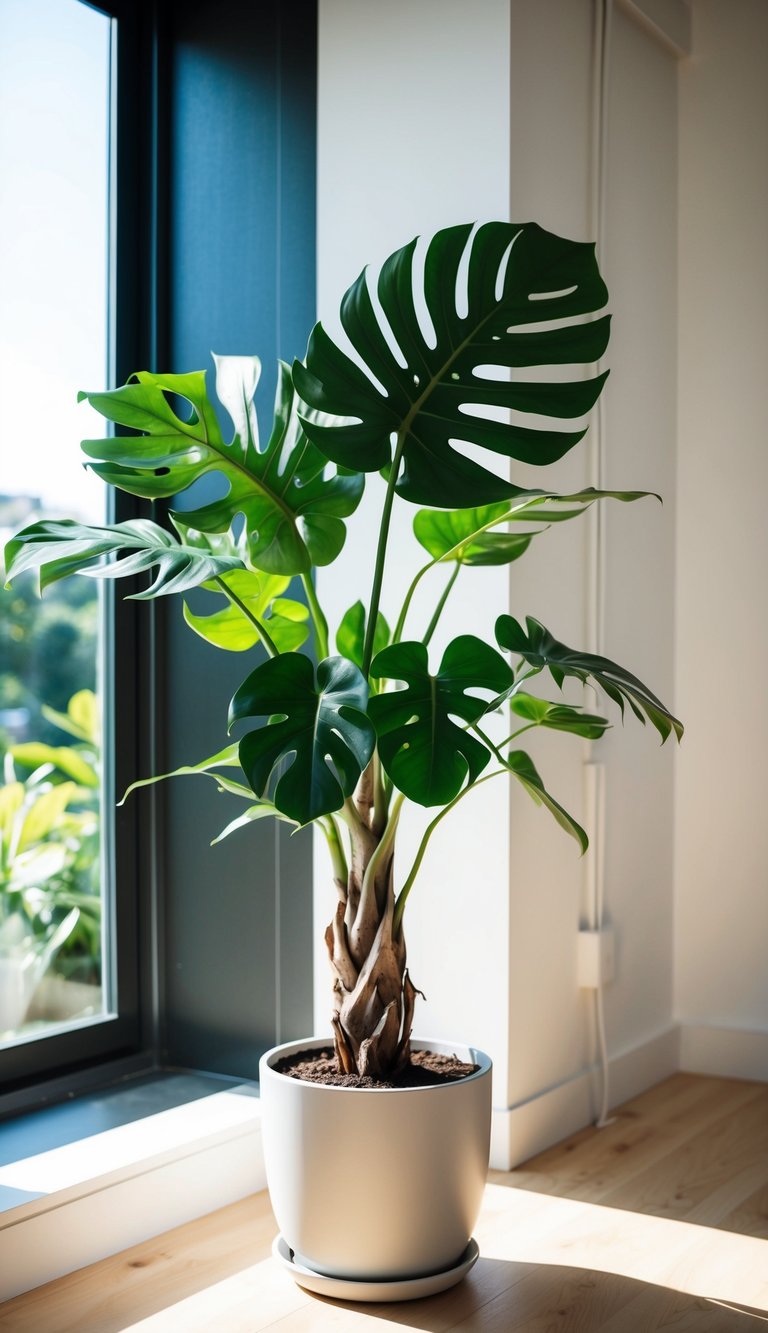
Proper lighting is crucial for the health and appearance of a Monstera plant. The right amount and type of light can help reduce leggy growth and promote lush, vibrant leaves.
Importance of Light
Light is vital for photosynthesis, the process plants use to create energy. When a Monstera receives enough light, it can grow strong and healthy. Without adequate lighting, the plant may stretch towards the light source, causing leggy growth.
A weak plant may struggle to produce large leaves and may also become more susceptible to pests and diseases. It’s essential to understand how light affects the growth and overall health of a Monstera to keep it thriving.
Best Light Conditions
Monsteras enjoy bright, indirect light. This means they thrive in a space where they receive lots of light, but it isn’t directly shining on them. Ideal locations may include near a window with sheer curtains or a spot that gets filtered light.
The following light conditions are beneficial:
- Bright, Indirect Light: Perfect for healthy growth.
- Low Light: Can survive but may grow slowly and become leggy.
- Direct Sunlight: Can lead to leaf burn and damage.
Adjusting the plant’s location based on the light it receives can make a big difference. Regularly checking the plant’s health will guide adjustments in its environment.
Proper Watering Techniques
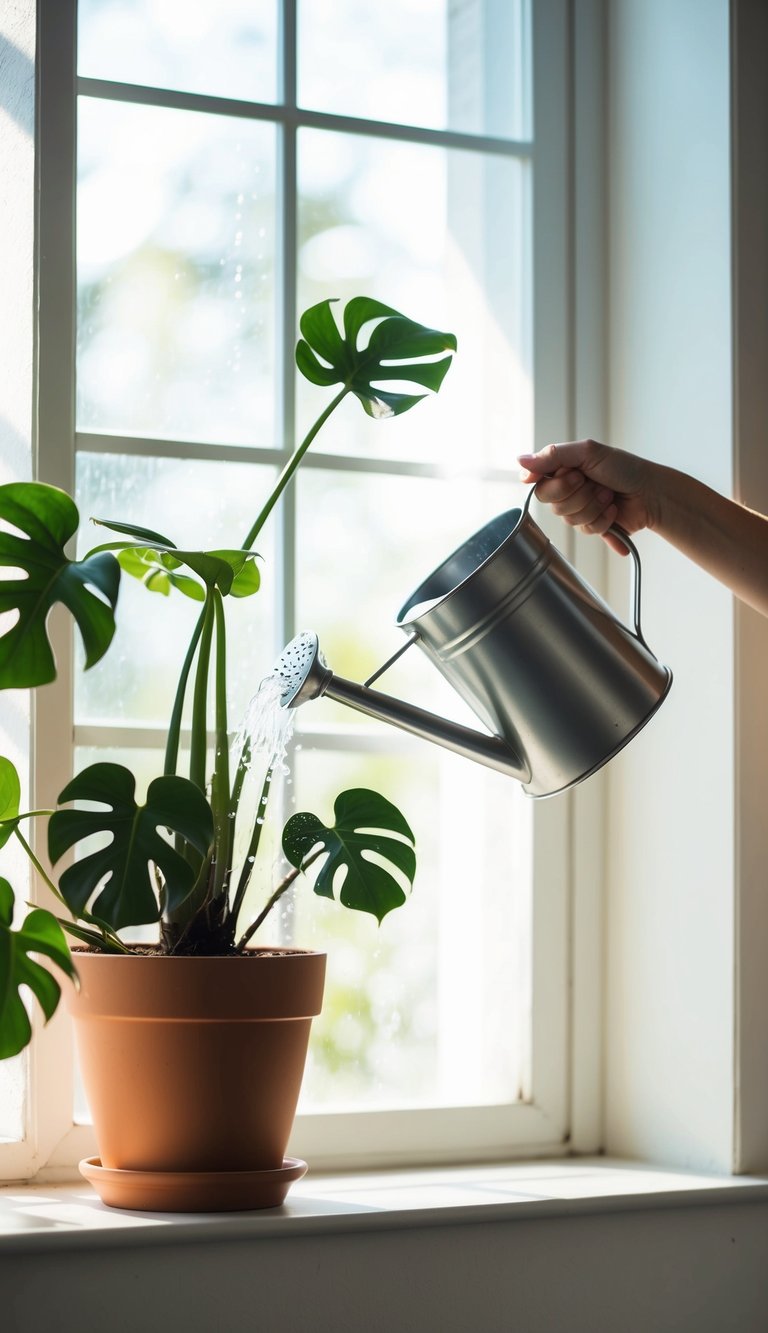
Watering correctly is key for a healthy Monstera. When done right, it can prevent leggy growth and promote strong development. Here are important aspects to keep in mind.
Watering Frequency
Monstera plants need consistent watering to thrive. The frequency depends on several factors like temperature, humidity, and pot size. A good rule is to check the top inch of soil.
- If it’s dry, it’s time to water.
- In warmer months, watering may be needed every 1-2 weeks.
- In cooler months, wait longer before watering.
Always ensure that excess water can drain out to avoid root problems. Using a pot with drainage holes is essential. It’s best to water thoroughly but not too often to keep the roots happy!
Signs of Overwatering
Overwatering can lead to serious issues. Root rot can happen when soil stays soggy for too long. Here are some signs to watch for:
- Yellowing Leaves: This often indicates too much water.
- Wilting: While this can mean dryness, it can also signal overwatering if the soil is still wet.
- Mushy Roots: If you check the roots and find them soft, it’s a sign of overwatering.
Adjusting the watering schedule can help. Allow the soil to dry out more between waterings if these signs appear. This helps keep the plant healthy and strong.