Bringing a Monstera into the home is an exciting adventure for plant lovers. Caring for a newly purchased Monstera is essential to help it thrive and grow beautifully. With the right tips and attention, anyone can keep this popular houseplant in great shape.
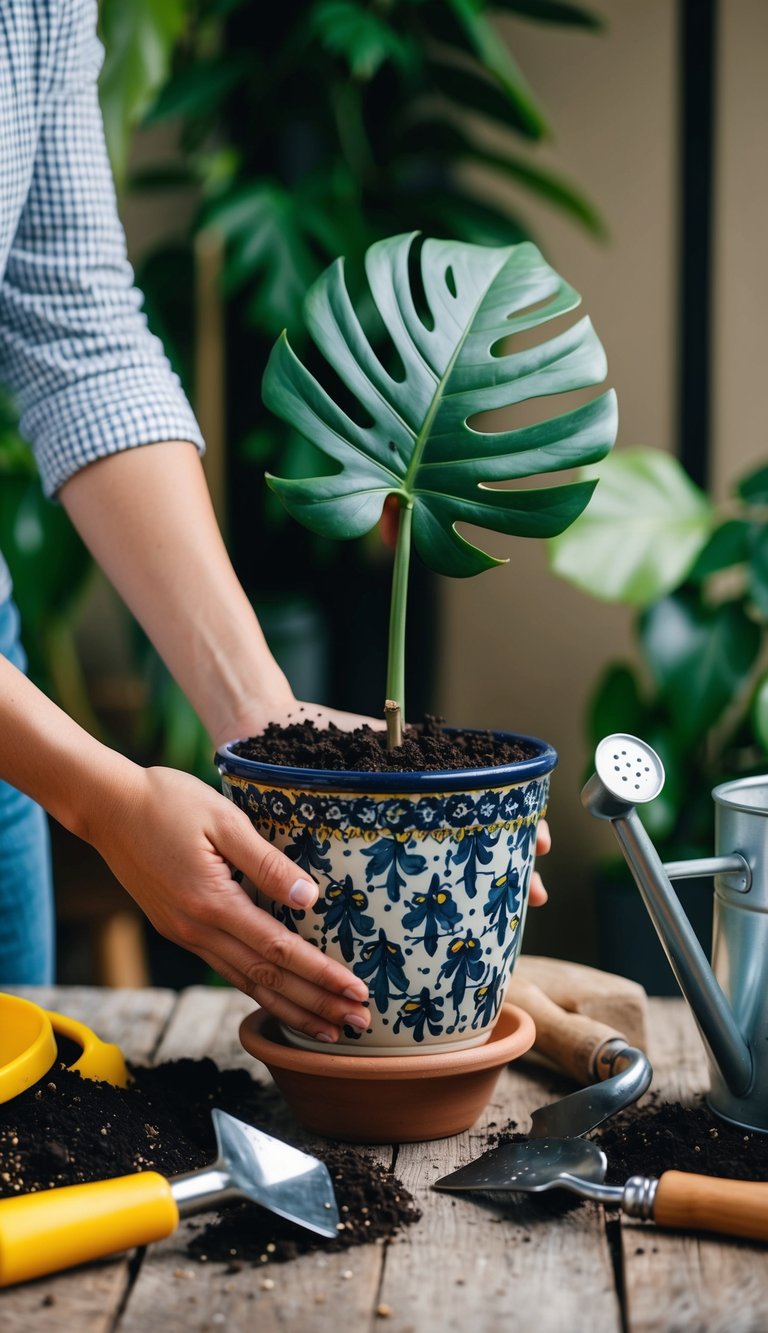
These tropical plants can transform any space with their large, unique leaves. Knowing how to nurture a Monstera ensures it stays healthy while adding to the home’s decor.
1) Water when soil is dry
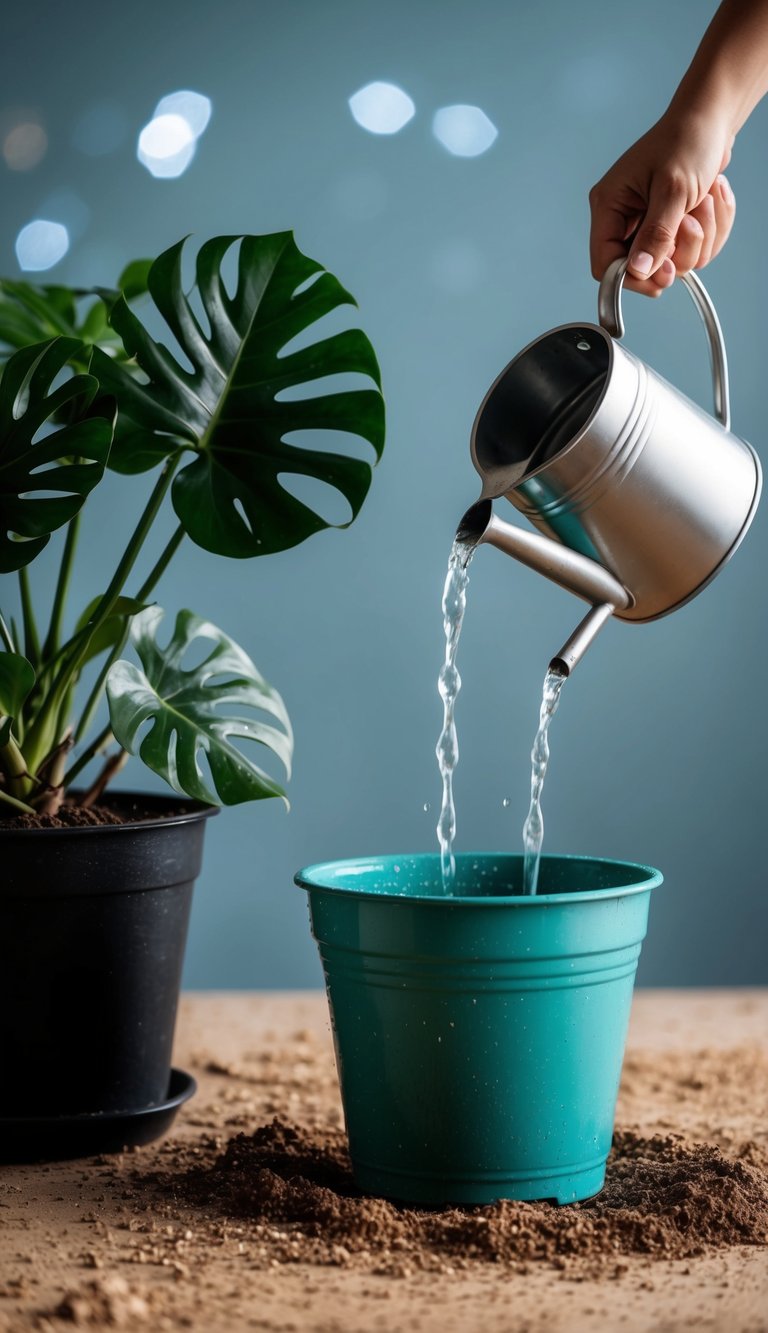
Watering a Monstera is important for its health. This plant likes to be watered when the top inch of soil feels dry.
Checking the soil regularly will help. If it feels dry, it’s time to give it a drink. If the soil is still damp, wait a few more days before watering again.
Overwatering can be harmful. Too much water can cause root rot, which can kill the plant. This is why it’s key to check the soil first.
When watering, make sure to do it evenly. Pour water gently until it starts to drain from the bottom. This helps the roots soak up what they need.
In bright light, a Monstera may need more water. In low light, it may need less. Adjust watering based on the plant’s environment.
Using room temperature water is best. Cold water can shock the plant, so warm it a bit before watering.
Paying attention to the soil helps keep a Monstera happy. Healthy plants are rewarding to care for and will thrive with proper watering.
Indirect sunlight
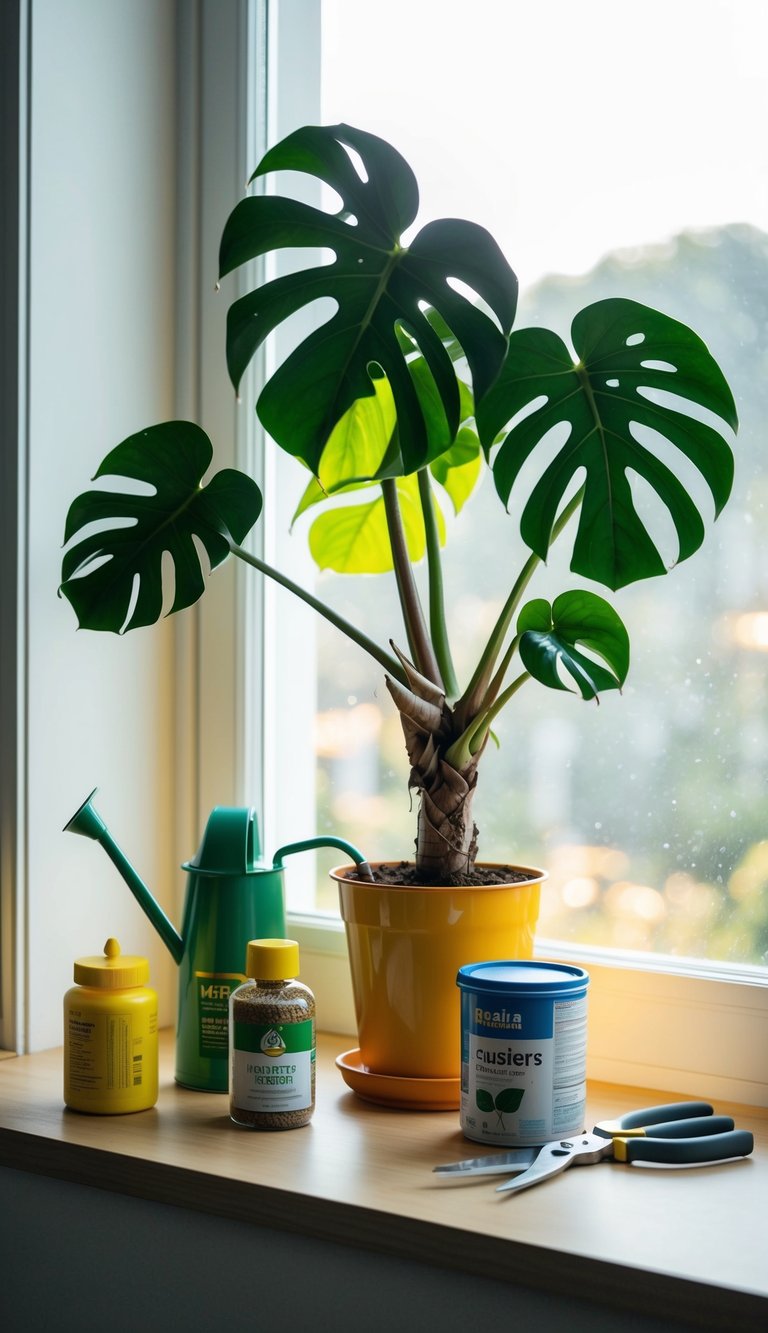
Monstera plants love light, but not too much direct sun. Bright, indirect sunlight is the best for them. This helps the leaves grow big and healthy.
Place the plant near a window where it can enjoy filtered light. A sheer curtain can help soften the sun’s rays. If the light is too harsh, the leaves may scorch.
If the plant is too far from the light, it might grow slowly. They can still survive in lower light, but they will not thrive. It’s all about finding that perfect spot.
Rotating the plant every few weeks can help it grow evenly. This way, all sides receive equal light. That helps prevent the plant from leaning to one side.
Pay attention to the leaves. If they start to turn yellow, it could mean it’s getting too much light. Dark spots can also appear from too much sun exposure.
Finding the right balance of indirect sunlight can make any Monstera flourish. With the right amount of light, it will grow strong and vibrant. A happy Monstera makes for a happy plant owner!
3) Use well-draining soil
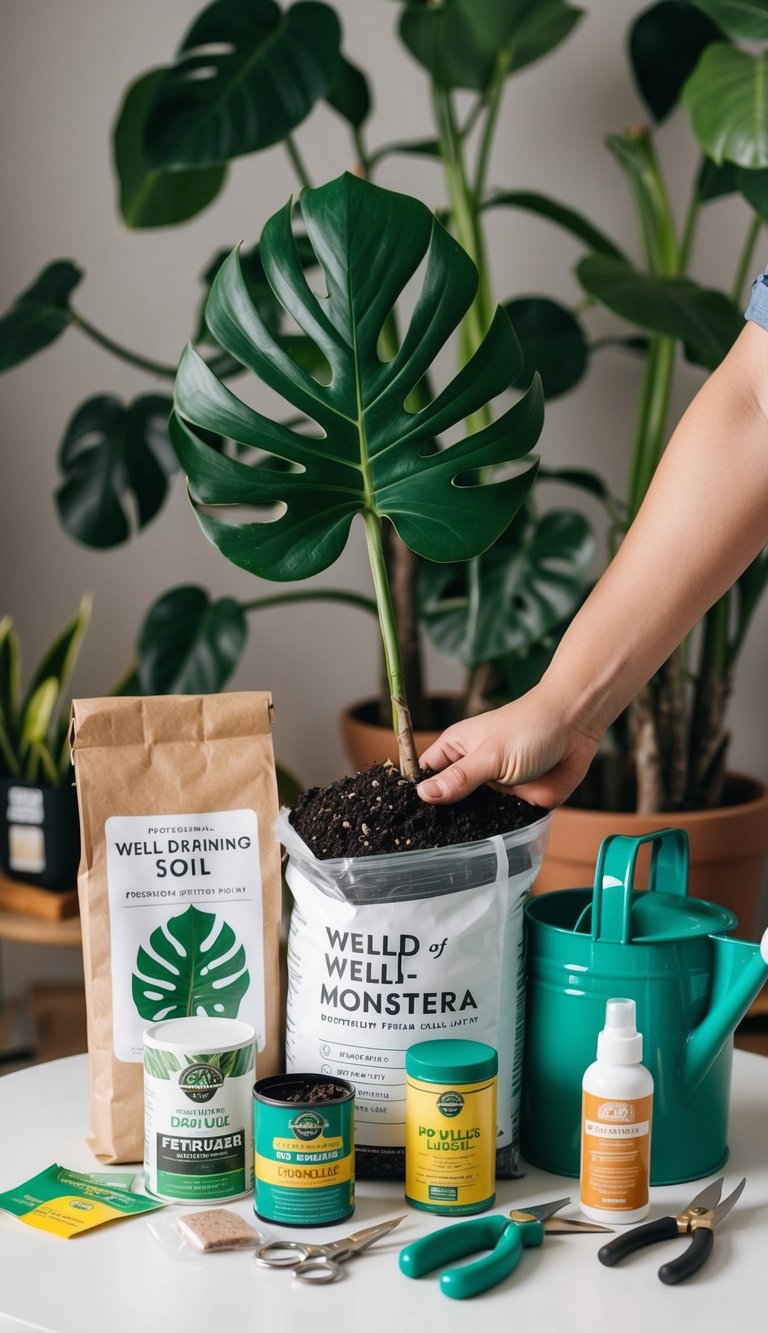
Choosing the right soil is key to keeping a Monstera healthy. Well-draining soil allows water to flow through easily. This prevents the roots from sitting in water, which can cause rot.
A mix designed for indoor plants works well. Many gardeners use a combinations of potting soil, perlite, and orchid bark. These ingredients create air pockets that help with drainage.
When planting, make sure the pot has drainage holes. This helps excess water escape. Without good drainage, the plant can struggle to grow.
If the soil holds too much water, roots may not get the oxygen they need. This could lead to yellowing leaves or stunted growth. To avoid this, check the soil type before planting.
Repotting may be necessary over time. This allows for fresh soil and better growing conditions. Always look for soil that says “well-draining” on the bag.
Taking these steps helps ensure the Monstera thrives! With the right soil, it will be ready to grow big and strong.
4) Fertilize monthly in growing season
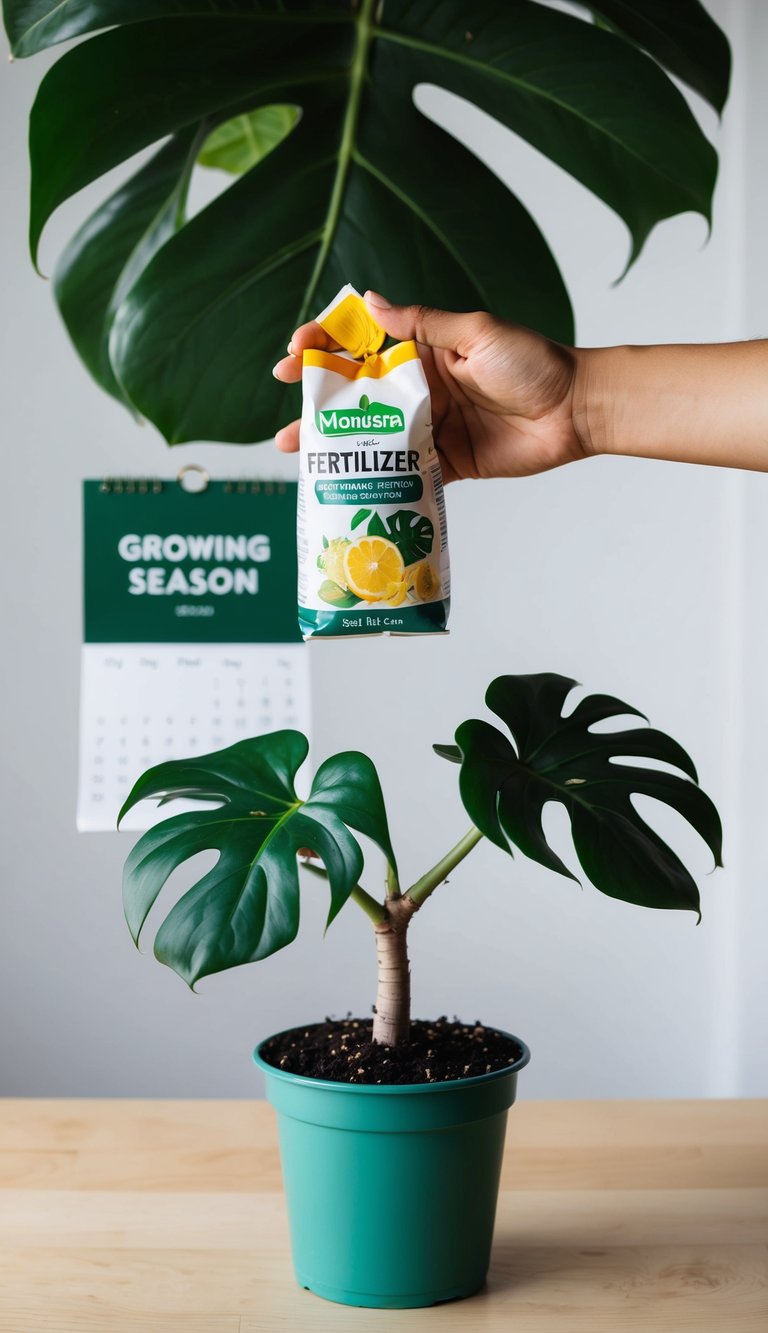
Fertilizing helps a Monstera grow strong and healthy. During the growing season, which is usually spring and summer, it’s time to give it extra care.
Using a balanced liquid fertilizer is a great choice. This type of fertilizer contains equal parts of nitrogen, phosphorus, and potassium. These nutrients support new growth and leaf development.
It’s important to follow the instructions on the label. Over-fertilizing can harm the plant. A little goes a long way!
She should fertilize once a month during the growing season. This routine provides the nutrients the plant needs to thrive.
Before fertilizing, he should make sure the soil is damp. Applying fertilizer to dry soil can cause root burn. A little water helps the roots soak up those nutrients!
As the fall and winter months approach, the plant’s growth slows down. She can reduce the frequency of fertilizing or stop altogether. This will help the plant rest.
Happy fertilizing will lead to a vibrant, beautiful Monstera! With the right care, it can become a stunning feature in any home.
5) Wipe leaves with a damp cloth
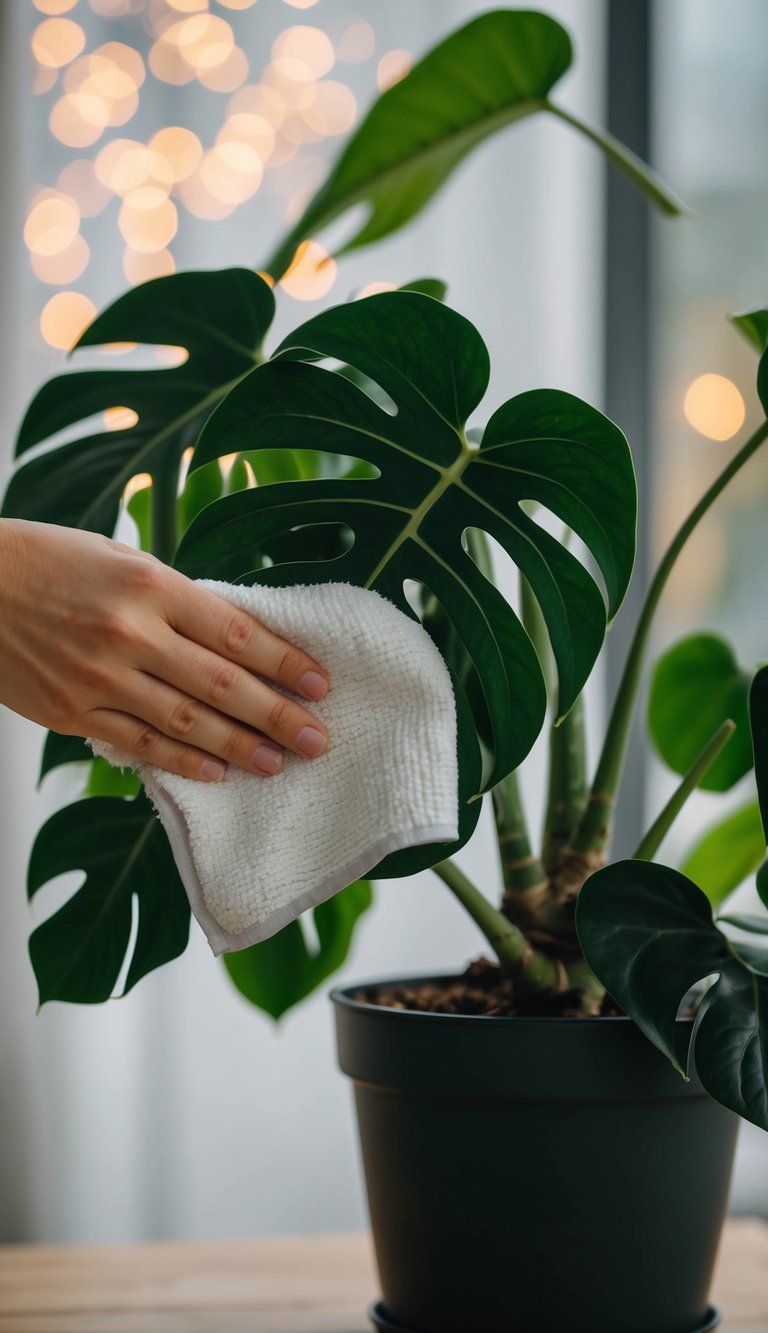
Keeping the leaves of a Monstera clean is very important. Dust can collect on the leaves, blocking sunlight. A clean leaf can absorb more light and stay healthy.
To wipe the leaves, she should use a soft cloth. A damp cloth works best. It removes dust and dirt without scratching the leaves.
Start at the top of the plant and work down. This way, the dirt won’t fall on the cleaned leaves. Gently wipe each leaf, making sure to get into the crevices.
She can do this every couple of weeks. This small task can make a big difference in the plant’s health. It’s also a good time to check for pests or any damage.
Using a damp cloth is easy and quick. A few minutes can keep the Monstera looking great. Plus, a shiny leaf is more attractive and shows care.
He might also consider using filtered water. This prevents spots from tap water. Keeping the leaves clean helps the plant thrive and keeps it looking beautiful.
6) Rotate the plant weekly
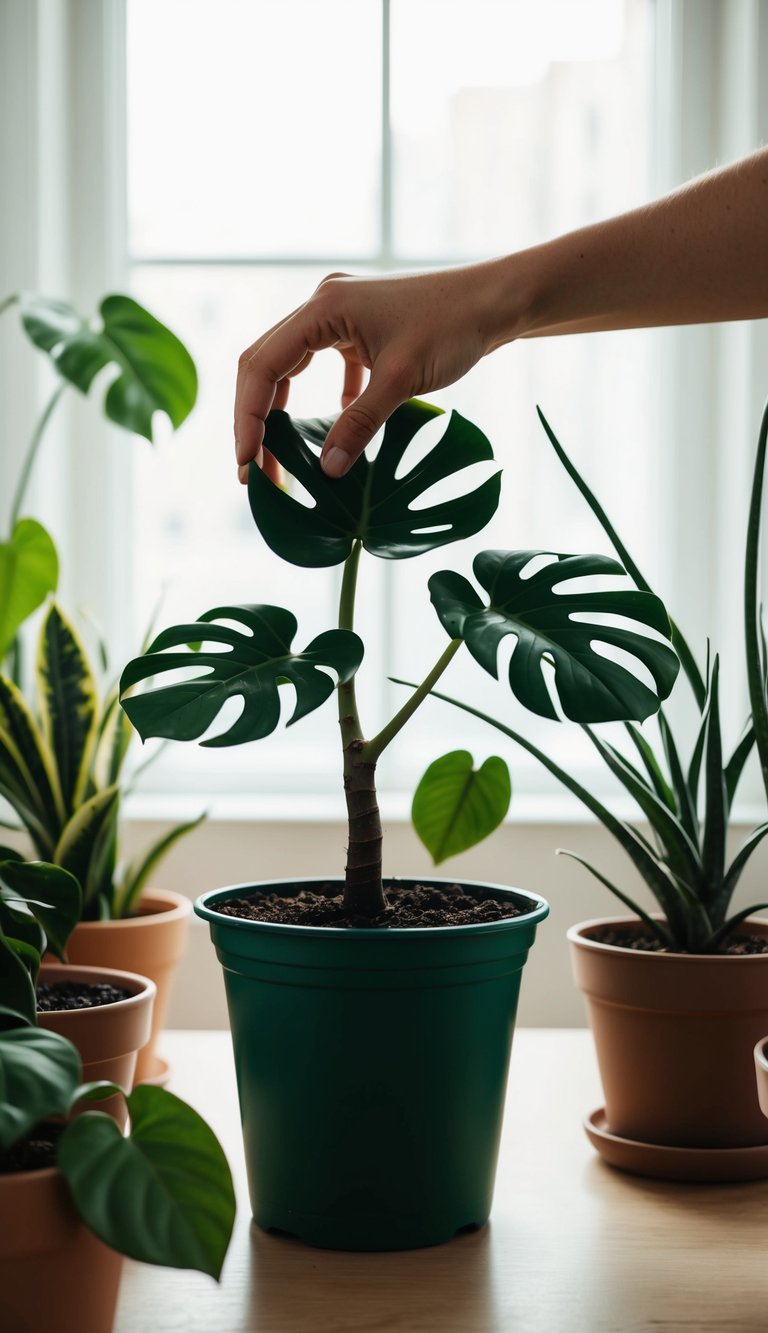
Rotating a Monstera weekly is a fun way to help the plant grow strong and healthy. These plants love light, and by turning them, they can get even sunlight from all angles.
When a Monstera receives more light on one side, the leaves may start to lean. Turning the pot will help keep it standing tall. It encourages balanced growth, making the plant look fuller and livelier.
She can easily track the rotation. Just choose a day of the week that works best. A quick spin every seven days can become a delightful part of her plant care routine.
Monitoring the plant after rotation is rewarding. She may notice fresh leaves growing everywhere. It’s exciting to see how a simple action can lead to some amazing results.
If using a decorative pot, be careful while turning it. Ensure the soil stays in place to avoid spills. A sturdy base can help prevent any accidents.
This practice also allows for regular checks. She can look for any signs of pests or disease. Routine care keeps the Monstera in top form and encourages it to thrive.
Support with a moss pole
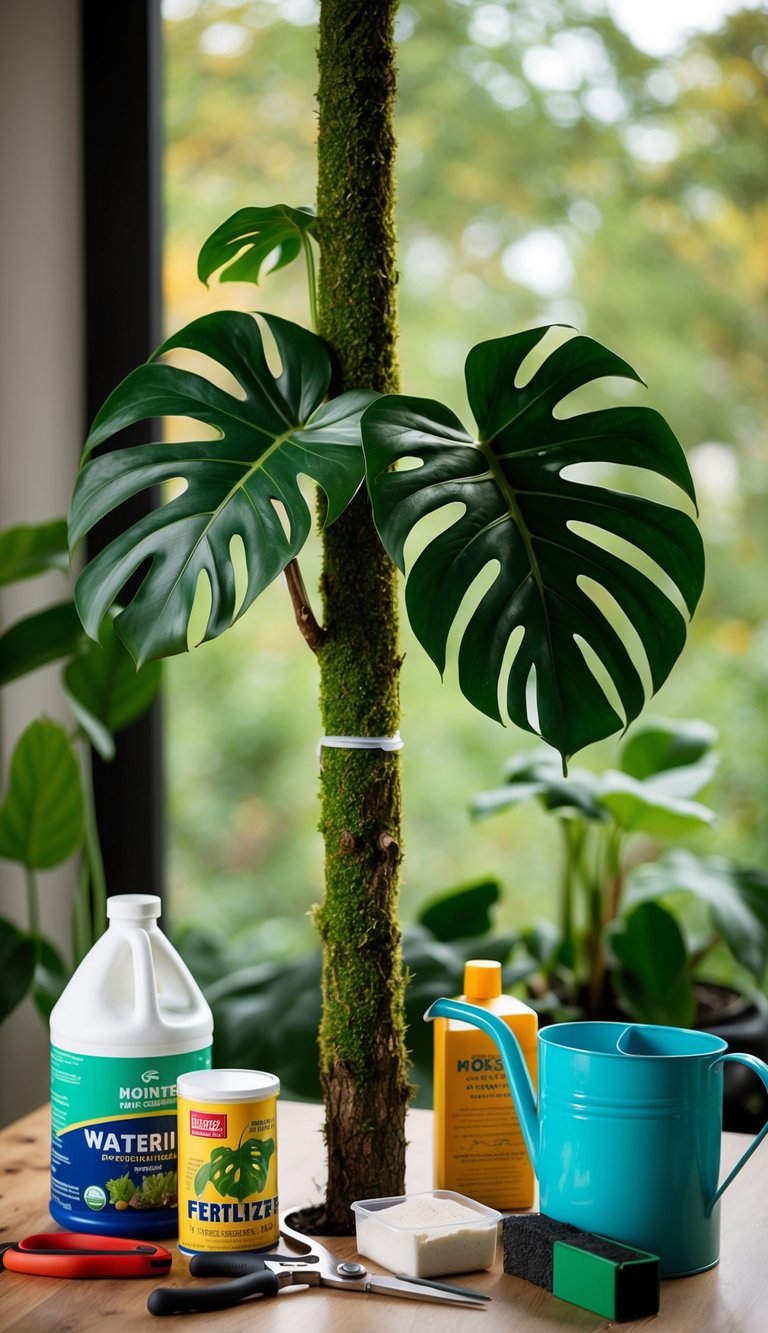
A moss pole is a great way to support a newly purchased Monstera. These plants naturally climb in the wild, so a moss pole helps mimic that environment.
Using a moss pole can encourage growth and help the plant stay upright. It provides a structure for the Monstera to attach to with aerial roots. This support keeps the leaves off the ground and allows them to bask in light.
To set up a moss pole, find a suitable size for the plant. A tall pole allows the plant to grow vertically. Secure the pole in the pot with the plant.
Wrap the aerial roots around the moss pole. This helps the plant connect and grow strong. It’s also good to mist the moss pole regularly to keep it damp. This will encourage the roots to cling to it.
As the Monstera grows, it may need more space. Adjust the support as needed to fit the height of the plant. A well-supported Monstera can thrive and create a beautiful display in any home.
8) Check for pests regularly
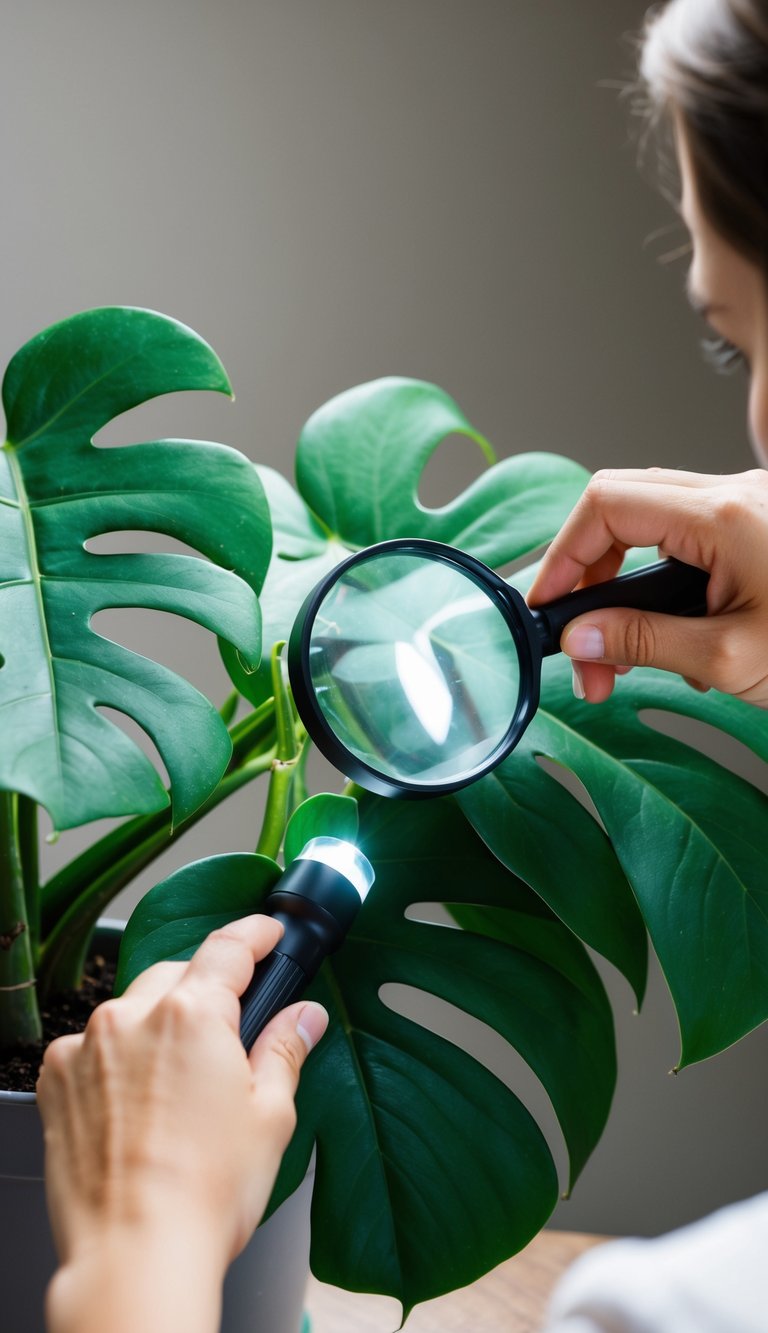
Checking for pests is an important part of taking care of a newly purchased Monstera. These plants can attract bugs like spider mites and aphids if not monitored.
It’s best to check the leaves, stems, and soil for any signs of pests. Small webs or sticky residue can mean trouble. Catching pests early makes treatment easier.
Regular checks can help keep the plant healthy and thriving. A quick look at the undersides of the leaves helps find hidden pests. If found, it’s important to act quickly.
Using a gentle spray of water can help remove some bugs. For more serious infestations, special insecticidal soap or neem oil may be needed. Always follow instructions carefully when treating the plant.
Keeping the environment clean around the plant also helps. Dust and debris can attract pests and hide them. A clean space means a happier Monstera!
She can make it a habit to check her plant weekly. This way, she can spot any issues before they become big problems. A little attention goes a long way in keeping her Monstera healthy and vibrant.
9) Repot every 1-2 years
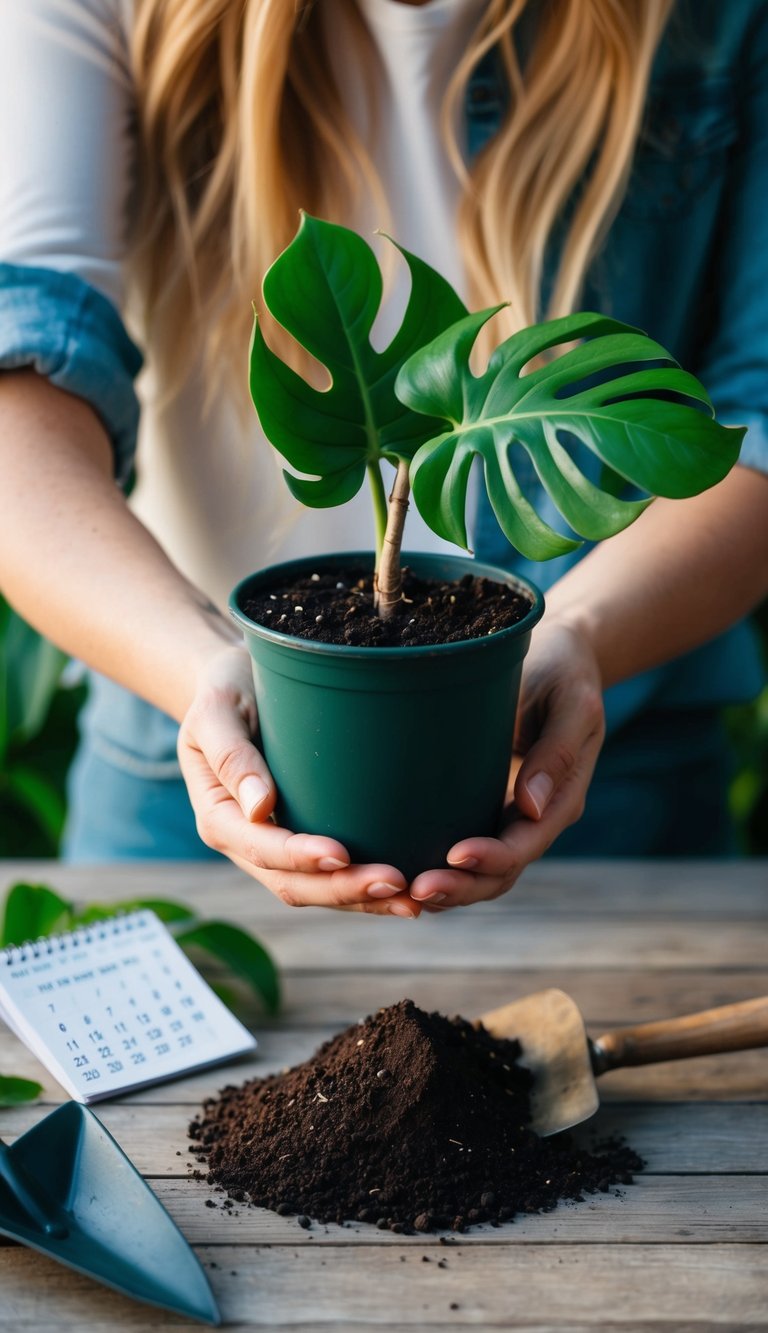
Repotting a Monstera is important for its growth. He or she should do this every 1 to 2 years. Fresh soil helps provide nutrients that the plant needs.
When a Monstera grows, its roots can become crowded. This can stop the plant from thriving. Repotting gives it room to spread its roots and keep growing strong.
Choose a pot that is slightly bigger than the old one. This gives the plant enough space for its roots to expand. Make sure the new pot has drainage holes.
Carefully remove the Monstera from its current pot. Gently shake off the old soil. Be careful with the roots; they can be delicate.
Add fresh potting mix to the new container. Place the plant in the middle and fill around it with soil. Press lightly to remove air pockets and keep the plant stable.
After repotting, water the Monstera well. This helps it settle into its new home. Keep an eye on it for a few weeks to see how it adjusts.
Repotting is like giving the Monstera a new adventure. It can grow even bigger and healthier in its new pot!
10) Maintain high humidity
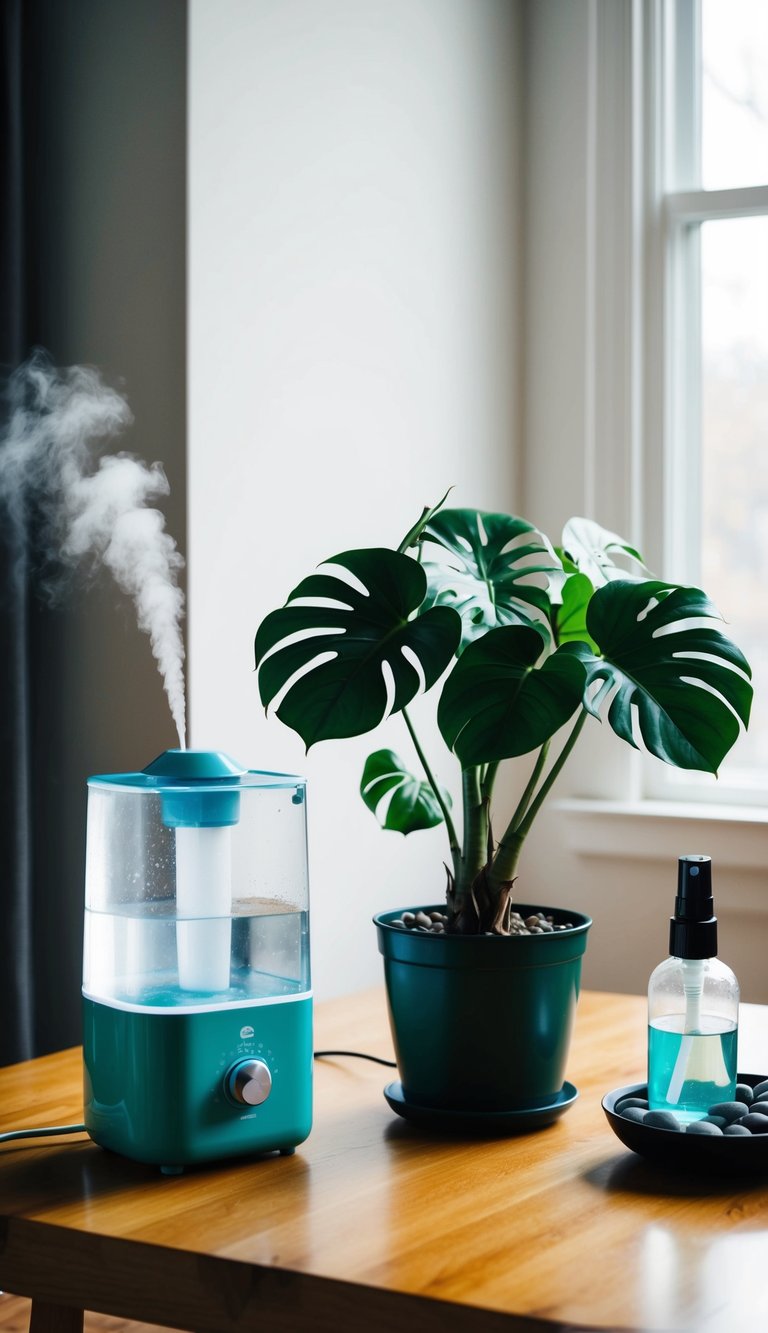
Monstera plants thrive in humid environments. They are native to tropical areas where humidity levels are high. Providing a similar setting helps them grow strong and healthy.
Using a humidifier is a great way to boost humidity. It can make the air moist, which the plant loves. Placing the Monstera in a bathroom or kitchen can also work well since these rooms usually have more humidity.
Another easy method is to mist the leaves regularly. This adds moisture and keeps the plant fresh. Just be careful not to overdo it, as too much water can lead to mold.
Grouping plants together can also increase humidity. When plants are near each other, they share moisture. This natural setup benefits all the plants involved.
Using pebble trays filled with water is another option. Place the pot on top of the tray, and as the water evaporates, it adds humidity around the plant.
She also recommends monitoring the humidity levels. A simple hygrometer can help track moisture in the air. Keeping the humidity around 60% or higher is ideal for a Monstera.
With the right humidity, a Monstera will flaunt its beautiful leaves and stay healthy. It’s an exciting way to watch the plant thrive and grow.
11) Prune yellow or damaged leaves
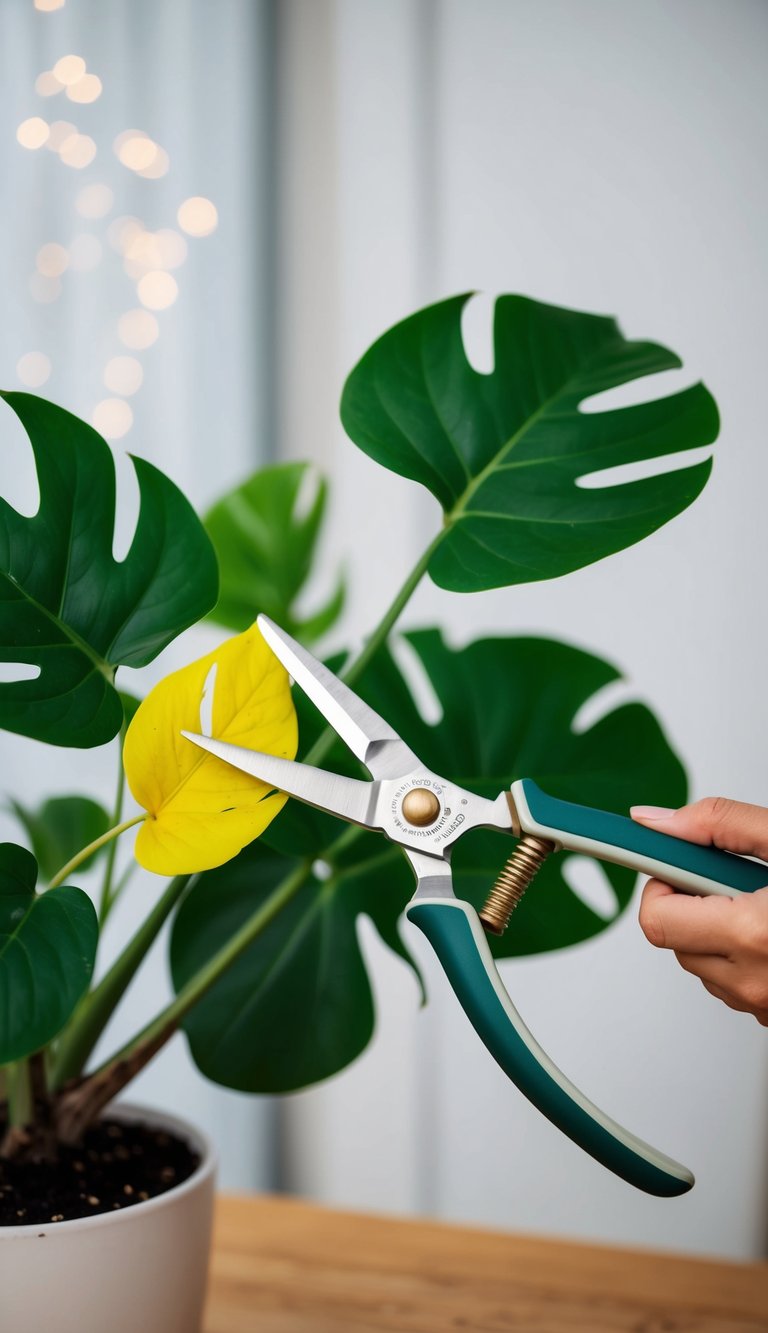
Pruning yellow or damaged leaves is an important part of caring for a Monstera. It helps the plant stay healthy and encourages new growth. When leaves turn yellow, it can mean they are not getting enough water or light.
To prune, use clean, sharp scissors or pruning shears. This helps prevent any damage to the plant. She or he should start by removing any leaves that look unhealthy. Cut the leaf stem close to the main stem of the plant.
It’s good to check for any brown or dry tips on leaves too. These can be signs of problems. Trimming these tips can improve the look of the plant. It also allows the plant to focus its energy on healthy leaves.
After pruning, make sure to monitor the plant. Water it as needed and ensure it gets enough light. The Monstera will appreciate the care and may grow even more beautiful.
Regularly checking for damaged leaves keeps the plant thriving. Even a little maintenance can make a big difference. With a little attention, the Monstera can become a stunning centerpiece in any home.
Creating the Perfect Environment
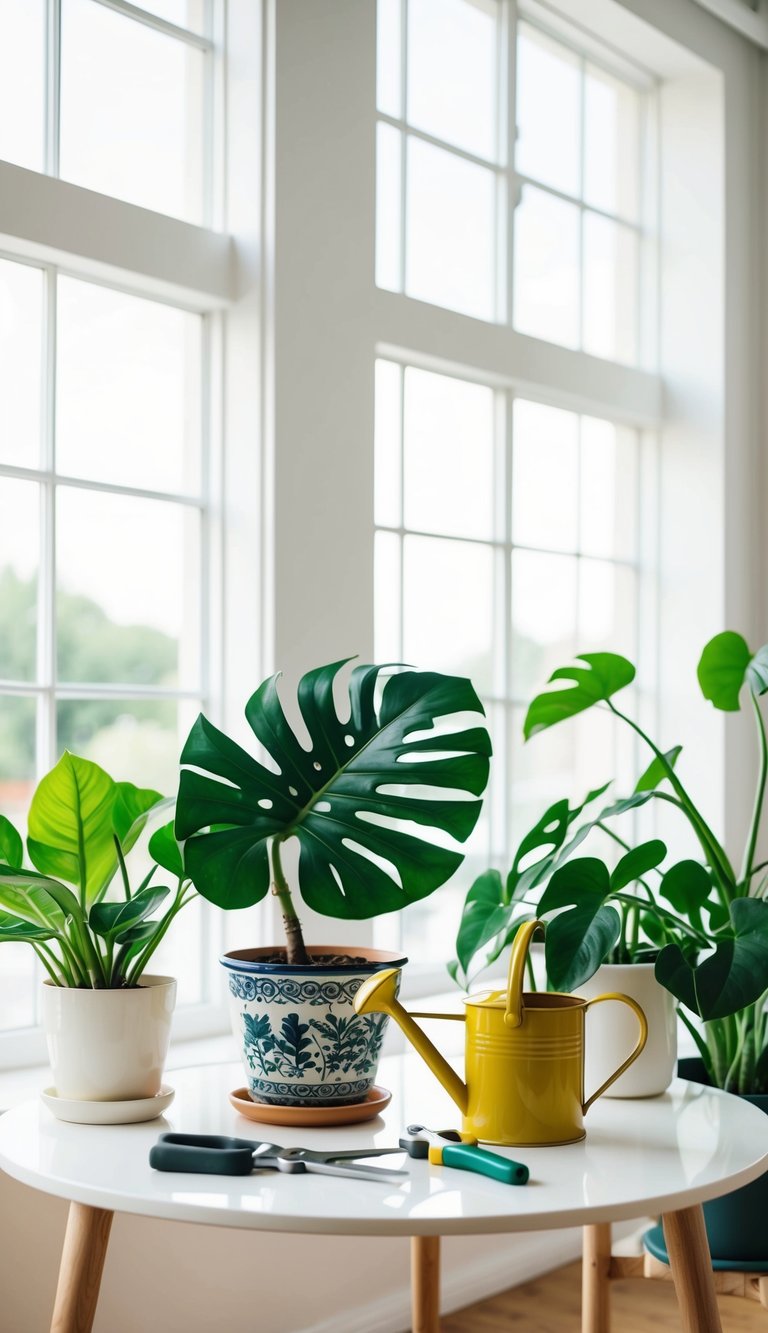
A newly purchased Monstera needs the right setting to thrive. This plant loves light, warmth, and specific soil. Here are key details to help create the best environment for a Monstera.
Ideal Light Levels
Monstera plants thrive in bright, indirect light. Placing a Monstera near a window with filtered sunlight is perfect. Too much direct sunlight can scorch the leaves. If the plant does not get enough light, it may grow slowly and develop smaller leaves.
Tip: If natural light is low, consider using grow lights. These can help provide the necessary brightness for healthy growth. Aim for 10 to 12 hours of light each day, adjusting based on the season.
Optimal Humidity and Temperature
Monstera plants enjoy higher humidity levels, around 60% or more. This helps keep the leaves lush and vibrant. She can increase humidity by misting the leaves or placing a humidifier nearby.
The ideal temperature range is between 65°F and 85°F (18°C to 29°C). Anything lower can stress the plant.
Tip: Avoid placing the Monstera near drafts or cold windows. It likes a cozy spot that feels warm and welcoming.
Choosing the Right Soil
Selecting the right soil is crucial for Monstera health. A well-draining potting mix is best. Look for a mix that includes peat moss, perlite, and bark. This combination offers good drainage while retaining moisture.
Avoid using heavy garden soil, as it may not drain properly and can lead to root rot.
Tip: A soil pH of 6 to 7 is ideal. Regularly check the moisture level of the soil. It should be moist but not soggy.
Watering and Feeding
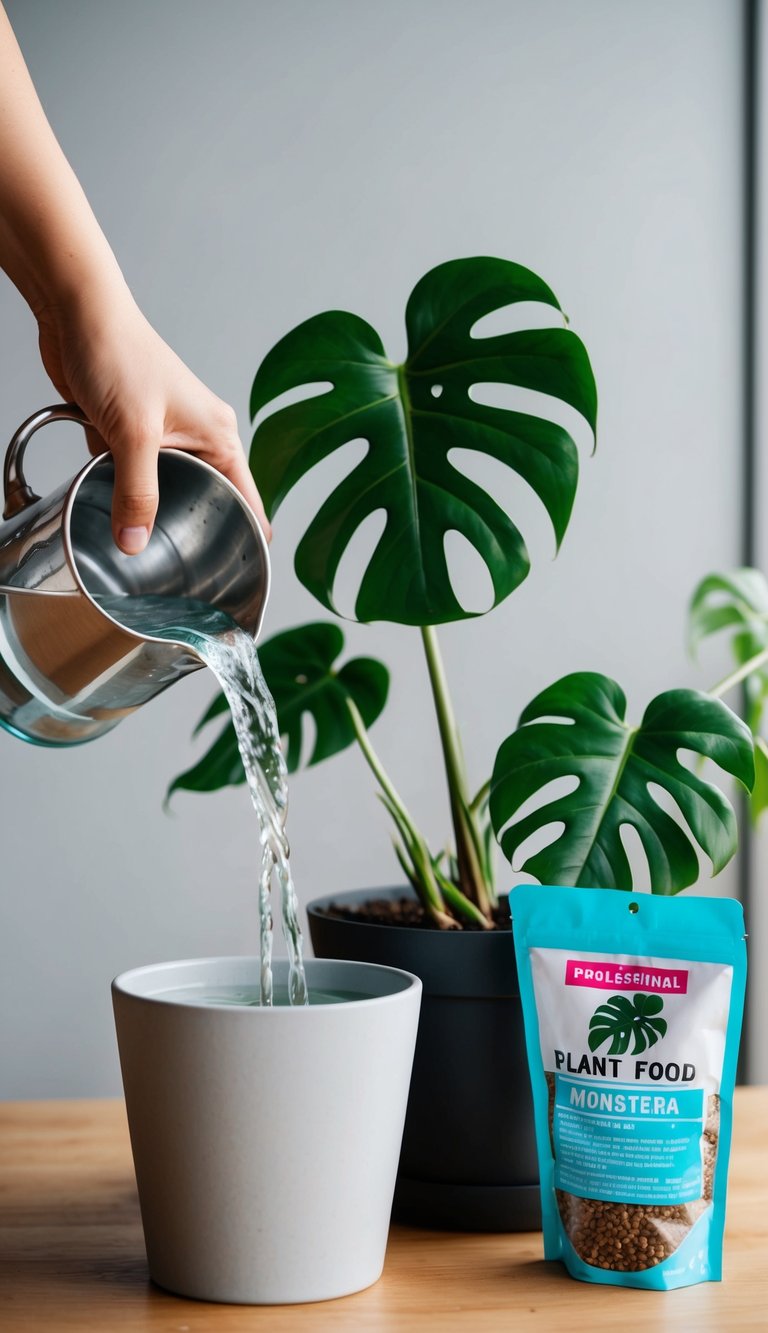
Caring for a newly purchased Monstera includes establishing a good watering routine and providing the right nutrients. These elements are crucial for the plant’s growth and overall health.
Proper Watering Schedule
Monstera plants like to be watered once the top inch of soil is dry. Checking the soil is simple. Stick a finger into the soil and feel for moisture. If it feels dry, it’s time to water.
When watering, do it thoroughly. Pour water until it drains from the bottom of the pot, ensuring all roots are well-hydrated. Avoid letting the plant sit in water, as this can lead to root rot. During warmer months, Monsteras may need more frequent watering, while in winter, reduce the frequency.
Nutrient-Rich Fertilizing
Fertilizing is important to keep a Monstera strong and healthy. During the growing season, which is spring and summer, use a balanced, water-soluble fertilizer every 4-6 weeks. Look for a mix with equal parts nitrogen, phosphorus, and potassium, like a 20-20-20 formula.
In fall and winter, it’s best to cut back on fertilizing. Monsteras grow slower during these seasons and don’t need as many nutrients. If unsure, it’s okay to skip fertilizing during these months. Following these guidelines will help ensure a vibrant and flourishing plant.