The Bible, a collection of ancient narratives, contains harrowing tales that plunge into the depths of human despair and moral failings. These stories reflect moments when individuals and communities faced dire consequences due to their choices, revealing the darker aspects of the human condition. Through these accounts, readers can glean profound insights into the struggles that have plagued humanity throughout history.

In examining these narratives, one encounters the raw reality of betrayal, violence, and loss—elements that resonate deeply within the human experience. Each story stands as a testament to the consequences of sin and the urgent cries for redemption that echo across the ages. These tales not only highlight humanity’s darkest moments but also challenge readers to confront their own vulnerabilities and the complexities of faith amidst suffering.
Cain and Abel: The First Murder

In a world untouched by the horrors of humanity, two brothers emerged: Cain and Abel. They offered sacrifices to God, but only one was accepted. The sting of rejection consumed Cain, igniting a fire of jealousy and rage.
Cain’s anger twisted his heart, blinding him to the bond he shared with his brother. Unable to master his feelings, he committed the first murder, forever marking history with an act of unspeakable violence.
As Abel fell, the weight of sin crashed down on Cain. His life transformed into a haunting shadow, engulfed by despair and punishment. God’s warning echoed in the silence: sin lurked, waiting to pounce.
Even in the aftermath of Abel’s death, God’s mercy intervened. Cain, marked and cast away, received a semblance of protection, showcasing a stark contrast between divine justice and human frailty.
This ancient tale is more than a story; it’s a mirror reflecting the darkness that can dwell within. Cain and Abel’s tragic end serves as a chilling reminder of how unchecked emotions can lead to catastrophic consequences.
2) The Flood: A World Cleansed

The flood narrative presents a stark picture of divine judgment. A world steeped in wickedness and violence faced a catastrophic cleansing. Humanity’s moral decay had reached a tipping point, prompting an expansive and merciless response from the Creator.
As waters surged and engulfed the earth, the story transcends mere destruction. It symbolizes the desperate need for renewal. In the depths of despair, humanity was confronted with the consequences of its actions, a sobering reflection of inherent flaws.
Amid the chaos, Noah emerged as a beacon of faith and obedience. His family, privy to survival, signified hope amidst the devastation. The floodwaters did not merely wipe the slate clean; they carried profound implications about accountability and divine mercy.
As the deluge subsided, the earth was reborn, teeming with potential. The command to “be fruitful and multiply” resonated through the remnants of the old world, urging humanity to rebuild and rethink. This transformative experience left an indelible mark, serving as a reminder of the delicate balance between human nature and the divine will.
3) Sodom and Gomorrah: Cities of Sin

Sodom and Gomorrah stand as stark symbols of humanity’s moral failure. These ancient cities, mentioned in Genesis, were notorious for their rampant sinfulness. They indulged in acts that society condemned, ignoring the consequences of their actions.
The Bible recounts a divine outcry against Sodom and Gomorrah, emphasizing the severity of their depravity. Their inhabitants rejected righteousness, embracing a way of life that led to their downfall. God’s judgment was swift and severe, showcasing the consequences of unchecked sin.
Many view this story as a cautionary tale, illustrating the potential fate awaiting societies that wander too far from moral truth. The destruction of these cities sends a chilling message about the severity of divine justice.
In today’s context, the tale serves as a reminder of the thin line between grace and judgment. As humanity grapples with its issues, the narrative of Sodom and Gomorrah resonates. It compels reflection on the state of contemporary society and warns against the normalization of sin.
Lot’s Wife: A Monument to Disobedience

Lot’s wife stands as a stark reminder of the perils of disobedience. In the face of divine instruction, she chose to look back at the burning ruins of Sodom, yearning for the life she was leaving behind.
Her action was not just a fleeting glance; it represented a deeper longing for the past. The moment she turned, she paid the ultimate price, transforming into a pillar of salt. This transformation encapsulates the tragic consequences that follow a moment of weakness.
The narrative serves as a warning to the faithful. It challenges them to consider what they hold dear and the dangers of nostalgia. As she stands frozen in time, Lot’s wife embodies the struggle between faith and the pull of the familiar.
In the quiet of that fateful moment, her choice resonated through generations. Remembering her story compels believers to reflect on their own paths, urging them to resist the temptation to look back, lest they suffer similar fates.
5) Abraham and Isaac: A Father’s Test

The command came as a shock. God demanded Abraham sacrifice his beloved son, Isaac. In that moment, a father faced the unimaginable: faith versus his own heart.
Abraham’s journey was steeped in promise. He had waited for Isaac, the child through whom God’s covenant would unfold. Now, the very essence of that promise hung on the edge of a knife.
With heavy steps, father and son ascended the mountain. Isaac, innocent and trusting, carried the wood for the sacrifice, unaware of the horrific fate awaiting him. Abraham’s heart must have waged a brutal war.
What drove Abraham? Was it an unwavering trust in God or sheer desperation? As they reached the altar, the air thickened with tension. The father’s hands trembled as he raised the blade, caught in a web of divine command and paternal love.
In a moment of chaos, a divine intervention halted him. “Do not harm the boy,” a voice proclaimed. A ram appeared, a symbol of provision in the face of despair. This story echoes through ages, revealing the depths of human sacrifice and the complexities of faith. It forces all to ponder: what would they do in such dire circumstances?
6) Esau’s Lost Birthright: A Tale of Deception

Esau, the firstborn son of Isaac, stood to inherit a wealth of blessings. Yet, in a moment of weakness, he traded his birthright for a mere bowl of stew. His hunger clouded his judgment, leading him to despise what was sacred.
Jacob, with cunning and ambition, seized this opportunity. He exploited Esau’s desperation, showcasing the darker aspects of human nature—greed and manipulation. The bond of brotherhood fractured under the weight of betrayal.
This story reveals the stark reality of familial rivalries. Esau’s impulsive decision echoes through time, exposing the profound consequences of momentary lapses in judgment.
The act of deception didn’t end there. Jacob’s eventual usurpation of Isaac’s blessing highlighted a lifetime of conflict and deceit. The narrative paints a vivid picture of how easily trust can be shattered.
Esau’s lost birthright serves as a haunting reminder of how fleeting desires can lead to irreversible loss. It forces a confrontation with the uncomfortable truth about human frailty and the lengths one will go to secure power.
Joseph’s Betrayal: Sold by Brothers
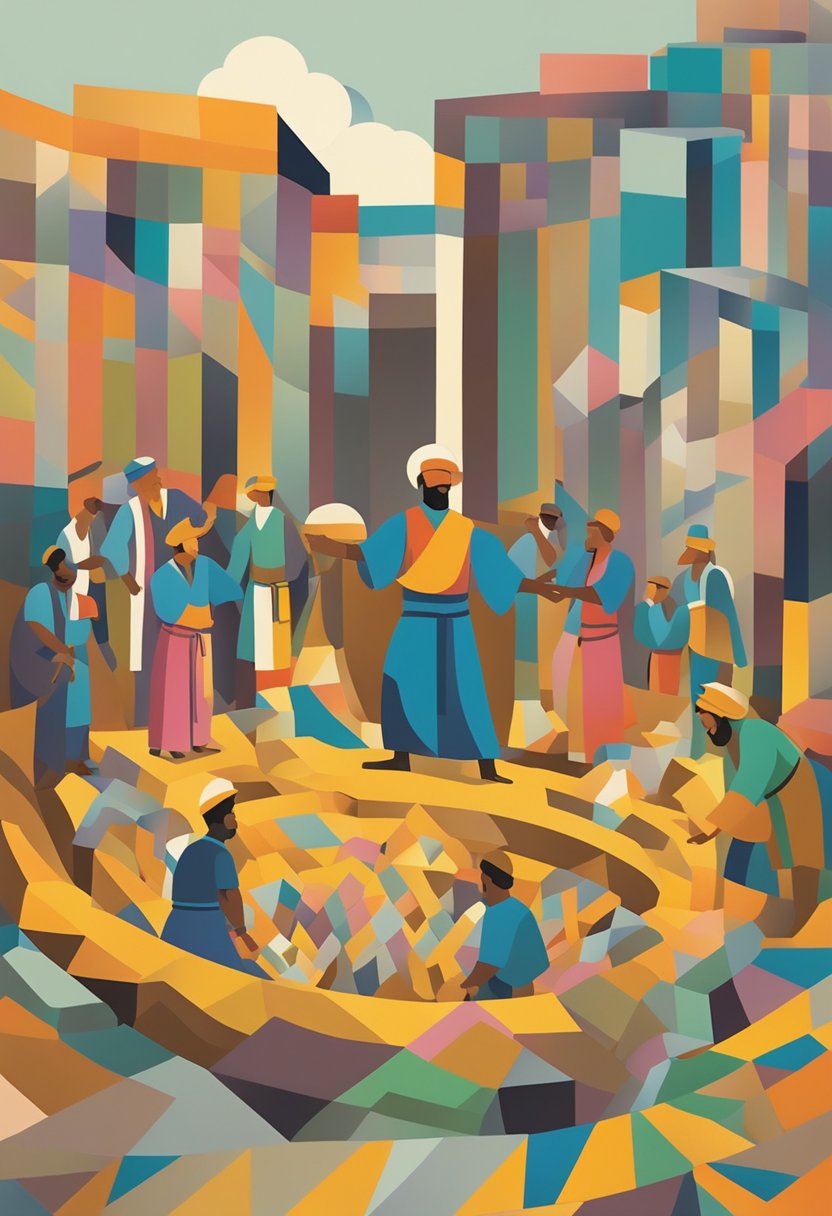
Joseph, favored and loved by his father, wore that notorious coat of many colors—a symbol of parental preference. This favoritism ignited a lethal jealousy within his brothers. They conspired, driven by resentment, to rid themselves of him.
In a cold act of betrayal, they sold Joseph into slavery for a mere twenty pieces of silver. His cries for mercy fell on deaf ears as they callously dipped his coat in goat’s blood, fabricating a lie of his death. The depths of their cruelty reveal humanity’s capacity for treachery.
In distant Egypt, Joseph faced suffering and hardship far removed from his family’s betrayal. Yet, even in darkness, he clung to hope. His journey from pit to power underscores a chilling truth: betrayal often comes from those closest.
As the years passed, famine struck, bringing his brothers to Egypt in search of food. They would stand before him, unaware of his identity, confronting the very brother they had condemned. This horrifying cycle of betrayal cast a shadow over their lineage, challenging notions of loyalty, family, and forgiveness.
8) The Plagues of Egypt: Divine Wrath Unleashed

The story of the plagues of Egypt stands as a powerful testament to divine judgment. As Pharaoh hardened his heart against the cries of the enslaved Israelites, a series of catastrophic events began to unfold. These plagues were not mere inconveniences; they were stark demonstrations of authority and power.
From the waters of the Nile turning to blood to an invasion of frogs, each plague struck with increasing intensity. The land of Egypt suffered grievously, as livestock perished and boils afflicted the people. Darkness enveloped the land, a chilling reminder of the futility of resisting divine will.
As each calamity descended, the helplessness of Pharaoh highlighted a larger truth about humanity’s defiance. The ten plagues were a reflection of stubbornness met with relentless consequence. In the face of such devastation, the narrative unveils the fragility of human power against the forces of the divine.
Ultimately, these stories resonate deeply with the theme of liberation. They illustrate the lengths to which one must go to achieve freedom, painting a vivid picture of a struggle that transcends time and place. The lingering impact of these events continues to evoke contemplation on justice, mercy, and the nature of authority.
9) Golden Calf: Idolatry and Rebellion

The golden calf incident stands as a stark reminder of humanity’s tendency toward idolatry. While Moses was receiving divine commandments on Mount Sinai, the Israelites succumbed to their fears and doubts. They created a molten image of a calf—a betrayal of the God who had liberated them from slavery.
This act of rebellion ignited a frenzy of worship, marked by pagan rituals and chaotic abandon. It reveals a profound disconnect between faith and human desire. In their desperation for a tangible god, they forsook the very essence of their identity.
Leaders, like Aaron, falter under pressure, making choices that haunt their people. Instead of guiding them toward faithfulness, they capitulated to popular demand. The consequences were dire, showcasing the fragility of belief when challenged by uncertainty.
The golden calf symbolizes not merely a statue of gold but the allure of instant gratification over genuine devotion. This event echoes through history, warning generations about the cost of turning away from true faith. The haunting question remains: what will humanity choose when the divine is out of sight?
10) Samson and Delilah: Love’s Treachery

The story of Samson and Delilah is a haunting portrayal of love entwined with betrayal. Samson, chosen to lead Israel, possesses unmatched strength, a gift tied to his uncut hair. His love for Delilah, however, blinds him to her true motives.
Delilah is not merely a lover; she is a cunning manipulator. Entrusted with his secrets, she betrays him, seducing Samson with deceitful charm. Each night, she lulls him into vulnerability, asking, “What makes you strong?”
In moments of intimacy, he reveals his source of power, unaware that she serves the enemy. Her betrayal leads to his downfall, capturing the essence of treacherous love. With each lie, Delilah draws him deeper into a web of deceit.
The climax unfurls in a dramatic twist. Samson, bound and blinded, realizes too late the depths of her betrayal. The tragedy resonates, reminding readers of the fine line between love and treachery. This timeless tale reflects humanity’s darkest moments—trust shattered by deceit, and strength turned into vulnerability.
The story of Samson and Delilah stands as a stark reminder of the perils that lurk within the human heart. What was once a bond of love transforms into a nightmare, illustrating the seductive nature of betrayal.
11) David and Bathsheba: A King’s Shame

The story of David and Bathsheba encapsulates a moment of profound moral failure. From his rooftop, King David’s careless gaze led to a web of deceit and destruction. This was no mere affair; it was a brutal abuse of power that forever tainted his legacy.
Bathsheba, a vulnerable figure caught in the crossfire, faced the harrowing consequences of David’s lust. Her plight highlights the stark imbalance between their positions—he, the king, wielding absolute power, and she, a pawn in his dangerous game.
After sending her husband, Uriah, to certain death, David’s actions spiraled into a tragic tale of loss and divine judgment. The child born from this union suffered the consequences of their sin, reminding all that no sin is without repercussions.
The narrative serves as a visceral reminder of human frailty, capturing a leader’s downfall and the devastating impact of unchecked desires. It poses challenging questions about responsibility, power, and the darkness that lurks even in the hearts of those lifted to greatness.
12) Absalom’s Rebellion: A Son’s Betrayal

Absalom, son of King David, embodies the tragic complexity of familial love and ambition. His desire for power led him down a dark path, culminating in a rebellion that tore the kingdom apart.
Driven by resentment and a need for recognition, he turned against his father. This betrayal was not just political but deeply personal, showcasing a son’s rejection of a father’s authority. The echoes of their conflict resonate with the heart-wrenching reality of broken trust.
Amid the chaos, loyalists like Joab struggled to remain by David’s side. Yet even as Absalom gathered supporters, his father’s love never wavered. David’s grief over his son’s choices reveals a profound depth of parental affection, even in the face of betrayal.
The moment of Absalom’s demise is a chilling illustration of the consequences of ambition unchecked by morality. David’s anguished cries, “O my son Absalom,” reverberate through time, a poignant reminder of the cost of conflict and the heartbreaking fragility of family bonds.
13) Jezebel: The Wicked Queen

Jezebel stands as a chilling figure in biblical history, often symbolizing unbridled ambition and corrupt power. As the wife of King Ahab of Israel, she wielded her influence with ruthless efficiency.
Her legacy is one of manipulation and idolatry. Jezebel championed the worship of Baal, leading many astray from the Hebrew god, Yahweh. This choice ignited a fierce conflict, pitting her against the prophet Elijah.
Her actions sparked a series of treacherous events, including the murder of Naboth to seize his vineyard. She turned a blind eye to justice, prioritizing her desires over ethics and morality.
Jezebel’s dark destiny ultimately caught up with her. The prophecy of Elijah foretold her grim end, where the dogs would consume her remains—a fitting conclusion for a woman who epitomized evil.
Even today, her name embodies wickedness, serving as a cautionary tale about the depths of human depravity and the consequences of unchecked ambition. In a world still wrestling with moral choices, the story of Jezebel serves as a stark reminder of the peril of forsaking righteousness for power.
14) Ahab and the Vineyard: Murder for Greed

King Ahab’s greed knew no bounds. He coveted a vineyard owned by Naboth, a man of integrity. Despite his offers, Naboth refused to sell, holding fast to his ancestral land.
Frustrated, Ahab sulked at home, a king thwarted. Queen Jezebel, ever the manipulator, took matters into her own hands. She orchestrated a scheme that would silence Naboth forever.
With false accusations and a mob incited by lies, Naboth met his tragic end. Murder for the sake of a vineyard became the pinnacle of Ahab’s moral decay. This act highlighted humanity’s darkest impulses: the willingness to destroy innocent lives for personal gain.
The prophet Elijah confronted Ahab, declaring his sins openly. Ahab’s actions sparked divine wrath, showing that greed can lead not only to earthly loss but also to eternal judgment. Ahab, once a powerful king, was reduced to a cautionary tale of how unchecked desire can corrupt the soul.
In this narrative, Ahab’s lust for power and possessions serves as a stark reminder of the perils lurking within humanity. It exposes the depths to which one can sink when driven by selfish desires.
15) Haman’s Plot: Genocide Foiled
In the heart of the Persian Empire, a sinister plot unfolded. Haman, a high-ranking official, harbored a deep-seated hatred for the Jews, fueled by pride and personal vendetta. His power was intoxicating, and he wielded it mercilessly.
After being promoted by King Xerxes, Haman commanded respect from all, but Mordecai, a Jew, refused to bow. This act of defiance ignited Haman’s wrath. Consumed by rage, he devised a plan to annihilate an entire people, casting lots to choose the date for their destruction.
The decree was sealed with the king’s authority, and panic spread among the Jews. Yet, a courageous queen named Esther, a Jewess hidden in the king’s palace, learned of the plot. She confronted the king, revealing her identity and Haman’s treachery.
The tables turned dramatically. Haman’s ambition led to his own downfall. The very gallows he had prepared for Mordecai became his execution site. Justice was served, and the attempt at genocide was thwarted. Esther’s bravery not only saved her people but exposed the depths of hatred one man could inspire. The story serves as a haunting reminder of the darkness lurking within humanity.
16) Nebuchadnezzar’s Madness: Pride’s Price

Nebuchadnezzar II, a man of immense power, fell victim to his own arrogance. His reign was marked by grandiosity, as he believed himself untouchable. This pride blinded him to the warnings presented by God.
In a moment of hubris, he declared, “Is this not the great Babylon I have built?” Such arrogance sparked divine retribution. He was cast into a period of madness, living like a beast in the fields. This transformation from king to creature starkly illustrates the consequences of pride.
For seven years, Nebuchadnezzar was stripped of his royal dignity. His story serves as a chilling reminder that even the mightiest can be humbled. It reveals the terrifying reality that unchecked pride can lead to one’s downfall.
When he finally regained his sanity, he acknowledged the sovereignty of God. This humility transformed him, highlighting the complexity of his character. Nebuchadnezzar’s experience echoes through time, warning future generations about the thin line between power and madness.
17) Belshazzar’s Feast: Writing on the Wall

In the ancient tale of Belshazzar’s Feast, a king indulges in excess, surrounded by opulence while his empire crumbles. With arrogance, he mocks the sacred vessels from the fallen temple, a blatant act of sacrilege.
As the revelry peaks, a disembodied hand materializes, inscribing a warning on the wall—words of impending doom. Tension grips the hall as Belshazzar, paralyzed by fear, witnesses the chaotic transformation of his lavish celebration into a scene of dread and despair.
The wise men falter, unable to decipher the ominous message. They can’t grasp the gravity of this divine intervention. In that moment, human folly is laid bare, revealing the vulnerability beneath the facade of power.
Daniel, the prophet, is summoned to interpret the grim words: “Mene, Mene, Tekel, Upharsin.” With each term, the fate of an empire is sealed. Belshazzar’s hubris leads to his destruction, illuminating the peril of ignoring divine warnings.
This story resonates—showing how arrogance can lead to downfall and reminding all of humanity’s darkest moments. The feast becomes a stark reminder that no one is above consequence; the writing on the wall foretells an inevitable reckoning.
The Fiery Furnace: Faith Tested by Fire

In a land ruled by tyranny, Shadrach, Meshach, and Abednego stood defiantly against King Nebuchadnezzar’s decree. They faced a blazing furnace, its flames a terrifying threat meant to crush their resolve. In that moment of peril, their unwavering faith shone brighter than the fire itself.
The king’s wrath was palpable as he commanded the furnace to be heated seven times hotter. Yet, these three men refused to bow to the idol, choosing instead to remain true to their God. Their courage became a testament to the power of faith even in the face of certain death.
As they were thrown into the flames, something miraculous happened. Instead of being consumed, they walked unscathed within the furnace, accompanied by a fourth figure whose appearance was divine. Nebuchadnezzar, astonished, realized that their God had protected them.
This story reveals humanity’s struggle between fear and faith, a battle against the pressures of conformity. The fiery furnace becomes a powerful symbol of hope, reminding believers that true conviction can withstand the fiercest trials. Their legacy endures, urging others to stand firm amid adversity, no matter the cost.
19) Daniel in the Lion’s Den: Facing Death

In a moment of dire consequence, Daniel found himself trapped in a den of hungry lions. This was not merely an ordeal; it was a test of faith that dwelled at the edge of mortality.
With every breath, he faced the grim reality of his impending fate. The decree that sealed his doom hung heavy in the air, yet Daniel remained resolute. He refused to abandon his beliefs, even when the jaws of death loomed nearby.
His act of defiance was not simply a personal statement; it echoed across a kingdom. In a time where fear reigned, Daniel’s faith shone like a beacon. He prayed openly, a rebellious stand against tyranny, demonstrating the power of belief in the face of annihilation.
As the lions circled, their hunger palpable, Daniel’s spirit did not waver. Instead, he drew strength from his unwavering trust in God. This gripping narrative explores the tension between human vulnerability and divine protection, showcasing how conviction can confront even the darkest of circumstances.
Daniel’s story is a poignant reminder that even in the most dire situations, faith can triumph over fear.
20) The Crucifixion: Humanity’s Harsh Verdict

The crucifixion of Jesus stands as a stark representation of humanity’s capacity for cruelty. The choice to execute an innocent man reveals the depths of moral failure present in society.
Under the influence of leaders, a once eager crowd betrayed their own savior. The weight of their choice is chilling as they declared, “His blood be on us and on our children.”
At Golgotha, the scene unfolds with brutal clarity. Torture is not only physical; it is the spiritual and emotional betrayal of a messenger who sought only love and redemption. The indifference shown by the soldiers, mocking and humiliating him, underscores a profound disconnection from compassion.
Jesus, the embodiment of grace, offered no retaliation. His silence in the face of injustice echoes through time, challenging individuals to confront their own depravity and choices.
Crucifixion was not merely an execution; it was a societal verdict. It exemplified a humanity blind to its own darkness, preferring to cling to shame rather than embrace forgiveness. In this moment, the darkness of the human heart is laid bare, compelling each person to reflect on their role in this haunting narrative.
21) Judas’ Betrayal: Thirty Pieces of Silver

In the shadows of history, one name stands synonymous with treachery: Judas Iscariot. He walked alongside Jesus, yet chose to betray his master for thirty pieces of silver. This act wasn’t merely about money; it was a deep betrayal of trust and loyalty.
Judas approached the chief priests, seeking a price for his betrayal. The meager sum they offered reflected little more than the cost of a slave, emphasizing the gravity of his decision.
His heart yearned for wealth, leading him to sell out a man who represented hope and salvation. The exchange marked a turning point in history, sealing Jesus’ fate.
Guilt consumed Judas after the act. He realized the enormity of his decision, but it was too late. The silver coins became a symbol of his moral failure, a haunting reminder of what he sacrificed for greed.
In his quest for riches, Judas lost sight of his true purpose. The betrayal would echo through ages, teaching generations about the darkness that can lurk within the human heart.
22) Peter’s Denial: Fear Over Faith

In a moment of anguish, Peter faces a gut-wrenching choice: faith in Jesus or surrender to fear. Despite his earlier declarations of loyalty, he succumbs to the pressure of the moment, denying his connection to Christ three times.
The scene is charged with intense emotion. Outside the courtyard, with the air thick with tension, Peter’s heart races. With each denial, a part of him fractures, revealing human frailty at its rawest. He fights against fear, yet the shadows of doubt creep in, overpowering his resolve.
The painful acknowledgment of his betrayal ignites a storm of shame and guilt. Peter’s struggle illustrates a profound lesson: even the most devoted can falter when faced with fear. The weight of his actions reverberates through his soul, a haunting reminder of his vulnerability.
His denial captures the essence of humanity: caught between devotion and self-preservation. It’s a striking portrait of how fear can overshadow faith, unraveling one’s deepest convictions. In these heart-wrenching moments, Peter embodies the conflict that lies within us all—a fiery battle between courage and cowardice that defines the human experience.
23) Saul’s Rage: Persecution Unleashed

Saul of Tarsus, initially a zealous protector of Jewish law, transformed into one of Christianity’s most notorious persecutors. His fury knew no bounds as he hunted down believers, driven by a fanatical desire to eradicate this emerging faith.
In Acts 8, Saul dragged men and women from their homes, tossing them into prison. Each arrest fueled his rage, a relentless pursuit that struck terror into the hearts of early Christians.
He stood witness to Stephen’s stoning, holding the coats of those who executed the first martyr. This moment crystallized his identity as a relentless oppressor, channeling his rage into suppression.
Saul’s campaign was more than mere hostility; it was an embodiment of fear and power. His actions prompted many to flee, scattering the nascent Christian community, yet they also ignited a resistance fueled by unwavering faith.
This dark chapter in biblical history illustrates how unchecked fury can consume an individual, casting a long shadow over humanity. Saul’s persecution reveals the depths to which one might plunge when blinded by zealotry, manifesting the darkest aspects of human nature.
24) Paul’s Shipwreck: Surviving Adversity

Paul faced one of the fiercest storms of his life while sailing to Rome. A violent tempest threatened not only his journey but the lives of all 276 souls aboard.
As waves crashed against the ship, panic spread among the crew. Yet amid chaos, Paul remained steadfast. He understood the turbulence was not just a physical storm but a test of faith and resilience.
In Acts 27, Paul’s calm demeanor amidst overwhelming fear showcased his unshakeable trust in God. He boldly reassured those around him, stating that none would perish. This statement would resonate deeply during such a harrowing moment.
When the ship finally wrecked, Paul and the others clung to broken pieces of the vessel, embodying the struggle for survival against dire odds. This scene is a stark reminder of human vulnerability in the face of nature’s wrath.
Through this shipwreck narrative, Paul exemplifies the human spirit’s capacity to endure. As he fought for survival, his faith illuminated the darkest moments of despair, urging everyone to find hope in the storm.
25) Stephen’s Martyrdom: Stoned for Faith

Stephen stands as a harrowing beacon of faith amidst violence. As one of the first Christian martyrs, his story unfolds in the book of Acts. Accused of blasphemy, he faced a mob fueled by rage, a scene drenched in bloodlust and fear.
In his final moments, Stephen’s gaze lifted to heaven. He declared visions of glory, seeing Jesus standing at the right hand of God. These words echoed with defiance against his accusers, challenging their very beliefs.
The crowd surged, drowning him in stones. His cries for mercy mirrored Christ’s own words—“Do not hold this sin against them.” This ultimate sacrifice reverberated through history, a stark reminder of the price of unwavering faith.
Saul, a witness present at his execution, would later become Paul—the apostle who spread Christianity. Stephen’s martyrdom ignited a fire within the early Church, molding the very essence of faith under persecution. His story compels believers to reflect on their own convictions, even in the darkest of times.
Biblical Context: Understanding Humanity’s Fall

The narrative of humanity’s fall from grace is a profound exploration of sin and its consequences. This context reveals the intrinsic struggle between darkness and light, offering invaluable insights into human nature and moral failure.
The Nature of Sin in the Bible
Sin, as depicted in biblical texts, is not merely a series of misdeeds but a deep-rooted condition of the human heart. The doctrine of total depravity explains that every aspect of humanity—mind, will, and emotions—has been marred by Adam’s disobedience. Romans 5:12 states, “Therefore, just as sin came into the world through one man, and death through sin, and so death spread to all men because all sinned.”
This doctrine underscores that humans are predisposed to sin, often choosing darkness over light. Biblical stories illustrate this moral descent, showcasing the ramifications of sin that saturate human relationships and lead to societal breakdown. Deceit, envy, and violence emerge as patterns, highlighting how personal choices can spiral into collective consequences.
Symbolism of Darkness and Light
In Scripture, darkness frequently symbolizes sin, ignorance, and separation from God, while light represents purity, knowledge, and divine presence. John 3:19 illustrates this contrast, stating, “And this is the judgment: the light has come into the world, and people loved the darkness rather than the light because their works were evil.”
This imagery is powerful in conveying the struggle between good and evil. Biblical narratives, including the fall, serve as cautionary tales, reminding humanity of its inclination toward darkness. In Genesis 3, the act of eating the forbidden fruit signifies not just disobedience but a choice that plunges humanity into moral chaos. The ongoing battle between light and darkness becomes a central theme, resonating deeply within the essence of human experience.
Moral Lessons from Devastating Stories
The Bible presents numerous narratives that lay bare the depths of human behavior, showcasing betrayal, deceit, and the consequential paths they carve. Through these cautionary tales, readers are confronted with the true effects of choices made in darkness and the guiding light of divine justice intertwined with mercy.
Consequences of Betrayal and Deceit
Betrayal serves as a common thread in many biblical stories, revealing devastating outcomes. For instance, the narrative of Judas Iscariot highlights the profound impact of betrayal. Judas, one of Jesus’ closest disciples, sold his master for thirty pieces of silver. This act led not only to Jesus’ crucifixion but also to Judas’ own despair and demise.
Another poignant example is David and Uriah. David’s lust for Bathsheba led him to orchestrate Uriah’s death. His subsequent guilt and the turmoil in his family were direct results of his deceit. These stories illustrate that betrayal often carries a steep price, affecting not just the perpetrator but also those caught in the fallout. Such narratives compel readers to reflect on their moral choices and the trust they breach.
The Role of Divine Justice and Mercy
The Bible does not simply present tales of human failure; it also reveals a dynamic interplay between justice and mercy. In the story of Jonah, God’s command to deliver a message of impending doom to Nineveh was met with resistance. However, after Jonah’s reluctant obedience, the people repented, and God displayed mercy by sparing the city. This act underscores the potential for redemption, regardless of previous wrongs.
Similarly, the parable of the Prodigal Son paints a vivid picture of mercy. The wayward son squanders his inheritance but is welcomed back by his father with open arms. This highlights that even in the face of sin and moral failure, divine mercy awaits those who seek forgiveness. These narratives emphasize that while justice is necessary, grace and the opportunity for repentance are equally foundational in the divine narrative.