The Great Depression stands as one of the most significant economic downturns in modern history, impacting millions worldwide.
This period, marked by widespread unemployment and financial instability, reshaped economies and societies.
Understanding the causes, events, and consequences of the Great Depression helps illuminate its profound effects and lasting legacy.
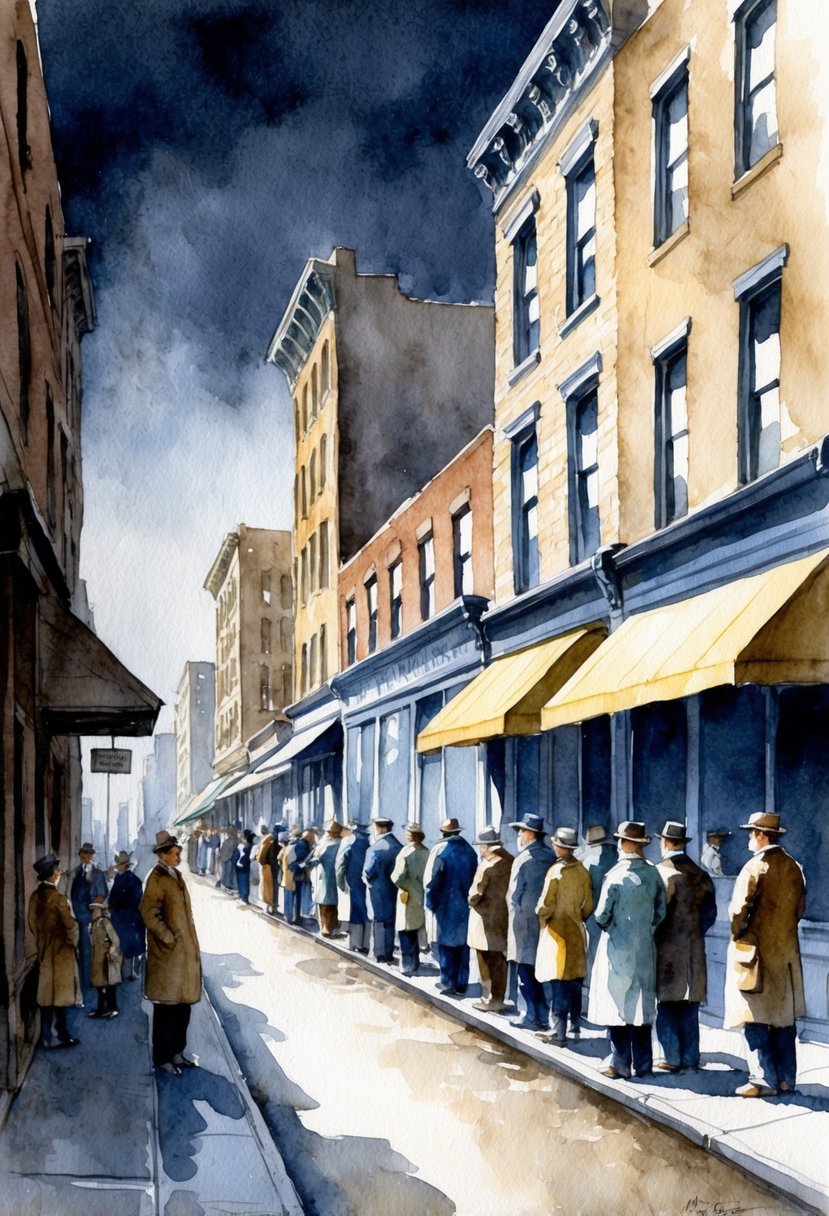
Key events during this era deeply influenced public policy and international relations.
Social and political shifts during the Depression era paved the way for new economic strategies and reforms.
Through examining this pivotal period, one gains insights into the resilience and adaptability of nations facing adversity.
A closer look at the Great Depression reveals the complex interplay of economic factors and human response.
The lessons learned continue to inform economic policy and preventive measures in modern times.
Exploring this era gives context to contemporary economic challenges and strategies.
The Causes of the Great Depression
The Great Depression was a complex event with multiple causes.
Key factors included the Stock Market Crash of 1929, significant bank failures due to inadequate monetary policies, restrictive international trade and tariffs, severe agricultural distress, and rising income inequality coupled with increasing consumer debt.
The Stock Market Crash of 1929
The stock market crash occurred in October 1929, often seen as the catalyst for the ensuing economic turmoil.
A period of speculative frenzy led to inflated stock prices far surpassing their real value.
On October 24, known as Black Thursday, panic selling began. This was followed by Black Tuesday, October 29, when the market lost billions of dollars in value overnight.
The crash eroded public confidence in the financial markets.
Investors faced massive losses, businesses collapsed, and consumer spending drastically decreased.
This economic downturn marked the beginning of the Great Depression.
The sudden crash revealed the fragility of the economy at that time, which had relied heavily on credit and speculation without proper regulation.
Bank Failures and Monetary Policy
In the early 1930s, numerous banks collapsed. This was largely due to inadequate monetary policies and a lack of sufficient reserves.
Many banks had invested heavily in the stock market and, when it crashed, faced huge losses.
Unable to cover withdrawals, banks turned insolvent, leading to widespread panic and bank runs.
As banks failed, depositors lost their life savings, further decreasing consumer spending.
The Federal Reserve’s policies during this period were criticized for being too restrictive, leading to a contraction in money supply.
This intensified deflationary pressures, exacerbating the economic decline.
International Trade and Tariff Policies
The global nature of the depression was fueled by flawed international trade and tariff policies.
The United States introduced the Smoot-Hawley Tariff in 1930, raising duties on hundreds of imports.
This was intended to protect domestic industries but had the opposite effect.
Many countries retaliated with their tariffs, resulting in a significant drop in international trade.
Exports contracted rapidly, especially for nations dependent on selling goods abroad.
This decline in trade further strained economies already grappling with domestic financial issues, spreading the depression across borders.
Agricultural Challenges
Farmers faced extreme hardship during the Great Depression, stemming from both environmental and economic factors.
The 1920s had brought overproduction, leading to falling prices for crops.
With declining incomes, farmers struggled to pay their debts and maintain their livelihoods.
The Dust Bowl compounded these problems in the mid-western United States.
Prolonged drought and unsustainable farming techniques led to massive dust storms that destroyed crops and rendered farmland unusable.
Thousands of farmers were forced to abandon their lands, contributing to the migration crisis.
Income Inequality and Consumer Debt
The 1920s witnessed a significant rise in income inequality.
Wealth was concentrated among a small minority, while wages for the average worker stagnated.
Many families relied on credit to purchase goods, creating substantial consumer debt.
As credit dried up after the crash, individuals could no longer afford basic necessities.
This disparity between rich and poor limited overall economic growth.
With the wealthiest holding onto their fortunes, consumer consumption plummeted, further driving the economic downturn.
These imbalances highlighted systemic vulnerabilities within the economy leading up to the depression.
The Timeline of the Great Depression
The Great Depression spanned a decade of economic turmoil, marked by a catastrophic stock market crash, a severe global economic downturn, and a series of difficult years before partial recovery.
The Early Years: 1929–1931
The Great Depression began with the stock market crash of October 1929, known as Black Tuesday. This initial shock led to a nationwide panic as banks failed and savings vanished.
By 1930, unemployment soared, affecting diverse sectors, and industrial production plummeted.
Agrarian communities faced added pressure due to falling crop prices, leading to widespread farm foreclosures.
Urban areas saw breadlines and shantytowns, famously called “Hoovervilles,” arise, as the government initially struggled to respond effectively to the crisis.
The Deepening Crisis: 1932–1933
1932 marked one of the darkest years. Unemployment reached nearly 25%, with many Americans losing their homes and livelihoods.
Franklin D. Roosevelt was elected in 1932, promising a New Deal for the suffering public.
Upon taking office in 1933, one of his first actions was the banking holiday to stabilize the financial system.
Agricultural legislation and public work programs began to provide jobs and restore confidence, although the economy remained fragile.
Recovery and Recession: 1934–1938
With the New Deal measures underway, the economy slowly began to recover between 1934 and 1936.
Initiatives like the Social Security Act and Works Progress Administration provided employment and social safety nets.
Despite these efforts, 1937 saw another recession, sometimes referred to as the “Roosevelt Recession.”
Industrial output declined sharply, and unemployment rose again.
Key factors included reduced government spending and wage freezes, which underscored the volatile state of economic recovery at the time.
The Final Years and the Outbreak of WWII
The late 1930s saw gradual improvement as the U.S. stabilized and some New Deal recovery efforts took hold.
Government measures fostered slow but steady growth, reducing unemployment rates.
This period ended with the onset of World War II in 1939, which ultimately transformed the American economy.
The war efforts significantly increased industrial production and employment, effectively pulling the nation out of the Great Depression and setting the stage for a new era of economic expansion.
Economic Impact and Statistics
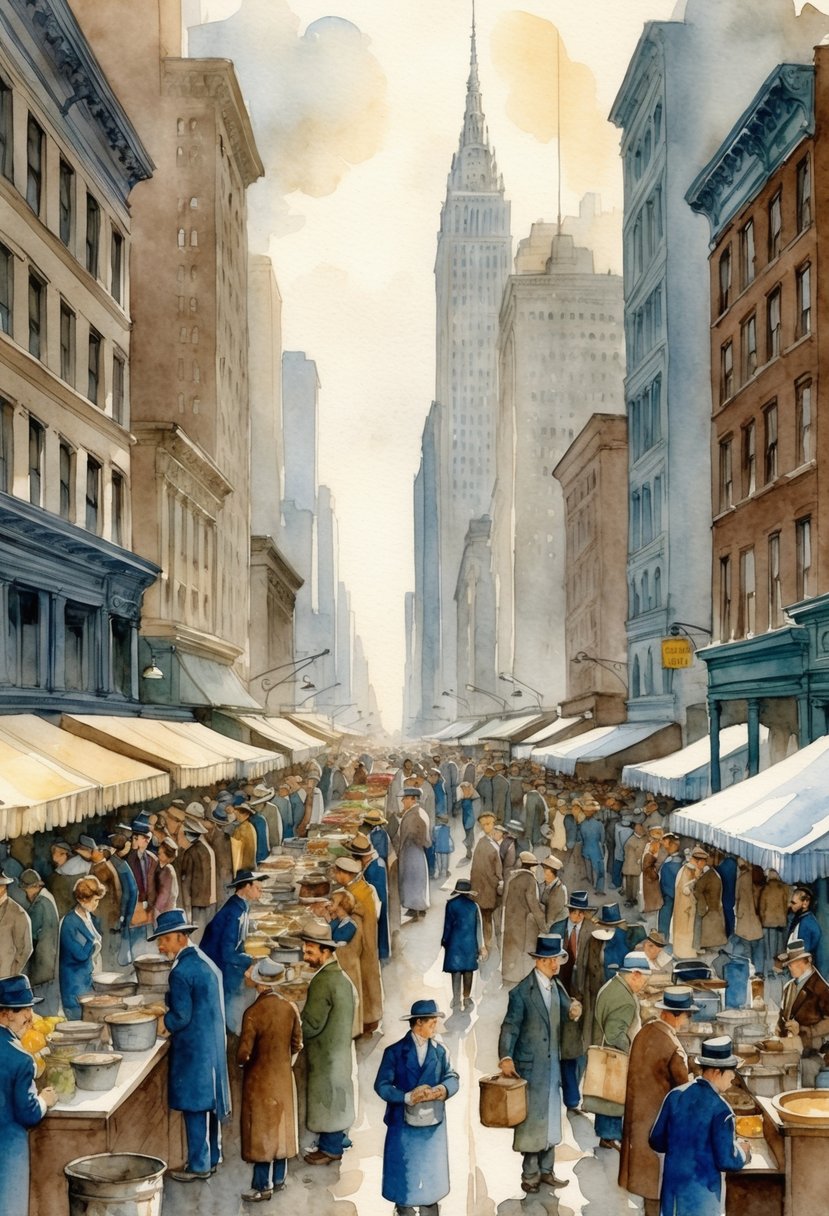
The Great Depression left a profound impact on the economy. Unemployment soared, industrial production plummeted, and Gross Domestic Product (GDP) experienced significant changes. These factors combined to shape the economic landscape during this period.
Unemployment Rates
Unemployment rates during the Great Depression reached unprecedented levels.
By 1933, about 25% of the American workforce was unemployed, translating to over 12 million people.
This drastic rise in unemployment contributed to a heightened sense of insecurity and hardship among citizens.
Employment opportunities were scarce, leading to increased competition for available jobs.
As businesses closed or scaled down, more individuals found themselves jobless.
A significant number of people faced reduced working hours or wage cuts, further compounding the economic distress. Relief efforts eventually provided some relief, but recovery was slow.
Industrial Production Decline
Industrial production saw a sharp decline, with manufacturing output dropping by nearly half between 1929 and 1932.
Key industries such as steel, textiles, and automotive were severely affected.
This decline in production resulted in factory closures and widespread layoffs, exacerbating the unemployment crisis.
Key figures:
- Steel production: Fell by 60%.
- Automobile production: Decreased by 75%.
- Textile industry: Experienced significant contractions.
The downturn in these sectors reflected the broader economic struggle and had ripple effects on related industries and services.
Limited consumer spending power further curtailed industrial activity, creating a vicious cycle of reduced demand and decreased production.
Gross Domestic Product Changes
The Gross Domestic Product (GDP) of the United States shrank dramatically during the early years of the Great Depression.
Between 1929 and 1933, GDP plummeted by approximately 30%. This contraction reflected falling investment, personal consumption, and industrial activity.
Year-by-Year GDP Change:
- 1929: GDP at peak before the crash.
- 1930-1933: Continuous decline, hitting the lowest point in 1933.
- Post-1933: Gradual recovery begins, though slow.
This downturn in GDP highlighted the severe economic contraction and underscored the challenges faced by policymakers in stabilizing the economy.
Efforts to stimulate growth included infrastructure projects and policy interventions aimed at encouraging consumption and investment.
Social and Cultural Effects
The Great Depression significantly altered family dynamics, artistic expression, and migration patterns. Gender roles shifted as families struggled to adapt, while artists and entertainers reflected and escaped the harsh realities of the era. Urbanization patterns changed as people moved in search of work and housing stability.
Family Life and Gender Roles
During the Great Depression, traditional gender roles faced pressure as families coped with economic hardship.
Men experienced high unemployment, challenging their role as primary breadwinners. Many struggled with identity crises, contributing to family stress.
Women often became the family’s financial backbone, seeking work wherever possible. Jobs in domestic service, garment factories, or as secretaries became common.
Those who managed to keep their homes financially afloat did so with ingenuity, budgeting skills, and community support.
Children also contributed to the family economy. Many left school early to work menial jobs, adding to the household income.
These changes led to altered family structures, with some families taking in boarders or moving in with relatives to save money.
Arts and Entertainment
The economic hardships of the 1930s impacted the arts sector, but it also inspired new cultural expressions.
The Federal Art Project of the Works Progress Administration (WPA) employed thousands of artists, helping them create public art that remains significant today.
During this period, photography became a powerful tool for documenting the era.
Photographers like Dorothea Lange captured images of poverty and resilience, creating lasting historical records.
Movies and radio served as escapism, offering relief from daily struggles.
Hollywood’s Golden Age produced classics, while radio programs provided entertainment and news.
Music genres, such as jazz and blues, thrived as live performances offered both affordable entertainment and social commentary.
The arts not only survived but thrived, providing crucial outlets for creativity and reflection.
Migration and Urbanization
Economic challenges led to significant population shifts.
Rural areas suffered, prompting many to relocate to cities in search of jobs.
This internal migration affected both urban growth and social dynamics.
Many African Americans moved from the South to Northern cities, a continuation of the earlier Great Migration.
Job availability in industries like manufacturing drew many to urban centers, reshaping city demographics.
Between 1930 and 1940, the famous Dust Bowl disaster forced thousands of farm families, particularly from the Great Plains, to migrate westward.
California became a primary destination, although hopeful arrivals often found conditions challenging.
This migration changed the social fabric of these areas, influencing the cultural and economic landscapes significantly.
Government Response and New Policies
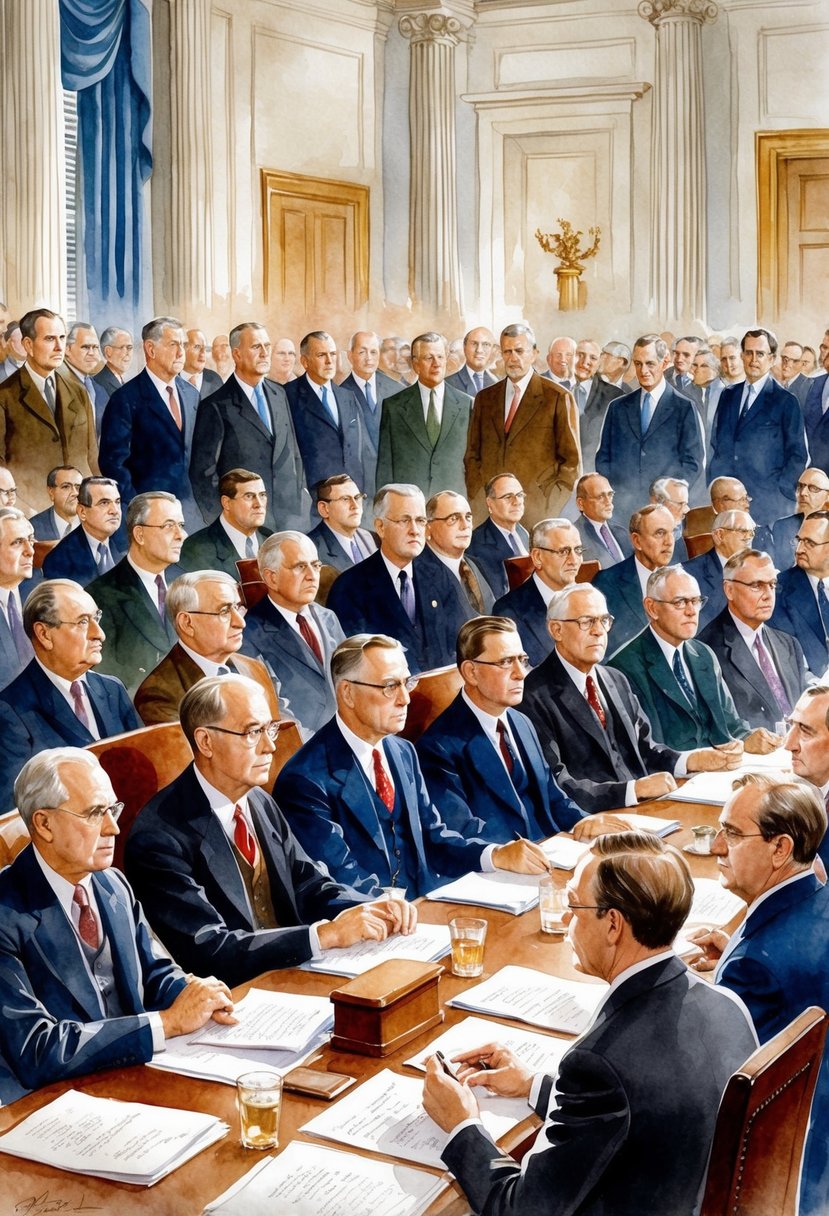
During the Great Depression, the U.S. government implemented several policies in a bid to stabilize the economy and provide relief.
These initiatives ranged from President Hoover’s efforts to Franklin D. Roosevelt’s transformative New Deal, creating significant and lasting changes.
Hoover’s Policies
President Herbert Hoover initially responded to the economic downturn with a focus on voluntary measures and encouraging businesses not to cut wages.
He believed in limited government intervention and emphasized local and private relief efforts over extensive federal programs.
Several initiatives were introduced, including the Reconstruction Finance Corporation (RFC) in 1932, aimed at providing emergency financing to banks, railroads, and other critical industries.
The goal was to stimulate investment and prevent further financial degradation.
Hoover’s policies, however, were often criticized for being insufficient in addressing the scale of the economic crisis.
The public’s dissatisfaction set the stage for significant political change and the eventual election of Franklin D. Roosevelt.
The New Deal and Franklin D. Roosevelt
Franklin D. Roosevelt’s New Deal marked a significant shift in government intervention.
This series of programs and reforms aimed to provide relief, recovery, and reform to the beleaguered economy.
Key initiatives included the Civilian Conservation Corps (CCC), Public Works Administration (PWA), and Social Security Act.
The CCC focused on environmental conservation projects, providing jobs to young men.
The PWA funded large-scale public works projects, boosting employment and infrastructure.
The Social Security Act established a system of old-age benefits, unemployment insurance, and aid to families with dependent children, laying the groundwork for modern social welfare.
Roosevelt’s New Deal represented a fundamental transformation in the relationship between the government and the American public, significantly expanding the federal role in economic management.
Legacy of the New Deal Agencies
Several New Deal agencies remain influential, continuing to shape American economic and social policies.
The Federal Deposit Insurance Corporation (FDIC) was established to secure bank deposits, restoring public confidence in the banking system. It remains a cornerstone of financial security today.
The Securities and Exchange Commission (SEC), created to regulate the stock market and prevent the abuses that led to the 1929 crash, continues to play a critical role in maintaining market integrity.
These agencies reflect the enduring impact of the New Deal, ensuring protections against economic instability while enhancing trust in financial systems. They illustrate the long-term shifts in government responsibilities initiated during this transformative period.
International Response and Global Consequences
The Great Depression affected countries worldwide, leading to diverse economic responses and consequences.
Countries in Europe faced varied challenges, Latin American nations coped with dependence challenges, and Asia struggled with economic constraints while attempting recovery.
Europe’s Economic Conditions
The Great Depression severely impacted Europe, where economies were already fragile from World War I.
Unemployment soared, and industrial production plummeted. Nations like Germany and the United Kingdom faced significant challenges.
Germany experienced hyperinflation and rising political unrest, contributing to the rise of extremist movements.
The United Kingdom sought to manage the crisis with budget cuts and austerity measures. Meanwhile, France maintained some economic stability initially but eventually succumbed to the downturn’s pressures.
The impact of economic distress varied, influencing political and social landscapes across Europe.
Latin America and the Depression
Latin America felt the Great Depression’s effects mainly through declining export revenues.
Many countries in the region relied heavily on agricultural and mineral exports. Prices for commodities like coffee, sugar, and copper plummeted.
Trade partnerships, particularly with the United States, suffered, deepening economic difficulties.
Some governments responded with import substitution policies to encourage domestic industries and reduce foreign dependency.
This period marked a shift in economic strategies that affected regional growth and development. It underscored the complexities of global interdependencies and economic vulnerabilities.
Asia’s Struggle and Recovery
In Asia, countries grappled with the economic downturn in distinct ways.
Japan initially experienced a sharp decline in exports and faced deflation. However, the government implemented aggressive fiscal policies and investment in heavy industries, allowing for a relatively swift recovery by the mid-1930s.
China and India encountered different challenges due to their colonial ties and agricultural economies.
China struggled with inadequate industrial infrastructure and political fragmentation. India’s economy was heavily tied to British policies, experiencing significant crop failures and reduced exports.
Recovery efforts varied, with Japan’s industrial expansion highlighting a proactive approach in contrast to the struggles faced by other Asian nations.
The Great Depression in American Memory

The Great Depression profoundly affected American society, leaving lasting impressions through historical narratives and education efforts that have preserved its memory.
These key areas shape how the era is remembered and understood today.
Historical Narratives
The Great Depression is often depicted through stories that emphasize the struggle and resilience of ordinary people.
Popular media, including books and films, played a major role in forming these narratives.
Works like The Grapes of Wrath by John Steinbeck painted vivid pictures of the hardships faced by families during the Dust Bowl.
Similarly, documentaries and historical accounts provide in-depth perspectives on the economic and social turmoil.
Oral histories from those who lived through the era offer personal insights into daily life.
These firsthand accounts contribute to a more humanized understanding of historical events. They highlight individual experiences, such as breadlines and migration, to offer relatable perspectives.
Education and Awareness
Education plays a crucial role in maintaining awareness of the Great Depression’s impact.
Schools incorporate the era into history curricula, ensuring that students learn about the economic crash and its consequences.
Textbooks often cover key events like the stock market crash of 1929 and the New Deal programs introduced by President Franklin D. Roosevelt.
Beyond formal education, museums and public exhibitions provide visual representations through artifacts and photographs.
These resources offer tangible connections to the past, making the historical period more accessible.
Educational programs and activities engage multiple generations in dialogues about the causes and effects of the Great Depression, fostering a deeper appreciation for its lessons.
Such initiatives help to keep the memory of the era relevant and informative for the broader public.
Comparative Analysis: Then and Now
Economic crises of varying magnitudes have profoundly shaped societies, with notable events like the Great Depression and the Great Recession serving as benchmarks. Current economic challenges highlight evolving preparedness and responses.
The Great Recession of 2008
The Great Recession, beginning in 2008, was a severe global economic downturn marked by a collapse in the housing market and widespread financial instability.
Banks, mortgage lenders, and investors were heavily impacted. Unlike the Great Depression, this crisis was mitigated by swift government interventions, including stimulus packages and bank bailouts.
These actions helped restore credit flow and stabilize markets. While unemployment rates rose, they did not reach the catastrophic levels seen during the Great Depression.
Lessons from past financial failures informed regulatory changes and stricter lending standards, preventing total economic collapse.
Modern Economic Crises and Preparedness
Today’s economic challenges, such as those caused by pandemics or geopolitical tensions, require rapid response and adaptability.
Governments now employ advanced technologies and data analytics for better forecasting and management of economic issues.
Fiscal and monetary policies have become more flexible, allowing quick adjustments to economic shifts.
Unlike during the Great Depression, today’s international cooperation and global coordination through bodies like the G20 aid in managing crises.
Public and private sectors focus on resilience, with attention to sustainable growth and minimizing systemic risks.
The emphasis on creating more robust economic frameworks aims to mitigate future crises, maintaining stability in an interconnected world.
Economic Theories and Interpretations
Multiple economic theories emerged to explain the Great Depression, focusing on causes and potential solutions.
These theories provided insights into government intervention, monetary policy, and market dynamics. Understanding these perspectives is crucial for analyzing economic responses to crises.
Keynesianism vs. Classical Economics
Keynesian economics challenged the classical view, which hinged on self-regulating markets.
John Maynard Keynes proposed that during economic downturns, active government intervention is necessary.
He argued for increased public expenditures and lower taxes to stimulate demand and pull the economy out of recession.
Classical economists believed in the natural adjustment of markets. They held that supply and demand would eventually restore equilibrium.
However, during the Great Depression, persistent unemployment and stagnant production evidenced that markets weren’t self-correcting.
This debate shifted economic policies globally, leading to greater governmental roles in economic management.
The Monetarist Perspective
The monetarist perspective, championed by Milton Friedman, attributed the Great Depression largely to monetary policy errors.
Monetarists argued that the Federal Reserve’s failure to counteract declines in the money supply exacerbated the economic downturn.
They believed that a lack of sufficient liquidity led to banking failures and reduced consumer spending.
Friedman emphasized the importance of controlling money supply growth to stabilize the economy.
This view contended that monetary policy, rather than fiscal measures, is the primary tool to manage economic cycles.
The monetarist approach influenced central banking strategies, highlighting the crucial role of monetary oversight in preventing future depressions.
The Great Depression in Literature and Film
During the Great Depression, literature and film served as powerful mediums to reflect societal struggles. Authors and filmmakers depicted the harsh realities, capturing the essence of the era.
Literary Works:
- The Grapes of Wrath by John Steinbeck: This novel highlights the journey of the Joad family, who face displacement and poverty.
- Of Mice and Men, also by Steinbeck, explores themes of friendship and dreams amidst economic hardship.
- Tobacco Road by Erskine Caldwell offers a gritty portrayal of rural poverty in the South.
Films of the Era:
- The Gold Diggers of 1933: A musical comedy that contrasts glamorous performances with economic issues.
- I Am a Fugitive from a Chain Gang: This film depicts the struggles of a man caught in a cruel penal system.
- Modern Times by Charlie Chaplin: A comedic yet poignant take on industrialization and its impact on workers.
Impact on Culture:
Books and films from this period continue to inform and educate. They offer insights into human resilience, the quest for dignity, and the social and economic challenges people endured. They remain relevant, reflecting the persistent themes of struggle and hope in difficult times.
The art and storytelling created during this time help convey the emotional and practical realities of the Great Depression, providing a rich tapestry for understanding this pivotal period in history.
Lessons Learned and Future Implications
The Great Depression taught valuable lessons about economic management and policy. During this time, governments recognized the critical role of monetary and fiscal policy in stabilizing economies.
Public spending and investment emerged as key tools to counteract economic downturns.
Banking security became a major focus following the collapse of numerous banks. Reforms such as the establishment of the Federal Deposit Insurance Corporation (FDIC) in the United States provided a safety net to protect depositors, restoring trust in the financial system.
The importance of international cooperation was also highlighted. Countries realized that economic policies and trade practices can have far-reaching impacts beyond their borders.
In response, global economic cooperation through institutions like the International Monetary Fund (IMF) was strengthened to address international financial stability.
Social safety nets, like unemployment insurance and welfare systems, were developed to support those facing economic hardship. These systems have since become integral to modern economies, providing relief and stability during economic crises.
As economies continue to face challenges, the lessons from the Great Depression remain relevant. Policymakers draw on these experiences to mitigate downturns and promote sustainable economic growth.
The balance between regulation and free-market principles continues to evolve, shaping the future of global economies.